
For most online businesses, credit card payment processing feels simple from the outside. A customer enters card details, clicks “Pay Now,” and the transaction goes through within seconds.
But behind that single payment is an entire network of banks, payment gateways, fraud systems, compliance checks, and risk monitoring tools working together in real time. And for high-risk businesses, that system often becomes one of the biggest obstacles to scaling successfully.
Many merchants do not think much about payment infrastructure until something breaks. Transactions suddenly start failing. Payouts get delayed without warning. Reserve requirements increase overnight. In some cases, the processor freezes the merchant account during a period of strong growth.
That situation has become increasingly common across industries like forex, online gaming, subscription platforms, travel, nutraceuticals, IPTV, and adult services.
Businesses searching for a reliable Credit Card Payment Solution, secure high-risk payment processing, or a scalable international payment gateway are usually trying to solve the same problem:
How to keep payments stable while growing globally.
And in 2026, that problem is becoming harder to ignore.
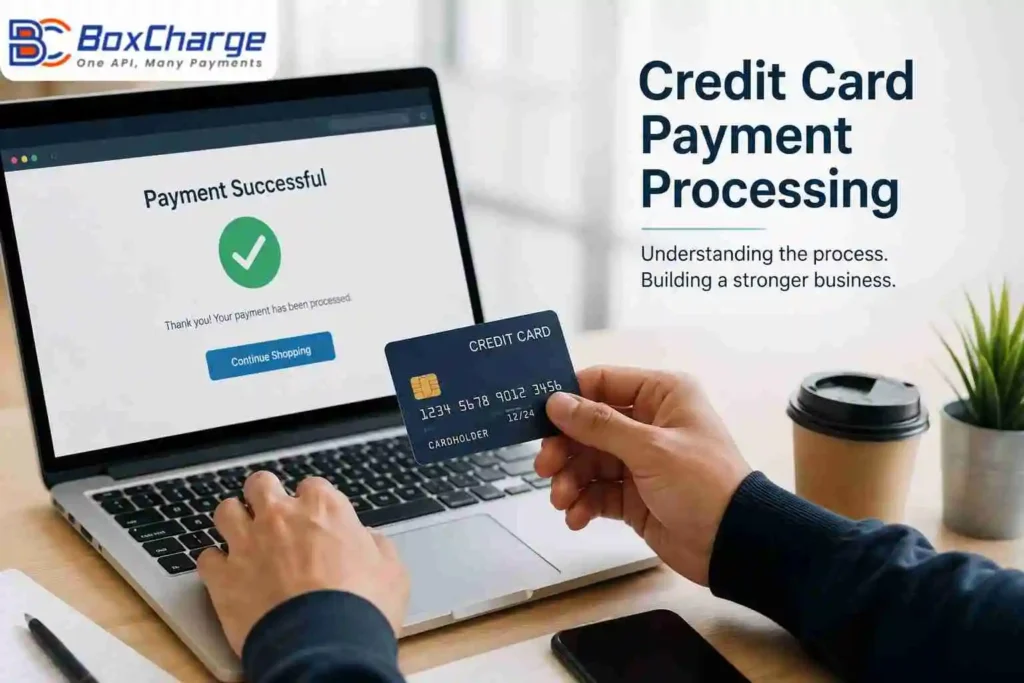
What Credit Card Payment Processing Actually Means
At its core, credit card payment processing is the system that securely transfers money from a customer’s bank account to a merchant after a transaction gets approved.
The process itself only takes a few seconds, but several systems work together behind the scenes to make it happen safely.
When a customer makes an online purchase, the payment first moves through the payment gateway. From there, the transaction gets routed to the acquiring bank, passed through the card network, and reviewed by the issuing bank before approval or decline happens.
For businesses operating internationally, the process becomes far more complicated because of fraud monitoring, cross-border transactions, currency conversion, compliance rules, and regional banking restrictions.
That complexity is exactly why more businesses are investing in stronger global payment processing infrastructure instead of depending on basic local processors that struggle with international scale.
How Online Payment Processing Works Behind the Scenes
The moment a customer enters card details on a website, the payment gateway encrypts the information and securely sends it for authorization.
This part matters more than most businesses realize.
A weak payment setup can quietly damage revenue through failed transactions, lower approval rates, slow checkout experiences, and fraud exposure. Many businesses blame declining sales on marketing when the real issue is poor payment infrastructure.
Modern payment gateway solutions now include AI fraud prevention, smart payment routing, tokenization, recurring billing tools, and multi-currency support to improve transaction success rates globally.
For businesses processing international payments, a strong international payment gateway can directly improve conversion rates and reduce payment failures.
After the gateway sends the transaction, the acquiring bank reviews the request and passes it through the card network. The issuing bank then checks whether the transaction looks legitimate based on available funds, spending behavior, fraud signals, and regional risk patterns.
If everything looks safe, the payment gets approved.
If something triggers fraud systems, the transaction gets declined automatically.
That is one reason many international businesses struggle with lower approval rates. Cross-border transactions naturally create more scrutiny, especially in industries already categorized as high risk.
A forex company processing international deposits may see transactions decline simply because of fluctuating payment sizes and customer locations. An online gaming business handling rapid global transactions may trigger fraud filters even when payments are legitimate.
This is why businesses increasingly search for:
secure payment processing, online credit card processing, cross-border payment solutions, and scalable merchant acquiring support instead of relying entirely on domestic processors.
Why High-Risk Businesses Face More Payment Problems
Traditional processors are designed around predictable, low-risk transaction behavior.
High-risk businesses rarely fit that model.
Many processors become uncomfortable when merchants scale quickly, process international payments, or experience temporary spikes in chargebacks. That discomfort usually turns into payout reviews, reserve increases, settlement delays, or account restrictions.
And the frustrating part is that these problems often appear after the business starts growing successfully.
A subscription business scaling aggressively through paid advertising may suddenly face rolling reserves because transaction volume has increased too quickly. A gaming platform expanding into Europe may experience settlement holds because the processor becomes nervous about cross-border exposure.
Most merchants never expect these problems during onboarding.
They discover them only after revenue starts increasing.
That is why stable high-risk merchant accounts and reliable high-risk payment gateways have become such a major priority for international online businesses.
The Chargeback Problem Most Merchants Underestimate
Chargebacks remain one of the biggest reasons processors terminate merchant accounts.
And contrary to what many people assume, disputes are not always caused by fraud.
A large number of chargebacks happen because of recurring billing confusion, unclear billing descriptors, delayed refunds, friendly fraud, or international banking differences.
Processors rarely look at the emotional context behind those disputes. They focus on ratios and liability exposure.
Once chargeback levels rise beyond acceptable thresholds, processors may increase reserves, delay settlements, limit processing volume, or freeze the account entirely.
For businesses processing large transaction volumes, even temporary payout disruption can create serious operational pressure.
This is why modern online businesses increasingly invest in payment optimization, chargeback management, AI fraud prevention, payment orchestration, and smarter checkout systems instead of relying on outdated payment infrastructure.
Why International Payment Processing Matters More Than Ever
Most online businesses no longer operate inside one country alone.
A company based in the USA may process customers across Europe, the UK, the Middle East, and Asia within months of scaling successfully. That growth creates new challenges involving multi-currency payments, regional compliance laws, localized fraud patterns, alternative payment methods, and international acquiring banks.
Unfortunately, many domestic processors simply are not designed for that level of global activity.
This is one reason businesses increasingly search for:
international payment gateways, global payment solutions, cross-border payments, and scalable digital payment infrastructure capable of supporting long-term international growth.
Businesses want payment systems that grow with them instead of creating operational problems later.
Choosing the Right Payment Processing Partner
The cheapest processor is rarely the safest option for a growing business.
A slightly lower processing fee means very little if payouts become unstable six months later.
Businesses planning to scale internationally should focus on payment providers that offer stable acquiring relationships, transparent reserve policies, recurring billing support, fraud prevention systems, and stronger international payment capabilities.
Many businesses now work with providers like BoxChrge to secure more stable high-risk payment processing, improve transaction approval rates, and reduce the operational risks that often come with international scaling.
Because in reality, payment processing affects far more than transactions alone.
It affects customer trust, cash flow, conversion rates, operational stability, and long-term growth.
Final Thoughts
Understanding how credit card payment processing works helps businesses avoid costly mistakes before payment instability starts to affect revenue.
As global eCommerce and digital transactions continue to grow, businesses increasingly need reliable Credit Card Payment Solutions, scalable international payment gateways, and secure global payment processing systems that support long-term growth without interruption.
Most merchants only realize how important a stable payment infrastructure is after payouts stop arriving or transactions begin failing.
By then, fixing the problem becomes much harder.
Businesses that invest in reliable payment systems early usually scale faster, reduce operational risk, and avoid the payment instability that continues hurting high-risk merchants across global markets.