
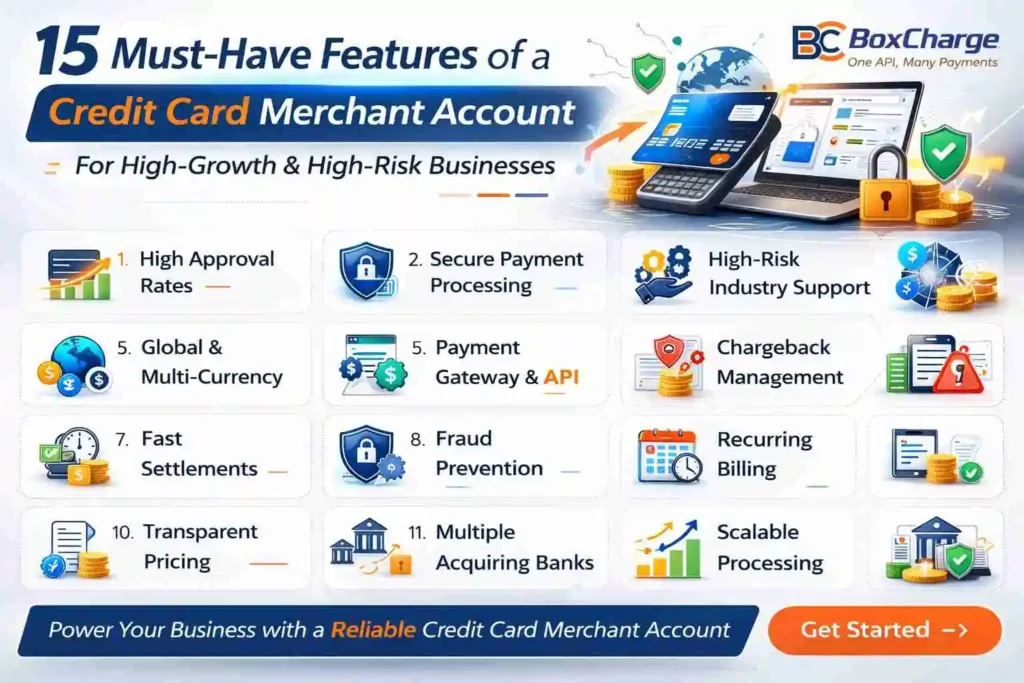
Choosing the right credit card merchant account is one of the most important financial decisions for any online or high-risk business. Whether you operate in eCommerce, forex, gaming, adult, nutraceuticals, SaaS, or subscription services, your payment infrastructure determines approval rates, chargeback exposure, cash flow stability, and long-term scalability.
This guide explains the most important features of a modern merchant account — with a focus on businesses that need secure, global, and high-performance payment solutions.
What Is a Credit Card Merchant Account?
A credit card merchant account is a specialized account that allows businesses to accept card payments from customers. It works with a payment processor and an acquiring bank to authorize, process, and settle transactions.
Unlike a basic bank account, a merchant account is designed to handle:
- Online credit card processing
- Recurring billing
- Cross-border transactions
- Fraud risk management
- Chargeback monitoring
For high-risk businesses, this infrastructure is essential to maintain payment continuity.
1. High Authorization Rates
One of the most valuable features of a strong merchant account is high approval performance.
A well-structured setup includes:
- Smart transaction routing
- Multiple acquiring bank connections
- Local payment processing for key markets
- Optimized fraud filters
Higher authorization rates directly increase revenue by reducing unnecessary declines.
2. Secure Online Credit Card Processing
Security is critical in 2026. Your merchant account must provide:
- PCI-DSS compliance
- End-to-end encryption
- Tokenization
- 3D Secure authentication
- Real-time fraud detection
Secure online credit card processing protects your business from fraud losses, regulatory penalties, and reputational damage.
3. Support for High-Risk Industries
Traditional banks often reject industries like:
- Forex trading
- Online gaming
- Adult platforms
- Crypto services
- CBD & supplements
A specialized high-risk merchant account offers:
- Risk-based underwriting
- Rolling reserve management
- Chargeback monitoring tools
- Stable acquiring relationships
This reduces the risk of sudden account shutdowns.
4. Multi-Currency & Global Payment Processing
If you serve international customers, your merchant account must support:
- Multi-currency acceptance
- Dynamic currency conversion
- Cross-border payment routing
- International settlement
A strong global payment gateway improves checkout conversion rates and reduces foreign exchange costs.
5. Integrated Payment Gateway & API Access
Your merchant account should integrate seamlessly with:
- eCommerce platforms
- Subscription billing systems
- Custom websites
- CRM and ERP software
Look for:
- REST API access
- Hosted checkout pages
- Webhook notifications
- Mobile optimization
Without integration flexibility, scaling becomes operationally difficult.
6. Chargeback Management Tools
Chargebacks are one of the biggest risks in high-risk payment processing.
Advanced merchant accounts include:
- Real-time dispute alerts
- Fraud scoring tools
- Pre-arbitration tracking
- Detailed reporting dashboards
Effective chargeback management reduces penalties and protects your processing relationship.
7. Fast & Predictable Settlement Cycles
Cash flow stability is essential for advertising, payroll, and operational expenses.
A reliable merchant account offers:
- Daily or weekly settlements
- Transparent reserve structures
- Clear payout schedules
- Reduced fund-hold risks
Delayed payouts can disrupt business growth, especially in high-volume industries.
8. Advanced Fraud Prevention Systems
Fraud prevention tools should include:
- AVS and CVV verification
- Velocity checks
- Geo-location filters
- AI-based transaction monitoring
- Risk-based authentication
Strong fraud protection improves approval rates while reducing chargeback exposure.
9. Recurring Billing & Subscription Support
Subscription-based businesses require:
- Automated recurring billing
- Secure card tokenization
- Failed payment retry logic
- Card updater services
This ensures consistent revenue flow and reduces customer churn.
10. Transparent Pricing Structure
Understanding processing costs is essential before choosing a provider.
Key pricing components include:
- Discount rate
- Transaction fees
- Chargeback fees
- Cross-border surcharges
- Rolling reserves
Transparent pricing helps businesses forecast expenses and maintain profitability.
11. Access to Multiple Acquiring Banks
Relying on a single acquiring bank increases risk.
Diversified acquiring partnerships allow:
- Higher domestic approval rates
- Lower cross-border declines
- Reduced dependency risk
- Greater long-term stability
This feature is particularly important for high-risk merchant accounts.
12. Scalability for High-Volume Processing
As your business grows, your merchant account must grow with it.
Look for:
- Higher monthly processing limits
- Support for large transaction values
- Load-balanced infrastructure
- Global routing flexibility
Limited capacity can restrict marketing expansion and revenue potential.
13. Compliance & Risk Monitoring Support
High-risk industries operate under strict regulatory scrutiny.
A professional merchant account provider offers:
- AML compliance guidance
- Ongoing risk monitoring
- Proactive account health checks
- Documentation support
Compliance stability reduces the likelihood of payment disruptions.
14. Alternative Payment Method Support
Modern checkout experiences require flexibility.
Beyond credit cards, many businesses benefit from:
- Debit card processing
- eWallet integration
- Bank transfers
- Alternative payment methods
Offering multiple payment options improves conversion rates and reduces cart abandonment.
15. Long-Term Account Stability
The most important feature is stability.
Your merchant account should provide:
- Clear communication policies
- Transparent reserve agreements
- Consistent underwriting standards
- Reduced risk of sudden termination
Payment interruptions can severely damage revenue and brand reputation.
Why the Right Credit Card Merchant Account Matters
A poorly structured merchant account can lead to:
- High decline rates
- Excessive chargebacks
- Frozen funds
- Sudden shutdowns
- Lost international sales
In contrast, a well-optimized credit card merchant account improves:
- Revenue consistency
- Approval performance
- Global reach
- Fraud protection
- Cash flow predictability
For high-risk and international businesses, payment infrastructure is not just operational — it is strategic.
How to Choose the Right Merchant Account Provider
When selecting a provider, evaluate:
- Industry experience
- Approval process transparency
- Risk management tools
- Global acquiring network
- Settlement reliability
- Technical integration support
Avoid providers that promise instant approvals without explaining underwriting terms or reserve policies.
Final Thoughts
A modern credit card merchant account must do more than process transactions. It must provide security, scalability, compliance, stability, global access, and risk protection.
If your business operates internationally or within a high-risk category, choosing the right payment partner directly impacts growth and long-term sustainability.
Before signing any agreement, assess these 15 features carefully. The right merchant account will not only help you accept payments — it will help you scale with confidence.