
If you run an online business, you’ve probably had this moment—
A customer is ready to pay… and the transaction just fails.
No clear reason. No warning. Just gone.
That’s usually where the payment gateway comes in—or more accurately, where things start to break.
Most guides explain this in a very technical way. Let’s keep it simple and real instead.
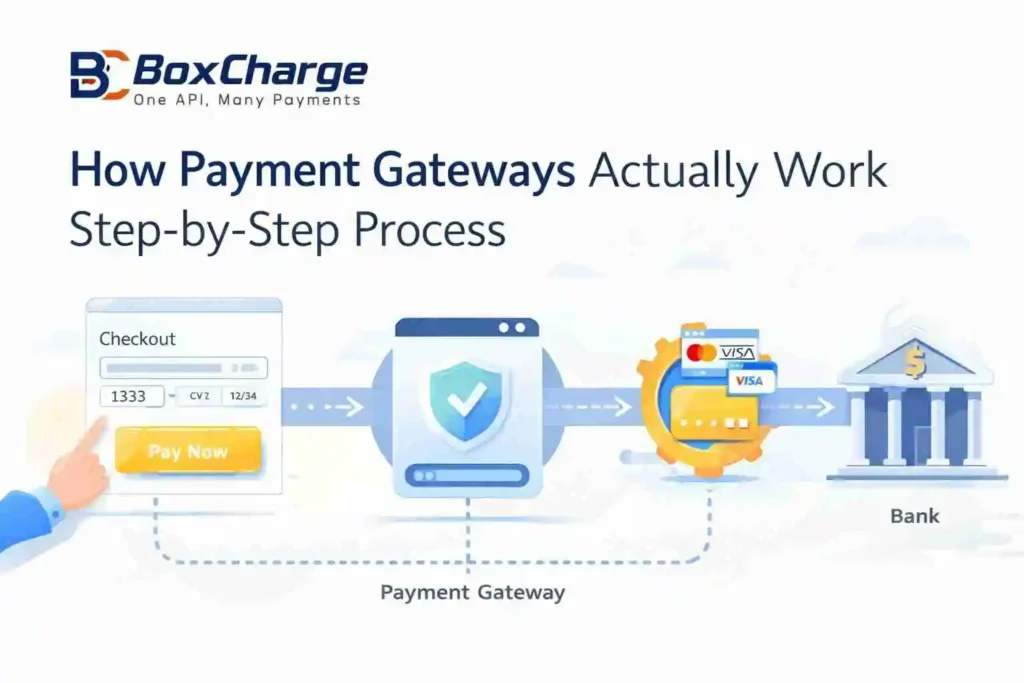
So, what is a payment gateway?
At its core, a payment gateway is just the system that moves payment information from your website to the bank and brings back an approval or decline.
That’s it.
But inside those few seconds, there’s a chain of checks happening—security, fraud, bank rules, risk scoring—all stacked on top of each other.
And if you’re in a high-risk space, those checks get stricter.
What actually happens when someone pays you
Let’s walk through it as it happens in real life.
Step 1: Someone clicks “Pay”
The customer enters their card details. Could be debit, credit, wallet—doesn’t matter.
At this point, your checkout already plays a role.
If it looks slow or sketchy, people drop off before anything even starts.
Step 2: The data gets locked (encrypted)
Before anything moves, the payment gateway encrypts the data.
This is where things like PCI DSS compliance come in. It’s basically making sure sensitive card details aren’t exposed.
You don’t see this part—but it’s critical.
Step 3: It gets passed to the processor
Now the request moves to the payment processor.
Think of this as the courier. It doesn’t decide anything—it just passes the request along to the right places.
Step 4: Card networks step in
The request hits networks like Visa or Mastercard. They don’t approve or reject either—they route it to the customer’s bank.
Step 5: The bank makes the call
This is the moment that actually matters.
The bank checks:
- Does the user have funds?
- Does the transaction look suspicious?
- Does the business fall under a risky category?
And then… approve or decline.
If you’re using a high-risk merchant account, this is where things often go wrong.
Step 6: Response comes back
The decision travels all the way back to your site.
The whole thing usually takes 2–5 seconds.
Feels instant—but a lot is happening in between.
Step 7: The money doesn’t arrive instantly
Even after approval, the money isn’t in your account yet.
It goes through a settlement process, which can take a couple of days.
For high-risk businesses, sometimes longer.
Why high-risk merchants struggle more than others
Now let’s talk about the part most blogs avoid.
If you’re in forex, gaming, subscription billing, or similar industries, you’ve probably noticed this already.
Payments fail more often. Accounts get flagged faster.
Here’s why.
1: Banks don’t trust the category easily
Some industries are labeled “high-risk” by default.
So even if your business is clean, the system treats it cautiously.
That affects your payment processing from day one.
2: Chargebacks hurt more than you think
A few disputes here and there might not seem like a big deal.
But for banks, chargeback management is a major signal.
Cross a certain threshold, and approvals start dropping. Quietly.
3: Fraud filters can be too aggressive
This one’s frustrating.
Legitimate customers get declined because the system thinks something is off.
High-risk businesses deal with this more because filters are tighter.
4: Fewer options, more dependency
Not every merchant account provider works with high-risk industries.
So you’re often stuck relying on limited gateways.
If one fails, everything slows down.
5: Global payments make it worse
If you’re dealing with international customers, things get even more complicated.
Different regions, currencies, rules—it all adds friction to your online payment processing.
What this looks like in real life
You’re getting traffic. People are clicking. They want to pay.
But:
- Transactions fail randomly
- Some cards work, others don’t
- Revenue feels inconsistent
At first, it feels like a marketing issue.
Most of the time, it’s not.
It’s the payment gateway setup.
What actually helps
There’s no magic fix, but a few things make a noticeable difference.
1: Use a gateway that supports high-risk properly
Not just “accepts” it—but is built for international high-risk payment processing.
There’s a difference.
2: Don’t rely on a single route
If all transactions go through one path, you’re exposed.
Smart routing helps distribute risk and improve approvals.
3: Clean up your checkout
Simple things:
- Faster load time
- Clear branding
- Less clutter
They reduce drop-offs more than people expect.
4: Pay attention to decline patterns
Most businesses ignore this.
But decline codes tell you exactly where things are breaking in your payment system.
5: Keep chargebacks under control
This isn’t just about refunds—it directly impacts approvals.
Better communication with customers helps more than complex tools.
Where most businesses mess this up
Honestly, it’s usually not complicated mistakes.
It’s things like:
- Sticking with the wrong gateway for too long
- Ignoring failed payments
- Assuming declines are “normal.”
- Not adapting to how banks evaluate risk
These things add up quietly.
Final thought
A payment gateway isn’t just a technical tool sitting in the background.
It directly decides:
- Whether you get paid
- How often do payments fail
- How stable your cash flow is
And if you’re in a high-risk space, it matters even more.
Understanding how it works doesn’t fix everything overnight—but it helps you stop guessing.
And that alone puts you ahead of most businesses dealing with the same problem.