
Best Invoicing Solutions for Businesses are no longer just accounting tools. In 2026, they will have become part of the payment infrastructure that directly affects cash flow, customer experience, payment approvals, and global business growth.
Many online businesses across the USA, UK, Canada, Europe, Singapore, and Australia are quietly losing revenue because their invoicing systems cannot keep up with modern payment behavior. Delayed invoice payments, failed transactions, recurring billing issues, and unstable processors are creating operational pressure for businesses trying to scale internationally.
For high-risk merchants, the situation becomes even harder.
A forex company processing international clients may struggle with delayed invoice settlements because transactions trigger additional fraud reviews. A subscription business may lose recurring revenue because invoice-linked payments fail repeatedly. An online gaming platform handling cross-border transactions may face processor restrictions that slow down invoice collections completely.
Most businesses assume invoicing problems are accounting issues.
In reality, they are often payment infrastructure problems.
That is exactly why businesses are upgrading to a smarter online invoicing solution provider, scalable international payment gateways, and reliable global payment processing systems designed for faster and more stable payment collection.
Many growing companies now work with providers like BoxChrge to improve payment reliability, simplify international billing, and reduce the operational problems that weak invoicing systems create over time.
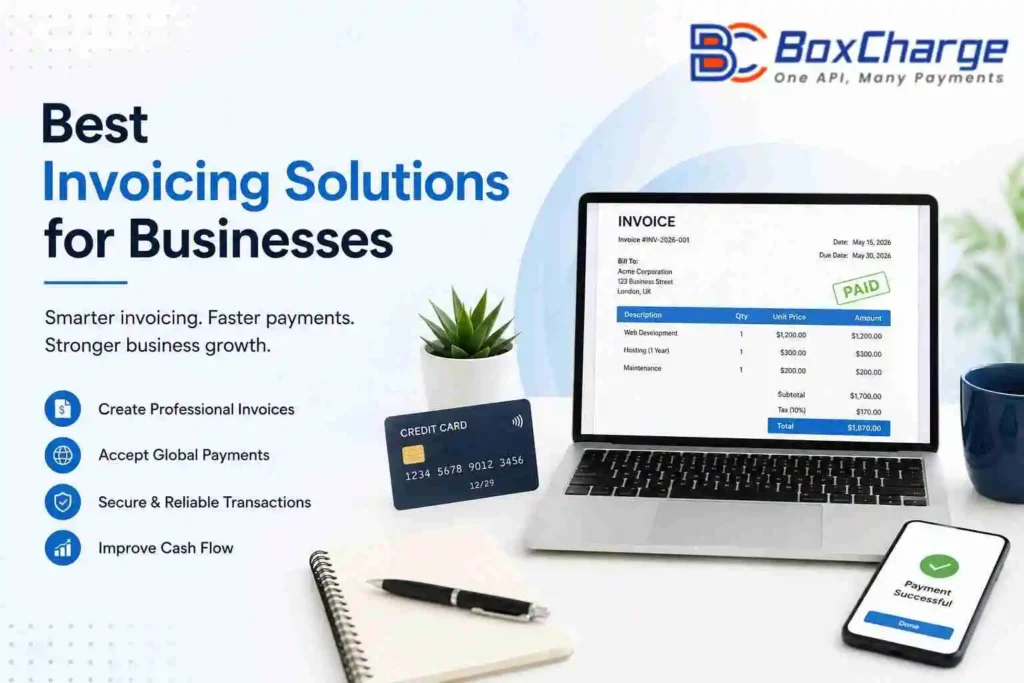
Why Online Businesses Are Replacing Traditional Invoicing Systems in 2026
Older invoicing systems were built for simple local billing.
Modern online businesses operate very differently.
Today, businesses process:
- recurring subscriptions,
- international transactions,
- multi-currency payments,
- digital services,
- and cross-border billing cycles.
That level of complexity creates operational challenges that older billing systems were never designed to handle properly.
This is one reason many businesses experience:
- delayed invoice payments,
- failed payment links,
- payment approval issues,
- settlement delays,
- and inconsistent cash flow visibility.
The invoicing system may look functional on the surface, but the actual payment experience behind it creates friction that slowly affects revenue growth.
A customer tries to pay an invoice internationally, and the payment gets flagged.
Another customer abandons payment because the invoice process feels slow or outdated.
Recurring invoice billing fails because the processor declines renewal transactions unexpectedly.
These problems happen every day across online businesses globally.
And most companies do not notice how expensive the issue becomes until scaling starts slowing down.
This is why demand for smarter digital invoicing software, secure online payment solutions, and scalable payment gateway integration continues to grow rapidly in 2026.
Why High-Risk Merchants Struggle More With Invoice Payments
High-risk businesses face payment pressure that many traditional businesses never experience.
Processors become far more aggressive when merchants process:
- international payments,
- recurring billing,
- higher transaction volume,
- or industries considered higher risk.
That pressure usually turns into:
- reserve holds,
- payout delays,
- transaction monitoring,
- approval declines,
- or settlement reviews.
And invoicing becomes directly affected by those restrictions.
A forex merchant scaling internationally may suddenly experience delayed invoice settlements because transaction behavior changes too quickly. An IPTV platform may struggle with recurring invoice collections after processors tighten fraud monitoring. A gaming company processing customers globally may see invoice payment failures rise because cross-border transactions trigger additional compliance checks.
For many businesses, the invoicing system itself is not broken.
The payment infrastructure connected to it is the real issue.
This is exactly why businesses increasingly search for:
high risk payment processing, scalable merchant account solutions, secure online invoicing systems, and stronger cross-border payment solutions capable of supporting global growth without constant payment instability.
The Best Invoicing Solutions Focus on Payment Performance
Most businesses still evaluate invoicing software based only on appearance and automation features.
That is no longer enough.
The best online invoicing solutions now focus heavily on:
- payment reliability,
- approval optimization,
- international transaction support,
- fraud prevention,
- and billing automation.
Because sending invoices is easy.
Getting invoices paid consistently is the real challenge.
Modern invoicing systems help businesses:
- automate recurring billing,
- reduce failed transactions,
- improve invoice payment speed,
- support multi-currency transactions,
- and simplify international payment collection.
More importantly, they integrate directly with smarter payment gateway solutions that improve transaction stability behind the invoice itself.
That infrastructure matters more than many businesses realize.
Weak payment routing, poor acquiring support, and outdated fraud systems can quietly reduce successful invoice collections every single day.
Even small transaction failures create major revenue leakage over time.
The Hidden Revenue Problem Most Businesses Ignore
One of the biggest hidden problems affecting online businesses today is low payment approval rates tied to invoice payments.
Many businesses assume unpaid invoices happen because customers delay payments intentionally.
But in many cases, legitimate payments fail because the processor behind the invoice cannot properly handle:
- international activity,
- recurring transactions,
- or high-risk payment behavior.
This becomes especially common for businesses processing global transactions.
A customer in Europe tries to pay an invoice, and the payment gets declined.
A recurring invoice renewal fails because the processor flags unusual activity.
A cross-border payment remains pending because the acquiring relationship is weak in that region.
The customer sees a payment issue.
The business sees delayed revenue.
This is why stronger international payment gateways, optimized online credit card processing, and scalable global payment processing systems are becoming essential parts of modern invoicing infrastructure.
Businesses improving payment approval rates often improve invoice collection performance at the same time.
International Growth Requires Smarter Billing Infrastructure
International businesses outgrow basic invoicing systems very quickly.
A company processing customers across the USA, UK, Europe, Canada, Singapore, and Australia cannot rely on outdated billing workflows forever.
Different currencies, settlement timelines, payment methods, tax requirements, and regional banking rules create operational complexity that older systems struggle to manage efficiently.
This is one reason businesses increasingly adopt:
- multi-currency invoicing,
- international payment processing,
- automated billing systems,
- and scalable merchant services platforms built for international growth.
Businesses today want:
- faster settlements,
- smoother customer payment experiences,
- stronger reporting visibility,
- and fewer transaction failures.
Because invoicing now affects far more than accounting operations.
It affects:
- customer trust,
- revenue stability,
- operational efficiency,
- payment approvals,
- and long-term business scalability.
Why Businesses Are Switching to Smarter Invoicing Solutions
Many businesses stay with outdated invoicing systems too long because changing platforms feels complicated.
But weak billing infrastructure quietly damages growth.
Manual payment tracking slows operations.
Invoice follow-ups consume time.
Payment delays create cash flow pressure.
Failed transactions increase support complaints.
International collections become inconsistent.
For high-risk businesses, these problems grow even faster.
This is why businesses are actively upgrading to:
automated invoicing software, scalable payment gateway solutions, reliable online merchant account systems, and secure international payment processing designed for modern online commerce.
Businesses no longer want invoicing systems that generate invoices.
They want systems that help invoices get paid faster and more reliably worldwide.
Choosing the Right Invoicing and Payment Partner
The best invoicing solution is rarely the cheapest one.
For international and high-risk businesses, payment stability matters far more than low software pricing.
A strong invoicing and payment partner should support:
- recurring billing,
- international transactions,
- fraud prevention,
- multi-currency invoicing,
- secure payment processing,
- and scalable payment gateway integration.
Because billing infrastructure directly affects operational growth.
Businesses struggling with delayed invoice payments, recurring billing failures, payout instability, or international transaction issues should evaluate whether their current payment infrastructure can actually support long-term growth.
Many online businesses now partner with providers like BoxCharge to simplify international invoicing, improve payment approval rates, and support more reliable global payment processing without operational friction.
Final Thoughts
The Best Invoicing Solutions for Businesses are no longer basic accounting tools. They have become part of the infrastructure that supports global online growth.
As online commerce continues to expand internationally, businesses need smarter invoicing systems that support recurring billing, cross-border transactions, high-risk payment environments, and global customer payments without creating operational instability. Businesses planning to scale internationally should review whether their current invoicing and payment systems are helping growth or quietly slowing it down. Stronger online invoicing solutions, scalable international payment gateways, and reliable global payment processing systems are becoming essential for businesses that want faster payments, better approval rates, and long-term operational stability.