Why International Payment Gateways Break During Cross-Border Growth
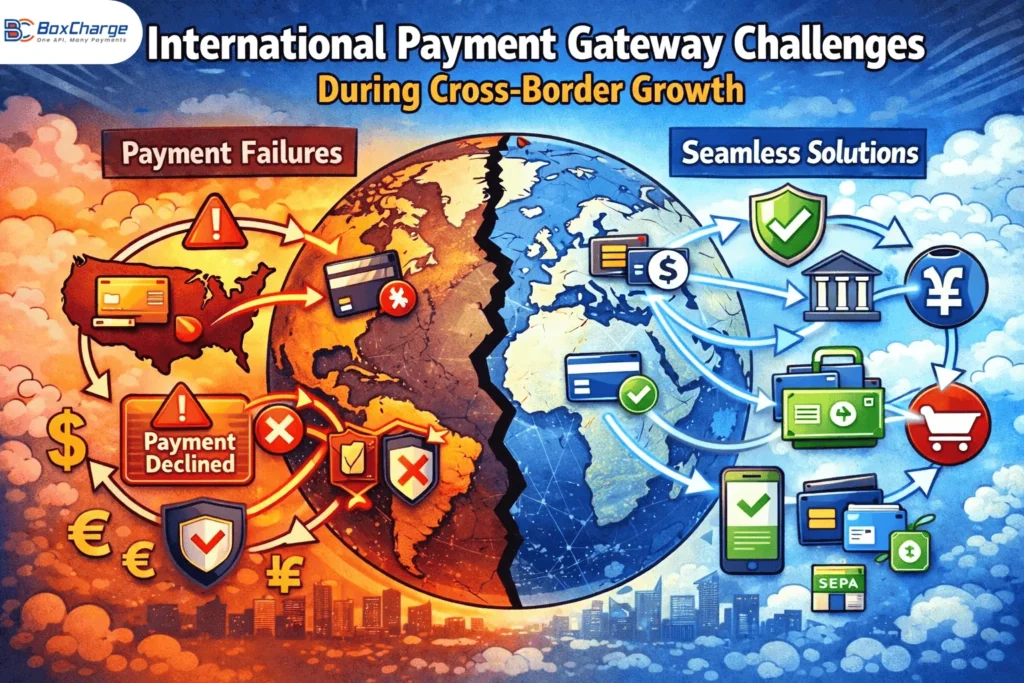
International expansion is often framed as a marketing or logistics challenge. In reality, payments are the first system to break when a business scales across borders. A gateway that performs flawlessly in one country can quietly fail in another — not because of volume, but because payments are local by nature. Consumer behavior, banking infrastructure, regulations, and fraud patterns vary sharply by region. For global merchants — especially those operating in high-risk or regulated industries — this disconnect results in: This article explains why international payment gateways fail during cross-border growth, using real-world examples from Germany, the USA, the UK, Gulf countries, and Japan, and how specialized payment gateway solution providers, such as BoxChrge, solve these failures at scale. The Core Problem: Global Ambition, Local Payments Reality Most international gateways are built on a centralized card-processing model. They assume that: That assumption breaks the moment a business expands. Cross-border payment success depends on local trust signals, local payment preferences, and region-specific risk logic — not just global card access. Germany: Where Card-First Gateways Lose Trust Germany is one of Europe’s largest e-commerce markets, yet it consistently underperforms for merchants using card-centric gateways. Where Gateways Break German consumers prefer bank-based payments over card-based payments due to cultural trust in domestic banking systems and stringent consumer protection regulations. Gateways that prioritize Visa and Mastercard experience: Payment Methods That Actually Convert Real Experience One of our clients was expanding a European subscription platform into Germany, and saw that conversion rates were nearly 35% lower than in France and the Netherlands — despite identical pricing and marketing. After enabling local bank-based payment methods and localized checkout flows through a regional payment partner, German conversions increased by over 28% within two billing cycles. Key takeaway: In Germany, trust beats convenience. If payments don’t look local, users don’t complete checkout. United States: High Volume, High Decline, High Chargeback Risk The U.S. appears card-friendly, but it is one of the most complex payment environments globally. Where Gateways Break Many international gateways either over-filter transactions (causing false declines) or under-filter them (triggering monitoring programs). What Works in the U.S. Market Real Experience A cross-border digital services provider processing U.S. transactions experienced an 18% false decline rate for legitimate customers outside North America. By implementing region-aware fraud logic and adaptive routing via a specialized gateway: Key takeaway: In the U.S., success depends on risk intelligence, not just payment access. United Kingdom: Open Banking Is No Longer Optional The UK has rapidly evolved beyond card-only payments. Where Gateways Break Gateways that fail to support Open Banking and wallet-first experiences struggle with: Payment Methods That Perform Real Experience A UK-based SaaS platform saw recurring payment failures spike after regulatory changes tightened SCA enforcement. After integrating Open Banking flows and local retry logic, the business reduced involuntary churn by 14% within one quarter. Key takeaway: In the UK, modern payments mean bank-first, mobile-first, and regulation-aware. Gulf Countries (GCC): Wallet-Driven, Trust-Sensitive Markets Markets like Saudi Arabia, UAE, and Qatar are digitally advanced but behave very differently from Western economies. Where Gateways Break Customers hesitate when payment methods feel “foreign,” even if the brand is trusted. What Converts in the GCC Real Experience An e-commerce merchant targeting Saudi Arabia experienced over 30% checkout abandonment when only cards were offered. After enabling regional wallets and local currency display through a specialized payment gateway: Key takeaway: In the GCC, local familiarity drives conversion more than global branding. Japan: One of the Most Misunderstood Payment Markets Japan is frequently misclassified as a card-dominant market. It is not. Where Gateways Break Western gateways often fail because they don’t support Japan’s unique hybrid system of offline and digital payments. Preferred Payment Methods Real Experience A digital entertainment company launching in Japan initially saw conversion rates less than half of expectations. After integrating Konbini and local wallet payments: Key takeaway: In Japan, payment flexibility matters more than speed. Common Reasons International Payment Gateways Fail Across all regions, failing gateways share the same weaknesses: These weaknesses compound as transaction volume increases. What a True Cross-Border Payment Gateway Must Deliver A scalable international payment gateway solution must operate on a “glocal” model — global infrastructure with local execution. Core Capabilities Required This is especially critical for merchants in high-risk categories, where tolerance for error is low and regulatory scrutiny is high. How BoxCharge Solves Cross-Border Payment Failures BoxCharge is built specifically for international and high-risk payment processing, not as a generic gateway reseller. What Makes BoxCharge Different Case Study: Global Subscription Business After switching to BoxChrge: Key Features High-Growth Merchants Should Demand Capability Why It Matters Local payment methods Drives trust and conversion Multi-currency pricing Reduces friction at checkout Dynamic fraud controls Prevents false declines Chargeback management Protects merchant accounts High-risk specialization Ensures account longevity Final Takeaway International growth does not fail because of demand — it fails because payments don’t adapt. Gateways designed for domestic processing often struggle to support the complexity of cross-border transactions, particularly in regulated or high-risk industries. Merchants that succeed globally treat payments as a strategic infrastructure decision, not a backend utility. Request a Cross-Border Risk Audit with BoxChrge If your business is expanding internationally and experiencing: BoxCharge can help. 👉 Request a Cross-Border Risk Audit for your specific region and discover how localized payment strategies can unlock sustainable global growth. Disclaimer: Data based on BoxCharge internal processing trends and regional banking reports from Q4 2025.
Why International Payment Gateways Break During Cross-Border Growth Read Post »