
As we discussed in “Why International High-Risk Payment Processing Is Harder Than Ever as We Approach 2026,” Fraud in online payments has always evolved quickly. But by 2026, it’s no longer just about stolen credit cards or suspicious IP addresses. Fraud today is smarter, quieter, and much harder to detect—especially for businesses operating in high-risk industries.
If you run a forex platform, gaming website, casino, adult business, or online dating service, fraud isn’t just a loss of revenue. It affects your Credit Card Merchant Account, your approval rates, and sometimes your ability to stay in business at all. That’s why fraud detection is changing fast. AI and machine learning are no longer “advanced features.” In 2026, they are becoming the foundation of modern payment gateways and high risk payment processing systems.
Why Old Fraud Rules Don’t Work Anymore
Many payment systems still rely on basic fraud rules:
- Block certain countries
- Decline large transactions
- Flag IP mismatches
These rules were useful years ago. Today, they often create more problems than they solve.
Modern fraud looks legitimate:
- Real cards with clean histories
- Customers who pass verification but later dispute
- Small transactions spread over time
- “Friendly fraud,” where buyers claim they didn’t authorize the payment
For businesses trying to accept credit card payments globally, this creates a difficult balance. Block too much, and you lose real customers. Block too little, and chargebacks start to climb.
This is where AI-driven fraud detection makes a real difference.
How AI Fraud Detection Works in 2026
Instead of checking one transaction at a time, AI looks at patterns.
1. It Understands User Behavior
AI systems don’t just ask, “Is this payment risky?”
They ask:
- Does this user behave like real customers usually do?
- Is their checkout flow normal?
- Does this transaction make sense based on past activity?
This helps online merchant accounts accept more legitimate payments without compromising security against fraud.
2. It Learns From Chargebacks
One of the biggest improvements in 2026 is that fraud detection systems now learn from past events and subsequent outcomes.
When a chargeback occurs, modern high-risk payment gateways feed that information back into the system. Over time, the gateway learns:
- Which transactions looked safe but later caused disputes
- Which customer behaviors often lead to chargebacks
- Which regions or payment patterns need tighter control
This is especially important for High-Risk Business Processing, where banks closely monitor dispute ratios.
3. It Recognizes Repeat Abuse
Fraudsters know how to hide behind VPNs and device changes. AI looks deeper.
In 2026, fraud tools analyze:
- Device behavior (not just IPs)
- How fast users type and click
- Navigation patterns
- Timing between actions
This makes it much harder for repeat abusers to return—something adult merchant accounts and Online Dating Merchant Account businesses struggle with the most.
Traditional Fraud Tools vs AI-Based Fraud Systems
Here’s the difference in simple terms:
| Area | Old Fraud Tools | AI-Based Fraud Tools |
| Rules | Fixed and manual | Automatic and adaptive |
| Focus | Single transaction | Full user behavior |
| False declines | High | Much lower |
| Chargeback learning | None | Continuous |
| High-risk support | Limited | Industry-specific |
| Global payments | One-size-fits-all | Region-aware |
This shift is why AI fraud detection is now essential for international payment gateways.
How AI Helps Specific High-Risk Industries
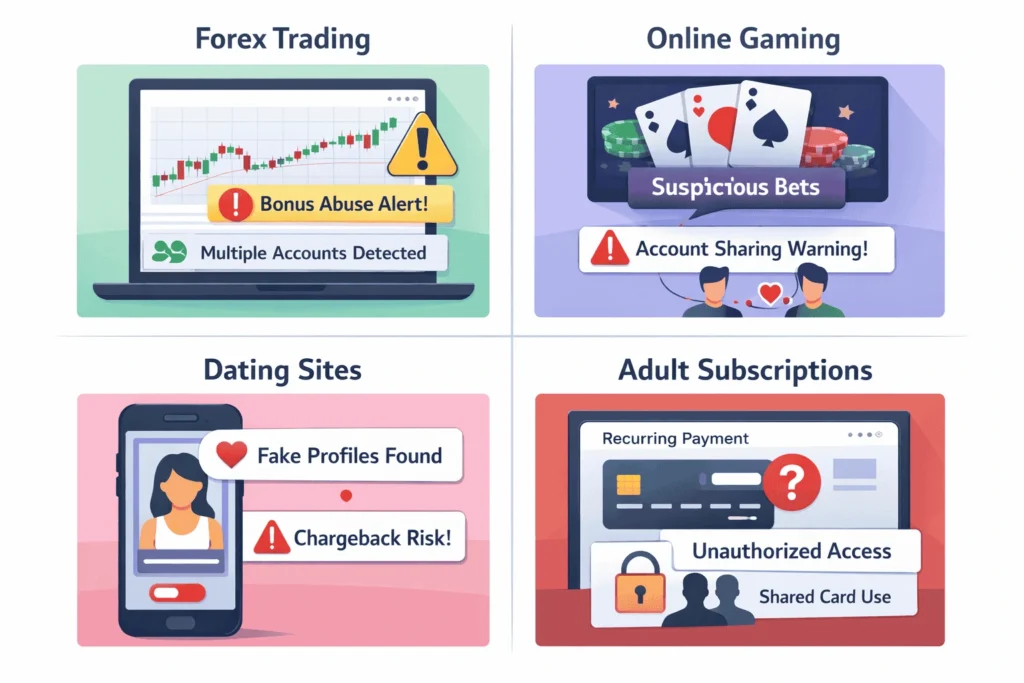
Forex & Trading Platforms
For a forex merchant account, fraud often isn’t obvious. It shows up as:
- Bonus abuse
- Multiple accounts under one user
- Withdrawal disputes
AI looks at trading behavior, deposit patterns, and account history to spot abuse early—before disputes appear.
Gaming & Casino Platforms
For gaming merchant accounts and casino merchant accounts, AI focuses on:
- Multi-account activity
- Coordinated betting behavior
- Suspicious payout timing
This protects both payments and the platform itself.
Adult & Dating Businesses
Fraud in adult and dating businesses usually comes from:
- Subscription disputes
- “Did not authorize” claims
- Shared card usage
AI systems analyze session behavior and usage patterns, helping reduce disputes without blocking real users.
Fraud Detection in Global Payment Processing
When businesses expand internationally, fraud becomes more complex. Different regions behave differently. Issuers respond differently. Chargebacks arrive at different speeds.
In 2026, global payment processing platforms will use AI to:
- Apply country-specific risk logic
- Adjust fraud settings automatically
- Route payments through the most suitable acquiring banks
This allows merchants to grow globally while protecting their high-risk merchant accounts.
Alternative Payment Methods and Fraud
As Alternative Payment Methods grow—wallets, local bank transfers, regional rails—fraud tools must work across all payment types.
Modern systems now:
- Track behavior across cards and APMs
- Detect users switching payment methods to bypass controls
- Create a unified risk profile
For businesses that accept payment online through multiple channels, this visibility is critical.
Fraud Protection Without Hurting Sales
One of the biggest fears merchants have is losing sales because of fraud tools. In 2026, AI helps avoid that by:
- Using soft declines instead of hard blocks
- Asking for extra verification only when needed
- Allowing smart retries instead of immediate rejections
This is especially important for Credit Card Payment Solutions in high-risk sectors, where every declined transaction matters.
What High-Risk Merchants Should Expect in 2026
If you rely on high-risk payment processing, fraud protection should:
- Improve over time
- Adjust to your industry
- Support international growth
- Focus on reducing chargebacks, not just blocking payments
Fraud prevention is no longer a feature. It’s part of your payment strategy.
Why the Right Payment Gateway Matters
Not all gateways are built for high-risk businesses. In 2026, the difference between a basic processor and a true High Risk Merchant Account provider is intelligence.
Platforms like Boxcharge focus on:
- Industry-aware fraud logic
- Smarter transaction routing
- Tools designed specifically for high-risk environments
This helps businesses scale without unnecessary payment disruptions.
Final Thoughts
Fraud detection in 2026 isn’t about stopping bad transactions at all costs. It’s about understanding customer behavior, context, and intent.
For businesses using an international payment gateway, running forex payment processing, or operating gaming, casino, adult, or dating platforms, AI and machine learning are no longer optional—they are essential.
If your business operates in a high-risk space and plans to grow internationally, choosing the right payment infrastructure makes a real difference. A gateway built for high-risk industries can help you scale securely, without adding friction for real customers.