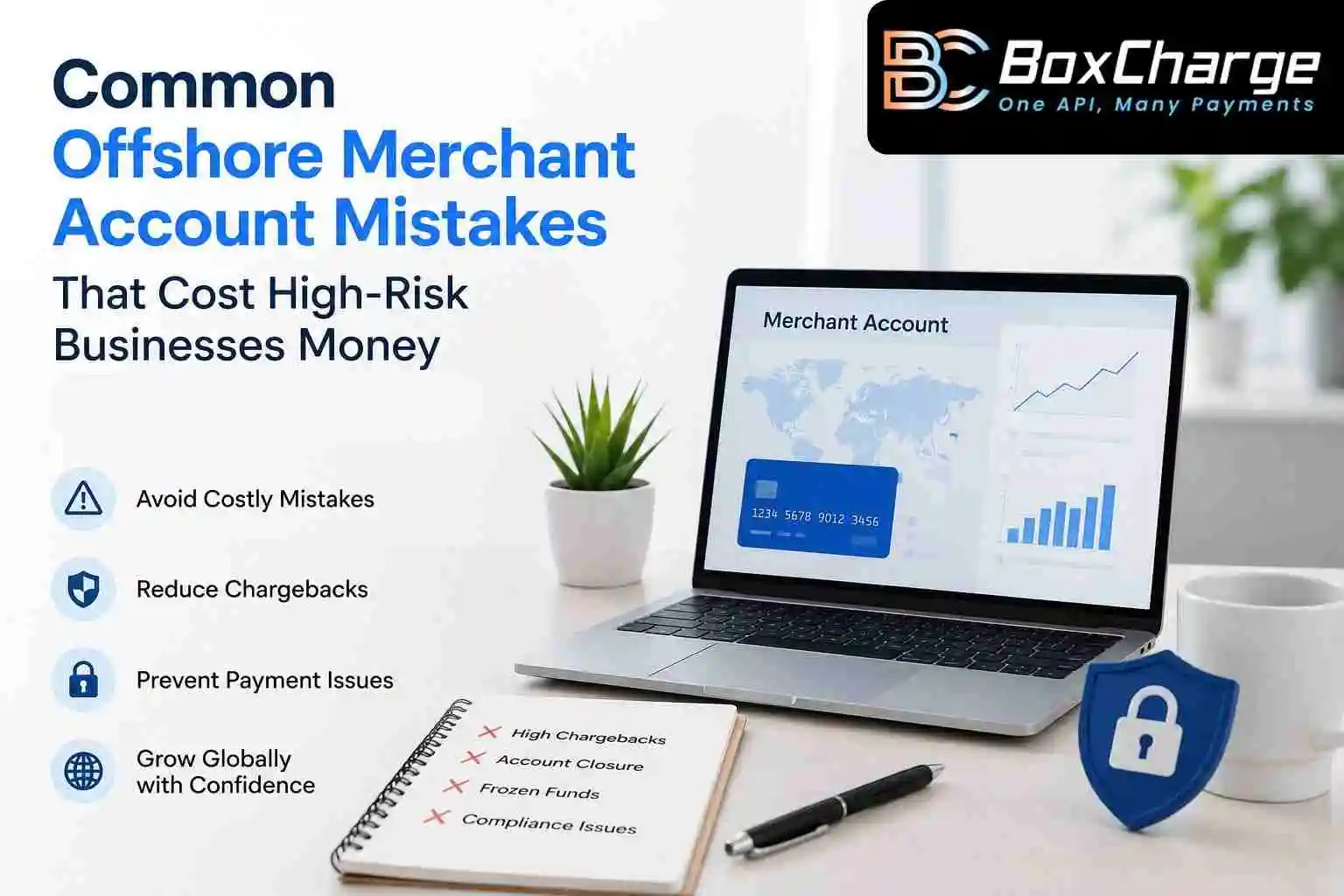
An offshore merchant account can help a high-risk business expand globally, but choosing the wrong payment setup can quickly turn growth into frustration.
Many business owners come looking for an offshore solution after hitting the same roadblock more than once. Their merchant account application gets declined, a payment gateway suddenly stops processing transactions, or an acquiring bank places their funds on hold without much warning. By the time they start searching for alternatives, they've already lost valuable sales and customer trust.
If you operate in industries like travel, forex, gaming, IPTV, digital subscriptions, nutraceuticals, crypto, or other high-risk sectors, these situations probably sound familiar. Banks often apply stricter risk policies to businesses in these industries, making it much harder to find a stable payment partner.
That's why offshore merchant accounts have become an important solution for businesses that need reliable international payment processing, multi-currency support, and access to acquiring banks that understand high-risk industries.
However, approval is only the first step.
The decisions you make before and after opening your merchant account will have a direct impact on your cash flow, payment approvals, customer experience, and long-term growth. Unfortunately, many merchants make avoidable mistakes that lead to delayed settlements, rising chargebacks, larger rolling reserves, or even account termination.
The good news is that these mistakes are preventable.
By understanding how acquiring banks evaluate merchants and working with an experienced payment partner, you can build a payment infrastructure that supports your business instead of creating unnecessary obstacles.
Why High-Risk Businesses Often Struggle With Payments
Unlike traditional businesses, high-risk merchants don't have the luxury of choosing from dozens of payment providers.
A clothing store or local retailer may receive multiple merchant account offers within days. A high-risk business often spends weeks searching for a provider that's willing to understand its business model.
Even after approval, the challenges don't disappear.
Many merchants deal with lower approval rates, stricter compliance reviews, reserve requirements, or payment disruptions that affect daily operations. Imagine spending thousands of dollars on advertising, attracting customers from around the world, and then discovering that legitimate transactions are being declined because your payment setup isn't suited to your business.
When payments stop, everything else slows down.
Marketing campaigns become less effective, customer confidence drops, and cash flow becomes difficult to manage. That's why choosing the right high-risk merchant account is about much more than processing payments. It's about protecting your business and giving it room to grow.
Mistake #1: Choosing a Provider Based Only on Price
Every business wants to reduce costs, so it's understandable that processing fees are one of the first things merchants compare.
The problem is that the cheapest option often becomes the most expensive over time.
Some providers advertise attractive pricing but offer limited acquiring relationships, slow customer support, weak fraud protection, or hidden reserve requirements. These issues rarely appear during onboarding. They usually surface when your business starts growing or when a payment problem needs immediate attention.
Instead of asking which provider has the lowest fees, ask whether they understand your industry.
Can they support international payment processing as your business expands? Do they have relationships with multiple acquiring banks? Will they help you manage chargebacks and fraud? Can they continue supporting your business if transaction volumes increase?
A slightly higher processing fee is often a worthwhile investment if it gives you stability, better approval rates, and a payment partner that understands high-risk businesses.
Mistake #2: Leaving Out Important Information During Underwriting
Some merchants worry that being completely honest during underwriting will reduce their chances of approval.
Ironically, the opposite is usually true.
Acquiring banks know that high-risk businesses come with unique challenges. They're not looking for a "perfect" merchant—they're looking for transparency.
Problems usually begin when merchants understate their processing volume, fail to disclose recurring billing, or describe a business model that doesn't match their website.
These differences almost always come to light later.
Banks regularly review merchant accounts, and when they discover information that wasn't disclosed during onboarding, they may request additional documentation, increase reserve requirements, delay settlements, or suspend processing while they reassess the account.
Being open about how your business operates helps build trust from the beginning and reduces the risk of unexpected issues later.
Mistake #3: Waiting Until Chargebacks Become a Serious Problem
Chargebacks are part of online business, but they should never become something you simply accept.
Banks pay close attention to dispute ratios because they reflect the overall risk of a merchant. If chargebacks continue to rise, your offshore merchant account may become subject to additional reviews or stricter processing conditions.
The encouraging news is that many disputes are preventable.
Customers often file chargebacks because they don't recognise a billing descriptor, can't easily contact customer support, or misunderstand a subscription renewal. Others result from fraudulent transactions that could have been stopped before payment was approved.
Simple improvements such as clearer billing descriptions, responsive customer service, strong refund policies, and modern fraud prevention tools can dramatically reduce disputes.
Features like 3D Secure, AVS verification, device fingerprinting, and AI-powered fraud detection don't just protect individual transactions—they help protect your relationship with acquiring banks as well.
Merchants who actively monitor chargebacks are far more likely to maintain stable payment processing than those who only react after a problem has already developed.
Mistake #4: Choosing a Payment Provider That Doesn't Understand High-Risk Businesses
Not every payment provider is equipped to support high-risk merchants. Some companies advertise offshore merchant accounts, but their experience is limited to standard retail businesses. That difference becomes obvious when your business starts facing real payment challenges.
For example, if your chargeback ratio increases for a short period or you decide to expand into a new market, an inexperienced provider may struggle to find the right acquiring bank or offer practical guidance. Instead of helping you resolve the issue, they simply pass along the bank's decision.
An experienced provider takes a different approach. They understand how different industries operate, know which acquiring banks are comfortable with specific business models, and help merchants prepare the documentation needed for a smoother approval process.
When evaluating a payment partner, don't just ask about pricing. Ask about their experience with businesses like yours. A high-risk merchant accounts provider can save you months of unnecessary delays and help you avoid costly payment disruptions.
Mistake #5: Treating Compliance as a One-Time Task
Many merchants assume that once their merchant account is approved, the paperwork is over.
Unfortunately, that's not how payment processing works.
Banks continue to monitor merchant accounts throughout the relationship. They may review your website, refund policy, terms and conditions, product descriptions, and customer support channels to ensure everything remains compliant.
Even small issues can create unnecessary delays. An outdated refund policy, missing contact details, broken legal pages, or misleading product information can trigger additional reviews. While these problems may seem minor, they can slow down settlements or lead to requests for additional documentation.
The best approach is to treat compliance as part of your regular business operations. Review your website periodically, keep legal pages updated, and inform your payment provider if your business model changes.
A transparent business is much easier for banks to support over the long term.
Mistake #6: Depending on Just One Acquiring Bank
Many merchants celebrate once they finally secure an offshore merchant account, and understandably so. After weeks of applications and underwriting, it's a significant achievement.
But relying on a single acquiring bank can become a risk later.
Banks regularly update their policies based on market conditions, regulations, or internal risk strategies. Sometimes they stop supporting certain industries altogether. It doesn't necessarily reflect your business performance, but it can still affect your ability to process payments.
If you only have one acquiring relationship, you're left scrambling to find a replacement while trying to keep your business running.
That's why growing businesses should think beyond their first approval.
Working with a payment partner that has relationships with multiple acquiring banks gives you greater flexibility. If one banking partner changes direction, your payment operations can continue with minimal disruption.
A backup plan may never be needed, but when it is, it can save your business from unnecessary downtime.
Mistake #7: Underestimating Fraud Prevention
Fraud doesn't just cost money—it affects your reputation with banks.
As fraud increases, so do chargebacks, reserve requirements, and the level of scrutiny applied to your account. Over time, this can make payment processing more expensive and less reliable.
Modern fraud is also much more sophisticated than it was a few years ago. Fraudsters use stolen identities, automated bots, compromised cards, and other techniques that basic fraud filters often fail to detect.
A reliable offshore payment gateway should include advanced fraud prevention tools that analyse transactions before they're approved. Features such as behavioural analysis, velocity checks, IP monitoring, device fingerprinting, and AI-powered risk scoring help identify suspicious activity while allowing genuine customers to complete their purchases without unnecessary friction.
Protecting your business from fraud isn't just about reducing losses. It's about maintaining a healthy relationship with acquiring banks and ensuring your customers enjoy a secure checkout experience.
Mistake #8: Choosing a Provider That Can't Grow With Your Business
The payment solution that works today may not be enough a year from now.
As your business expands into new countries, processes higher transaction volumes, or adds new products and services, your payment requirements will change.
You may need additional currencies, regional acquiring, smarter payment routing, or higher processing limits. If your provider can't support those changes, you'll eventually need to migrate to another platform—a process that often involves fresh underwriting, new integrations, compliance reviews, and potential payment interruptions.
Planning for growth from the beginning saves time and reduces risk.
Choose a provider that offers scalable global merchant services, understands cross-border payments, and can continue supporting your business as it enters new markets.
Choosing the Right Payment Partner Makes All the Difference
The challenges of high-risk payment processing aren't going away, but they become much easier to manage when you have the right partner by your side.
A reliable provider does more than approve your application. They help you navigate underwriting, connect you with suitable acquiring banks, improve payment approval rates, and support your business as it grows internationally.
Instead of constantly reacting to payment problems, you can focus on attracting customers, increasing sales, and expanding into new markets with confidence.
Ready to Build a More Reliable Payment Infrastructure?
If your business has been declined by traditional banks, is struggling with unstable payment processing, or is planning to expand internationally, choosing the right payment partner is one of the smartest investments you can make.
BoxCharge helps businesses secure dependable offshore merchant accounts, high-risk merchant accounts, international payment processing, and offshore payment gateways backed by experienced acquiring partners and tailored payment solutions.
Whether you're launching a new venture or replacing an existing provider, our team works with you to build a payment infrastructure that's designed for long-term growth—not short-term fixes.
Talk to BoxCharge today and discover a payment solution built around your business goals.
Final Thoughts
An offshore merchant account can open the door to international growth, but success depends on more than simply getting approved.
Choosing a provider based only on price, overlooking compliance, ignoring chargebacks, or relying on a single acquiring bank can create problems that affect revenue, customer trust, and long-term stability.
The businesses that succeed are the ones that treat payment processing as a strategic part of their growth plan rather than an afterthought.
By working with an experienced payment partner, staying transparent during underwriting, and investing in the right fraud prevention and compliance practices, you can build a payment system that supports your business today and scales with it tomorrow.
When your payment infrastructure is reliable, you spend less time solving payment issues and more time doing what every business owner wants—serving customers, increasing sales, and growing with confidence.
Frequently Asked Questions
Q: Can any business apply for an offshore merchant account?
Yes. Approval depends on factors such as your industry, processing history, compliance, website quality, and the acquiring bank's underwriting requirements.
Q: How long does it take to get approved?
Approval timelines vary, but businesses that provide complete and accurate documentation usually experience a faster underwriting process.
Q: Are offshore merchant accounts only for high-risk businesses?
No. Many international businesses use them to support multi-currency payments, cross-border expansion, and access to global acquiring networks.
Q: Can I switch from my current payment provider?
Absolutely. Many businesses move to a new provider when they need better approval rates, improved international coverage, stronger fraud prevention, or a more scalable payment solution.