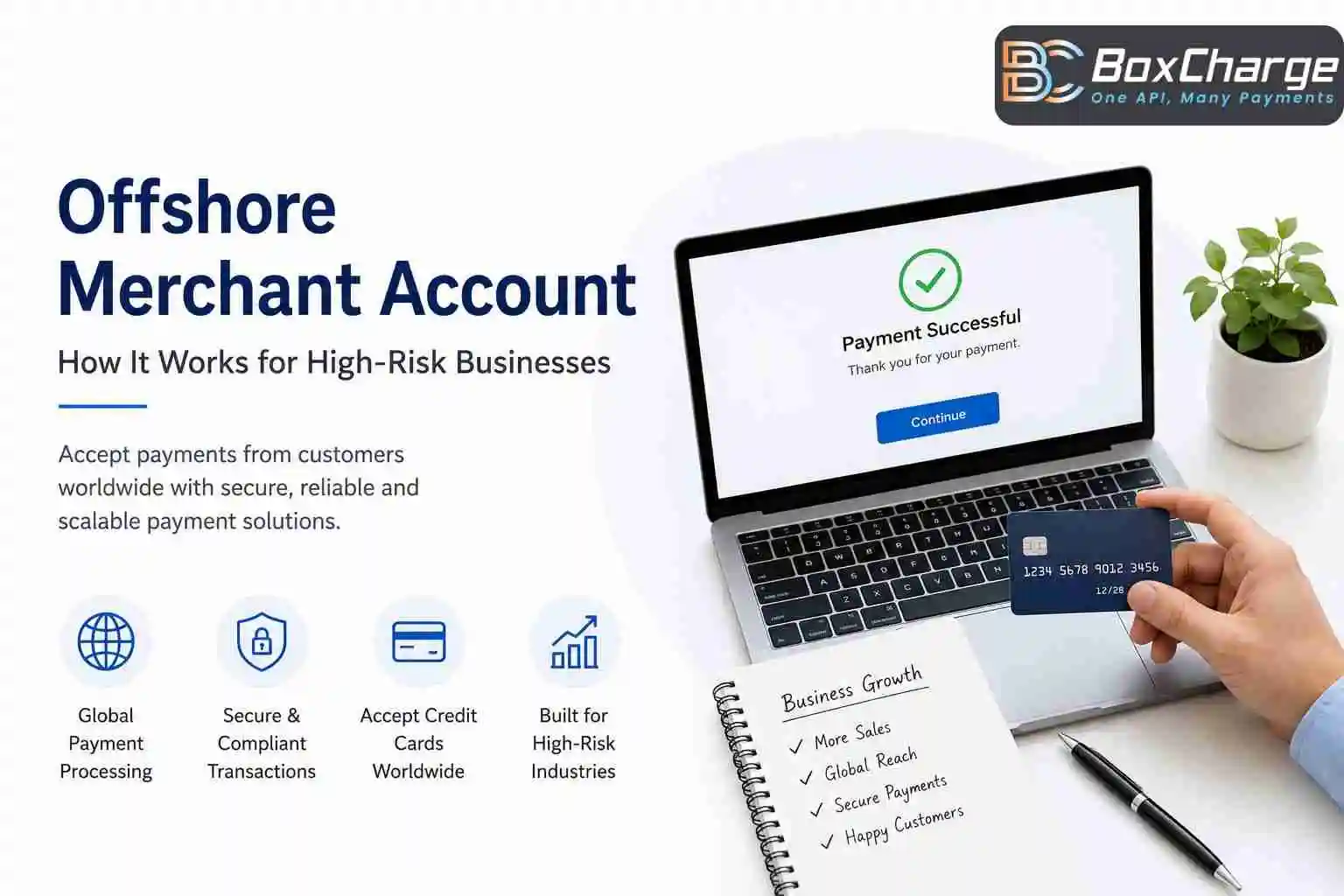
An Offshore Merchant Account can be the difference between growing your business with confidence and constantly worrying about payment interruptions. If you've ever had a merchant account application rejected, experienced delayed payouts, watched your rolling reserve increase without warning, or struggled to accept international card payments, you're not alone. These challenges affect thousands of legitimate businesses every year, particularly those operating in industries that banks classify as high risk.
The frustrating part is that most merchants don't realise there's a problem until business starts growing. More customers begin placing orders, overseas sales increase, and recurring subscriptions become a significant source of revenue. Instead of rewarding that growth, many traditional payment providers become more cautious. Processing limits change, compliance reviews become frequent, and settlements take longer to arrive.
For a business trying to scale, payment instability creates a ripple effect. Marketing campaigns continue to spend money while failed transactions reduce conversions. Inventory still needs to be purchased. Employees and suppliers still expect to be paid on time. Every payment delay affects cash flow, making it harder to reinvest in the business.
This is why more businesses are turning to an Offshore Merchant Account. Rather than relying on payment providers designed primarily for domestic, low-risk merchants, offshore acquiring gives businesses access to financial institutions that understand Global Payment Processing, Cross-Border Payments, recurring billing, and industries with more complex risk profiles.
If your goal is to accept credit card payments from customers worldwide without constantly worrying about payment restrictions, understanding how an offshore merchant account works is an excellent place to start.
Why Businesses Start Looking for an Offshore Merchant Account
Very few business owners wake up one morning and decide they need an offshore merchant account.
The search usually begins after something goes wrong.
A merchant account application is declined without a clear explanation.
International customers complain that their cards aren't being accepted.
Settlement periods suddenly become longer.
Monthly sales increase, but instead of celebrating growth, another compliance review lands in your inbox.
For many merchants, these situations feel confusing because nothing about their business has changed. They're selling legitimate products, serving genuine customers, and following industry regulations.
The problem often lies elsewhere.
Traditional payment providers are built around standard risk models. Businesses processing recurring payments, serving international customers, operating in regulated industries, or handling larger transaction values are often assessed differently from traditional retailers. As transaction volumes increase, payment providers may become more cautious, introducing additional reviews or stricter processing conditions.
That's where an Offshore Merchant Account becomes a practical solution.
Instead of forcing your business into a payment model that wasn't designed for it, offshore acquiring connects you with banks experienced in supporting international merchants and businesses operating in higher-risk industries. That often leads to greater payment stability, improved processing flexibility, and infrastructure capable of supporting long-term growth.
What Is an Offshore Merchant Account?
An Offshore Merchant Account is a business merchant account provided by an acquiring bank located outside the country where your company is registered.
While the term "offshore" sometimes creates confusion, the concept is actually quite straightforward.
It gives businesses access to payment processing solutions that are often better suited to international commerce and industries requiring more flexible underwriting.
Your customers won't notice any difference during checkout.
They'll browse your website, choose a product or service, enter their card details, and complete their purchase exactly as they always have.
Behind the scenes, however, the payment follows a different acquiring route.
Instead of being processed solely through a domestic acquiring bank, the transaction is handled by an offshore acquiring partner with experience supporting businesses that process international payments, recurring subscriptions, digital services, or higher-risk transactions.
That doesn't mean offshore providers ignore regulations.
Reputable providers still carry out detailed compliance checks, identity verification, fraud monitoring, and ongoing risk assessments. The difference is that they understand business models that traditional payment providers often struggle to support.
For many growing companies, that's exactly what makes an offshore merchant account valuable.
How an Offshore Merchant Account Works
Although payment processing happens within seconds, several important steps take place before a transaction is completed.
1. Your Customer Completes the Checkout
The process starts when a customer chooses to buy from your website.
After entering their payment details, the information is encrypted to protect sensitive cardholder data before leaving your checkout page.
A secure and reliable checkout experience is essential because even minor payment issues can cause customers to abandon their purchase.
2. The Payment Gateway Transfers the Transaction
Once payment details are submitted, your Payment Gateway securely sends the transaction to the acquiring bank connected to your offshore merchant account.
Think of the payment gateway as the bridge between your website and the banking network.
It securely transfers payment information while performing initial fraud and security checks to protect both the customer and your business.
Modern payment gateways also support features such as multi-currency payments, recurring billing, tokenisation, and advanced fraud prevention, making international payment processing much smoother.
3. The Acquiring Bank Reviews the Payment
The acquiring bank receives the transaction request and prepares it for authorisation.
This is where offshore acquiring differs from many traditional payment providers.
Because these banks regularly work with international businesses and higher-risk industries, they're generally more familiar with subscription billing, cross-border transactions, digital services, and complex payment models.
Rather than making decisions based purely on industry labels, experienced acquiring banks evaluate the overall strength of the business, including its compliance standards, payment history, and operating model.
4. The Customer's Bank Makes the Decision
The payment request is then sent to the customer's issuing bank.
Within seconds, the bank checks whether sufficient funds are available, reviews fraud detection systems, confirms card details, and decides whether to approve or decline the payment.
If everything checks out, the approval travels back through the payment network, allowing the purchase to be completed almost instantly.
5. Funds Are Settled
Once approved, the transaction enters the settlement process.
Funds move from the issuing bank to the acquiring bank before being deposited into your merchant account according to the agreed settlement schedule.
Reliable settlements are just as important as successful payment approvals. Businesses depend on predictable cash flow to pay suppliers, invest in advertising, manage payroll, and continue expanding into new markets.
Why High-Risk Businesses Often Struggle to Get Approved
One of the biggest misconceptions about payment processing is that a "high-risk" business is somehow an unsafe or illegitimate business.
In reality, that's rarely the case.
Banks use the term high risk to describe the likelihood of financial exposure, not the quality of the business itself. A company can have excellent customer service, strong compliance standards, and consistent revenue while still being classified as high risk because of the industry it operates in or the way it processes payments.
For example, a subscription-based SaaS company may experience chargebacks months after the original purchase. A travel business often accepts payments long before the customer actually travels. Nutraceutical brands face different regulations in different countries. Digital services and online gaming businesses frequently process payments from customers around the world.
None of these businesses is doing anything wrong.
They're simply operating in industries that require payment providers with a greater understanding of international commerce and risk management.
Unfortunately, many traditional merchant account providers prefer predictable, low-risk merchants. As a result, growing businesses often encounter:
Rejected merchant account applications.
Higher rolling reserves.
Unexpected account reviews.
Lower processing limits.
Delayed settlements.
Higher payment decline rates.
Difficulty accepting international payments.
For a business that's investing heavily in growth, these issues can quickly become expensive.
Imagine spending thousands on digital advertising only to discover that customers can't complete their purchases because transactions are being declined. Every failed payment represents lost revenue, wasted marketing spend, and a customer who may never return.
This is why many businesses eventually move towards a High-Risk International Merchant Account. Instead of constantly adapting their business to satisfy a payment provider, they choose a payment infrastructure that's already designed to support international growth.
The Biggest Benefits of an Offshore Merchant Account
Choosing the right payment partner isn't simply about processing transactions.
It's about creating a payment system that supports your business as it grows.
1: Greater Approval Opportunities
Businesses operating in higher-risk industries often find that offshore acquiring banks are better equipped to evaluate their business model rather than making decisions based solely on industry classifications.
While approval is never guaranteed, merchants usually have access to acquiring partners that understand their sector far better than traditional providers.
2: Reliable Global Payment Processing
Selling internationally shouldn't mean constantly worrying about payment acceptance.
An offshore merchant account helps businesses process payments across multiple markets while supporting different currencies, international customers, and cross-border transactions.
For businesses planning global expansion, this flexibility becomes increasingly valuable.
3: Support for Multi-Currency Payments
Today's customers expect to shop in their own currency.
Offering multi-currency payment processing improves the checkout experience, builds trust, and can help reduce abandoned carts caused by unexpected currency conversions.
For international ecommerce businesses, this creates a smoother buying journey from start to finish.
4: Improved Cash Flow
Healthy cash flow keeps every business moving.
When settlements arrive consistently, businesses can confidently invest in marketing, inventory, recruitment, software, and expansion plans.
Working with experienced payment providers helps reduce unnecessary settlement delays that can disrupt daily operations.
5: Scalable Payment Infrastructure
Many businesses eventually outgrow their first payment provider.
An offshore merchant account is designed with long-term growth in mind, making it easier to support increasing transaction volumes, international expansion, recurring billing, and changing customer expectations without repeatedly changing payment providers.
How to Choose the Right Offshore Merchant Account Provider
Not every offshore provider offers the same level of service.
Choosing purely on price often becomes an expensive mistake later.
Before selecting a provider, ask questions such as:
Do they specialise in High-Risk Merchant Accounts?
Can they support international growth?
Do they offer a secure Payment Gateway?
Can they process multiple currencies?
Are settlement schedules transparent?
What fraud prevention tools are included?
Will dedicated account management be available?
Can they support additional services such as Cross-Border Payment Gateway, Global Payment Processing, or IBAN Settlement if your business expands?
The right provider should become part of your growth strategy—not another obstacle to overcome.
Frequently Asked Questions
Q: Is an Offshore Merchant Account legal?
Yes. Offshore merchant accounts are legitimate payment solutions used by businesses around the world. Reputable providers operate within banking regulations, compliance requirements, and international payment security standards.
Q: Who should consider an Offshore Merchant Account?
Businesses processing international payments, recurring subscriptions, digital services, travel bookings, SaaS products, nutraceuticals, gaming services, or operating in other higher-risk industries often benefit from offshore acquiring solutions.
Q: Can an Offshore Merchant Account reduce payment declines?
While no provider can eliminate payment declines, experienced acquiring banks, intelligent payment routing, and modern payment gateways can help improve overall payment approval rates and create a smoother checkout experience.
Q: Is an Offshore Merchant Account only for large companies?
No.
Many startups, growing ecommerce brands, online service providers, and medium-sized businesses choose offshore acquiring because it better supports international growth than many traditional payment providers.
Final Thoughts
Growing a business is challenging enough without worrying about whether your payment provider will support your next stage of expansion.
As customer expectations continue to evolve and international commerce becomes more accessible, businesses need payment solutions that are built for global growth rather than limited by domestic processing rules.
An Offshore Merchant Account isn't about replacing one payment provider with another.
It's about creating a stronger payment foundation that supports international sales, recurring billing, multi-currency payments, and long-term business growth without unnecessary interruptions.
For many high-risk businesses, it's the difference between constantly solving payment problems and confidently focusing on customers, products, and expansion.
Ready to Build a Stronger Payment Infrastructure?
Whether you're expanding into new markets, replacing an unreliable payment provider, or searching for a dependable High-Risk Merchant Account, Offshore Merchant Account, or Global Payment Processing solution, choosing the right payment partner can make all the difference.
BoxCharge helps businesses access reliable payment solutions designed for international growth, cross-border commerce, and high-risk industries. From secure payment gateways to multi-currency processing and dedicated merchant support, our goal is to help your business accept payments with confidence while preparing for long-term success.
If your current payment provider is slowing your growth, it may be time to explore a payment solution that's built to grow with your business.