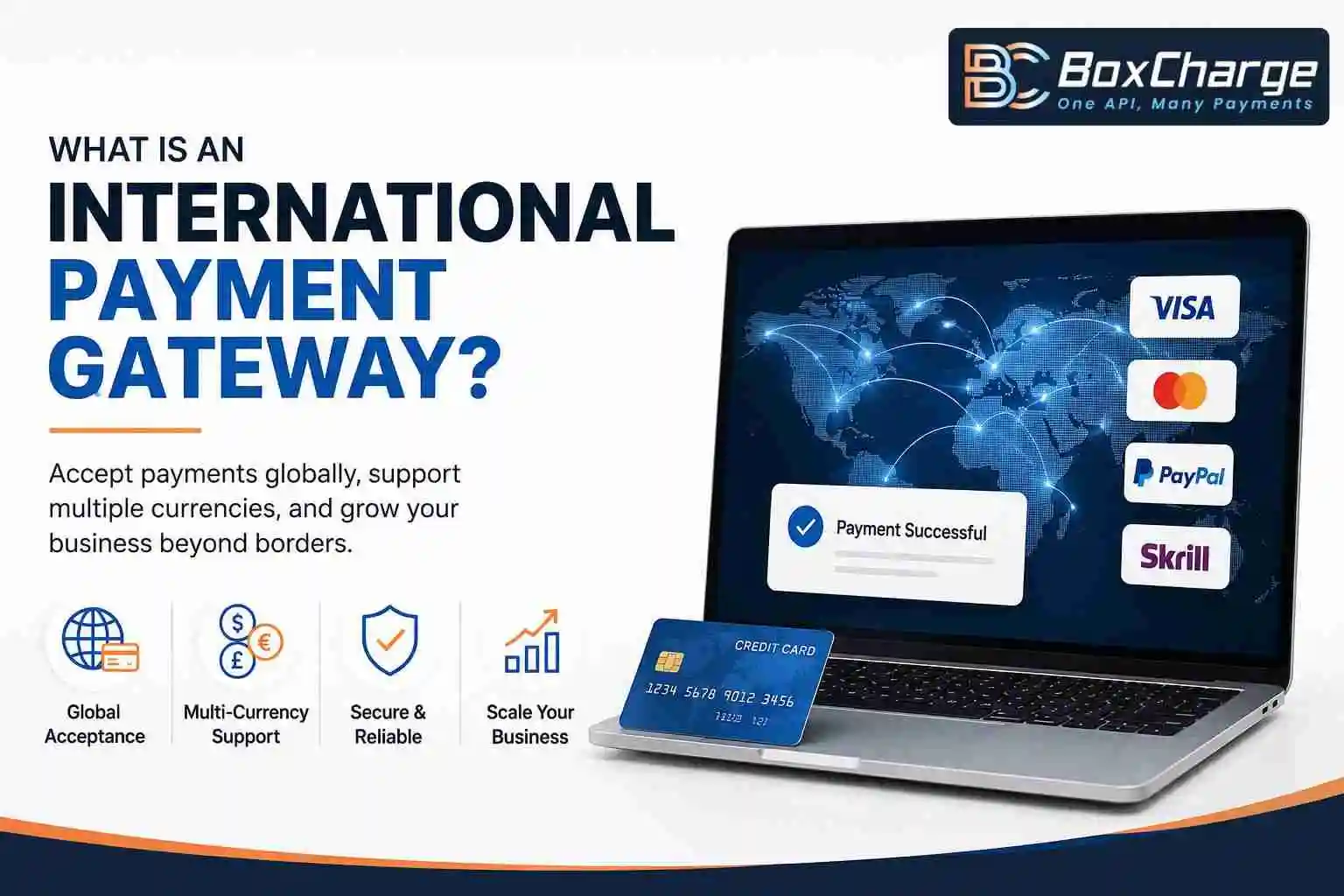
An international payment gateway is one of the most important tools for businesses selling products or services across borders. Whether you're running an eCommerce store, SaaS platform, online marketplace, forex brokerage, gaming business, or another high-risk operation, your ability to accept payments from customers worldwide directly impacts revenue and customer experience.
Unfortunately, many businesses discover the importance of an international payment gateway only after they begin expanding globally. Payments fail, foreign cards are declined, settlements take longer than expected, chargebacks increase, and traditional payment providers struggle to support cross-border transactions. For businesses operating in high-risk industries, these challenges become even more severe.
A modern international payment gateway is designed to solve these problems by securely connecting merchants with acquiring banks, payment networks, alternative payment methods, and multiple currencies through a single platform. It helps businesses improve authorization rates, reduce payment friction, and provide customers with a seamless checkout experience regardless of where they are located.
In this guide, you'll learn what an international payment gateway is, how it works, why it's essential for global businesses, and what features you should look for when choosing the right payment partner.
What Is an International Payment Gateway?
An international payment gateway is a secure payment solution that enables businesses to accept online payments from customers in multiple countries and currencies. It authorizes payment transactions, encrypts sensitive payment information, communicates with acquiring and issuing banks, and facilitates secure payment processing across global markets.
Unlike a domestic payment gateway that focuses on a single region, an international payment gateway is built to support cross-border commerce. It allows merchants to accept payments through international credit and debit cards, digital wallets, bank transfers, and alternative payment methods while complying with global payment security standards.
For businesses expanding internationally, an international payment gateway is no longer optional—it's the infrastructure that keeps global revenue flowing.
How Does an International Payment Gateway Work?
Every online payment follows a secure process behind the scenes.
When a customer completes a purchase:
The customer enters their payment details.
The payment gateway encrypts the transaction data.
The acquiring bank receives the authorization request.
Card networks communicate with the issuing bank.
The issuing bank approves or declines the payment.
The gateway confirms the transaction in seconds.
Funds are settled into the merchant account according to the agreed payout schedule.
During this process, advanced fraud detection, encryption, tokenization, and risk monitoring work continuously to protect both the merchant and the customer.
Why Businesses Need an International Payment Gateway
Consumer expectations have changed dramatically.
Customers now expect to pay using:
Their local currency
Their preferred payment method
International credit and debit cards
Mobile wallets
Regional payment solutions
If your checkout cannot support these preferences, customers are far more likely to abandon their purchase.
An international payment gateway removes these barriers by creating a localized payment experience without requiring merchants to build separate payment systems for every country.
The Biggest Challenges High-Risk Merchants Face
Expanding internationally creates opportunities—but it also exposes weaknesses in traditional payment infrastructure.
For high-risk businesses, those weaknesses often translate into lost revenue.
Declined Merchant Account Applications
Businesses operating in industries such as online gaming, forex, CBD, nutraceuticals, IPTV, adult entertainment, subscription services, and digital products frequently struggle to secure payment processing.
Many traditional providers automatically reject applications simply because of the industry's risk profile rather than evaluating the business itself.
Weeks of paperwork often end with a simple rejection.
Unexpected Payment Disruptions
One of the biggest frustrations for high-risk merchants is uncertainty.
Everything appears to work normally until:
Transactions begin failing
Payment volumes are restricted
Additional reviews are requested
Settlement delays increase
Accounts are suspended
For businesses processing international payments every day, even a short interruption can result in significant revenue loss and dissatisfied customers.
Cross-Border Payment Complexity
Selling internationally means dealing with:
Multiple currencies
Foreign acquiring banks
Regional payment preferences
Currency conversion
Tax regulations
Compliance requirements
Managing separate providers for every region quickly becomes expensive and difficult to scale.
Rising Chargebacks
International transactions naturally involve greater payment risk.
Chargebacks may occur because of:
Currency confusion
Fraudulent transactions
Friendly fraud
Delivery disputes
Subscription misunderstandings
High chargeback ratios often lead to higher processing fees, rolling reserves, or account reviews.
Without effective chargeback management, profitability quickly declines.
Higher Fraud Exposure
Global payments attract sophisticated fraud attempts.
Cybercriminals target businesses accepting international transactions through:
Stolen cards
Identity theft
Account takeover
Bot attacks
Synthetic identities
Businesses relying on outdated payment infrastructure struggle to identify these threats before losses occur.
Slow International Settlements
Cash flow matters.
Delayed settlements affect:
Payroll
Marketing budgets
Inventory purchases
Software development
Business expansion
A reliable international payment gateway helps merchants receive settlements faster while maintaining compliance and transaction security.
Why Traditional Payment Gateways Often Fail Global Businesses
Many businesses begin with a domestic payment gateway because it appears easier and less expensive.
However, domestic solutions often lack:
Multi-currency support
Global acquiring relationships
Alternative payment methods
Advanced fraud prevention
Cross-border optimization
High-risk underwriting expertise
As businesses grow internationally, these limitations become increasingly expensive.
The result is lower authorization rates, frustrated customers, and reduced global revenue.
What Makes a Good International Payment Gateway?
Not every provider offering international payments delivers the same level of performance.
The best international payment gateways combine technology, security, flexibility, and global banking relationships into one scalable platform.
Look for a provider that offers:
Multi-currency payment processing
International card acceptance
Alternative payment methods (APMs)
PCI DSS compliance
Tokenization and encryption
Real-time fraud detection
Chargeback management
Global acquiring bank network
High approval rates
Flexible settlement options
Easy API integration
Dedicated account support
For high-risk merchants, these capabilities are essential—not optional.
Benefits of Using an International Payment Gateway
The right international payment gateway does more than process payments. It helps businesses improve customer experience, increase payment success rates, and support long-term global growth.
Accept Payments from Customers Worldwide
An international payment gateway enables businesses to accept payments from customers across multiple countries through a single platform. Whether your customers pay by credit card, debit card, digital wallet, bank transfer, or local payment method, they enjoy a seamless checkout experience that builds trust and encourages repeat purchases.
Increase Payment Approval Rates
Cross-border transactions often fail because of currency mismatches, unsupported payment methods, or limited acquiring relationships. A global payment gateway routes transactions more efficiently, helping merchants achieve higher authorization rates and reduce lost sales.
Support Multiple Currencies
Customers are more likely to complete a purchase when they can pay in their local currency. Multi-currency payment processing improves the buying experience while reducing conversion friction and unexpected exchange fees.
Strengthen Payment Security
International payment gateways include advanced security features such as PCI DSS compliance, tokenization, encryption, 3D Secure authentication, and AI-powered fraud detection. These technologies help protect customer data while minimizing fraudulent transactions.
Simplify Global Expansion
Instead of managing separate payment providers for each market, businesses can use a single platform to support multiple countries, currencies, and payment methods. This reduces operational complexity and makes expansion faster and more cost-effective.
How to Choose the Right International Payment Gateway
Selecting the right provider is one of the most important decisions for any growing business. While pricing is important, reliability, security, and scalability have a much greater impact on long-term success.
When evaluating an international payment gateway, consider the following:
Global Payment Coverage
Choose a provider that supports the countries and regions where your customers are located. A broad acquiring network improves payment acceptance and reduces transaction failures.
Multi-Currency Capabilities
Your payment gateway should support major global currencies and allow customers to pay in their preferred currency while simplifying settlements for your business.
High-Risk Industry Expertise
If your business operates in industries such as forex, gaming, travel, CBD, IPTV, subscription services, or digital products, partner with a provider that specializes in high-risk payment processing. Industry expertise leads to more stable merchant accounts and fewer unexpected disruptions.
Fraud Prevention and Chargeback Management
Look for built-in tools that monitor transactions in real time, identify suspicious activity, and help manage chargebacks before they affect your merchant account.
Easy Integration
A modern payment gateway should integrate easily with your website, mobile application, shopping cart, or custom platform through secure APIs and plugins.
Transparent Pricing
Understand all processing fees, settlement schedules, reserve requirements, and additional costs before signing an agreement. Transparent pricing helps businesses plan for growth without unexpected expenses.
Common Mistakes Businesses Make When Expanding Globally
Many businesses invest heavily in international marketing while overlooking the importance of payment infrastructure.
Some of the most common mistakes include:
Relying on a Domestic Payment Gateway
Domestic solutions often lack the acquiring relationships and payment methods required for international transactions, leading to lower approval rates and higher customer abandonment.
Offering Limited Payment Options
Customers expect flexible payment choices. Restricting them to one or two payment methods can reduce conversions, especially in international markets where local payment preferences vary.
Ignoring Compliance Requirements
Expanding into new countries requires compliance with payment regulations, AML requirements, KYC procedures, and data security standards. Failing to meet these obligations can result in fines, payment restrictions, or account termination.
Choosing Price Over Performance
The cheapest payment gateway isn't always the best option. Poor authorization rates, delayed settlements, and limited support often cost businesses far more than slightly higher processing fees.
Depending on a Single Payment Provider
Relying on one acquiring bank or gateway creates unnecessary risk. Businesses with diversified payment infrastructure are better prepared to handle unexpected disruptions and maintain business continuity.
Frequently Asked Questions
Q: What is an international payment gateway?
An international payment gateway is a secure payment solution that enables businesses to accept online payments from customers in multiple countries and currencies. It supports cross-border transactions while ensuring payment security, compliance, and reliable transaction processing.
Q: How does an international payment gateway work?
An international payment gateway securely encrypts payment information, communicates with acquiring and issuing banks, authorizes transactions, and processes payments through global card networks and alternative payment methods.
Q: Why do businesses need an international payment gateway?
Businesses need an international payment gateway to accept global payments, support multiple currencies, improve payment approval rates, reduce checkout friction, and deliver a seamless customer experience across international markets.
Q: Can high-risk businesses use an international payment gateway?
Yes. Many providers offer international payment gateways specifically designed for high-risk industries such as forex, gaming, travel, IPTV, SaaS, CBD, adult businesses, and subscription services. These solutions include specialized underwriting, fraud prevention, and chargeback management to support long-term payment stability.
Q: What features should an international payment gateway include?
A reliable international payment gateway should offer multi-currency payment processing, global acquiring support, fraud detection, PCI DSS compliance, alternative payment methods, chargeback management, secure API integration, and flexible settlement options.
Grow Globally with BoxCharge's International Payment Solutions
Expanding into international markets should create new opportunities—not new payment challenges.
If you're struggling with payment declines, limited global coverage, account instability, or cross-border transaction issues, it's time to upgrade your payment infrastructure.
BoxCharge provides secure international payment gateway solutions designed for businesses operating across global markets. From multi-currency payment processing and global merchant services to high-risk merchant accounts, fraud prevention, and cross-border payment support, our solutions help businesses accept payments with confidence.
Whether you operate an eCommerce store, SaaS platform, forex brokerage, gaming business, travel company, or another high-risk enterprise, BoxCharge delivers scalable payment infrastructure built for international growth.
Ready to simplify global payments?
Contact BoxCharge today to discover how our international payment gateway solutions can help your business increase payment acceptance, reduce risk, and expand into new markets with confidence.