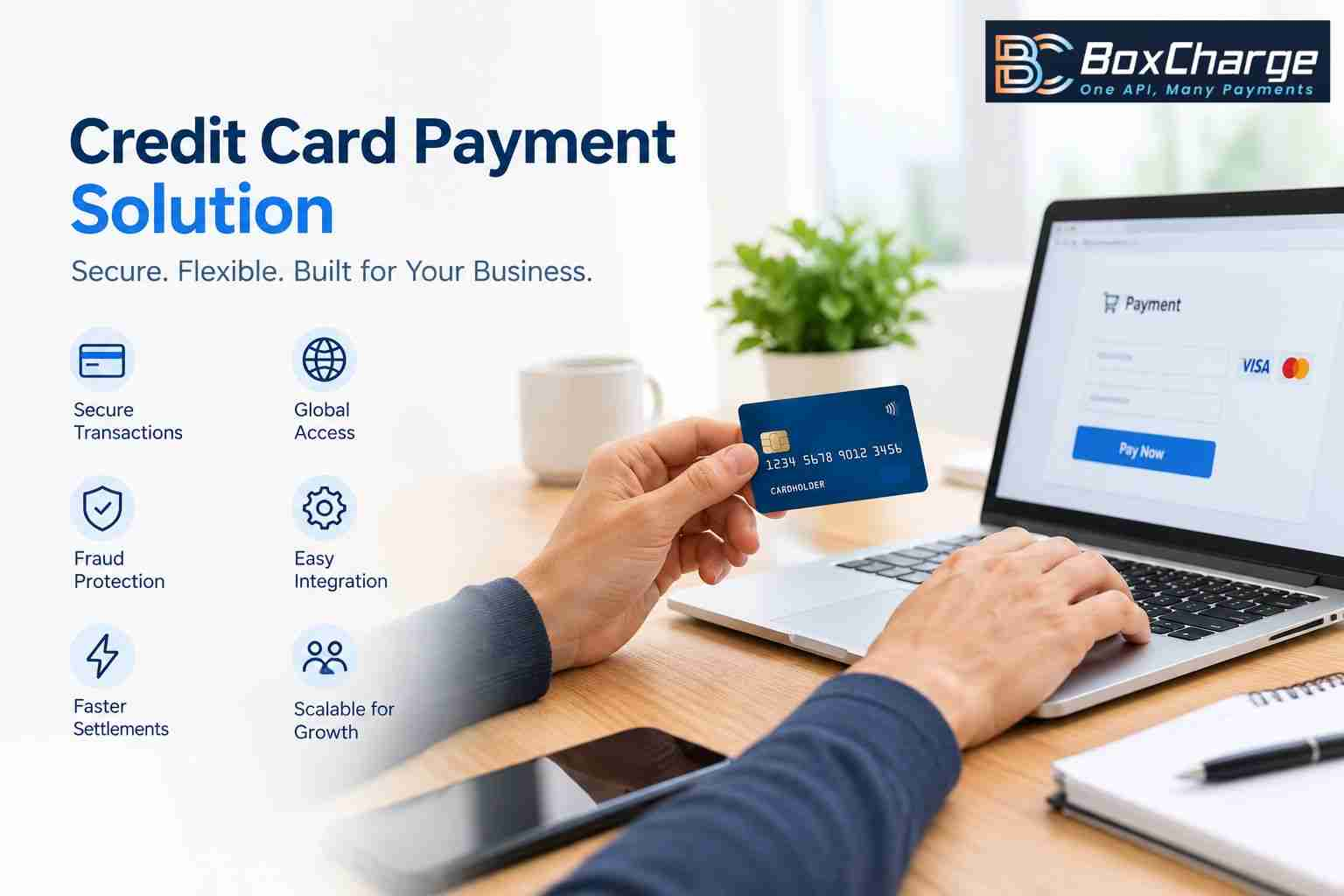
A credit card payment solution is no longer just a way to take card payments at checkout. For online businesses, international sellers, subscription companies, and high-risk merchants, it has become part of the wider payment infrastructure that determines how reliably revenue is collected, how quickly funds are settled, and how effectively fraud and chargebacks are managed.
Choosing the right solution means looking beyond transaction fees. A business needs to consider the merchant account, payment gateway, acquiring bank, transaction routing, fraud controls, settlement currencies, chargeback management, and the type of customers and markets it serves.
This becomes even more important for businesses classified as high risk. A payment setup that works perfectly for a conventional retailer may not be suitable for a business operating in industries such as iGaming, forex, adult services, nutraceuticals, travel, subscriptions, digital services, or other sectors subject to higher underwriting scrutiny.
What Is a Credit Card Payment Solution?
A credit card payment solution is the combination of technology, banking relationships, and payment services that allows a business to accept and process credit and debit card transactions.
For an online transaction, several parties can be involved. The customer enters their card details, the payment gateway securely passes the transaction for authorization, the acquiring bank communicates with the card network and issuing bank, and the approved transaction is eventually settled to the merchant.
The customer may only see a simple “Pay Now” button, but there is considerably more happening behind it.
A modern credit card payment solution may include:
Merchant account services
Payment gateway connectivity
Visa and Mastercard processing
Fraud screening
3D Secure authentication
Chargeback and dispute management
Recurring billing
Multi-currency processing
Tokenization
API integrations
Transaction reporting
Alternative payment methods
Multi-acquirer or payment orchestration capabilities
For growing businesses, having these components work together is often more valuable than simply finding the lowest advertised processing rate.
Why the Payment Solution Matters More as a Business Grows
Payment problems are easy to underestimate when transaction volumes are low.
A merchant may process a few hundred transactions each month without noticing that its gateway has limited routing options, its fraud rules are too aggressive, or its settlement process is not designed for international growth.
Then volume increases.
Suddenly, declined transactions become more expensive. A temporary payment disruption affects hundreds or thousands of customers. Chargebacks increase. Customers abandon checkout when their preferred payment method fails. A processor may also request additional documentation because the merchant's transaction profile has changed.
This is why businesses should assess payment infrastructure before growth creates pressure.
A strong credit card processing solution should be able to support increasing transaction volumes without forcing the merchant to rebuild its entire payment setup.
Why High-Risk Merchants Have a Harder Time
For high-risk merchants, accepting credit cards can be considerably more complicated.
The challenge is not that the card transaction itself works differently. The customer still enters their card information, the transaction is authorized, and funds eventually settle.
The difference is in the underwriting, risk management, monitoring, and acquiring relationship behind the transaction.
High-risk merchants may face:
More demanding underwriting
Higher processing fees
Rolling reserves
Longer settlement periods
Additional compliance checks
Higher chargeback exposure
Limited acquiring options
Sudden account reviews
Restrictions based on geography or business model
Difficulty finding a processor willing to support their industry
A merchant can therefore have a legitimate business and still struggle to find stable credit card processing.
This is particularly frustrating for account holders who have already invested heavily in their website, advertising, inventory, staff, and customer acquisition. Losing payment processing can turn a profitable operation into a cash-flow problem almost overnight.
The Real Problem Isn't Always Approval
Getting approved is only the beginning.
A high-risk merchant may successfully open a merchant account but later discover that the account cannot comfortably support its actual transaction profile.
For example, an online business might initially process £20,000 a month. Six months later, successful marketing campaigns push volume to £150,000.
From the merchant's perspective, this is good news.
From the processor's perspective, the risk profile has changed.
A sudden increase in volume can trigger additional monitoring, especially if transaction patterns, average ticket size, refund levels, geographic distribution, or chargeback rates also change.
This is why merchants should ask a prospective provider how it handles scaling, transaction spikes, reserves, chargebacks, and account reviews before signing an agreement.
The cheapest payment solution at the beginning is not necessarily the most cost-effective solution over the life of the business.
What Should Businesses Look for in a Credit Card Payment Solution?
1. A Merchant Account That Fits the Business
A payment gateway alone does not solve the underwriting problem.
The merchant account needs to be suitable for the business model, expected processing volume, customer locations, transaction types, and risk profile.
High-risk merchants should be particularly careful about applying under an inaccurate business description or using a merchant account that was not approved for their actual activities.
Transparency during onboarding is important because mismatches can create problems later.
2. Reliable Payment Gateway Integration
The gateway is the technology layer connecting the checkout experience with the payment processing environment.
For e-commerce businesses, the gateway should integrate smoothly with the existing website, shopping cart, mobile application, CRM, or billing platform.
API access can also be important for businesses that need more control over payment flows and transaction data.
The objective is simple: make payment processing reliable without creating unnecessary friction for customers.
3. Strong Fraud and Risk Controls
Fraud prevention needs to protect the merchant without rejecting too many genuine customers.
A sophisticated credit card payment solution can combine tools such as transaction monitoring, velocity checks, device and location signals, 3D Secure, rules-based screening, and other risk controls.
For high-risk businesses, this balance matters even more.
Overly aggressive fraud settings can increase false declines. Weak controls can increase fraudulent transactions and chargebacks.
Neither outcome is good for the merchant.
4. Chargeback Management
Chargebacks are a major concern for many high-risk businesses.
A payment solution should therefore provide mechanisms for monitoring disputes, identifying unusual transaction patterns, maintaining evidence, and responding to disputes efficiently.
Merchants should also understand their contractual responsibilities and the provider's approach to chargeback thresholds before onboarding.
Good payment processing is not simply about getting transactions approved. It is about keeping the overall transaction ecosystem sustainable.
5. Multi-Currency and International Processing
Businesses selling across the UK, Europe, North America, the Middle East, or other international markets may need more than a domestic card processor.
Multi-currency processing can make the checkout experience more convenient for international customers while helping businesses manage payments in different markets.
However, merchants should examine how currencies are converted, where funds are settled, which acquiring entities are involved, and what fees apply.
International payment processing should be evaluated as part of the wider financial structure rather than treated as a simple checkout feature.
When One Acquirer Isn't Enough
As transaction volumes grow, some businesses begin looking beyond a single acquiring relationship.
A multi-acquirer payment solution can provide access to multiple processing routes, depending on the merchant's structure and available acquiring partners.
This can be particularly useful for international and high-risk businesses where acquiring appetite differs by industry, geography, currency, and transaction profile.
Payment orchestration can also help businesses route transactions according to predefined rules and monitor performance across payment connections.
The purpose isn't to make payment infrastructure unnecessarily complicated.
It is to create more resilience.
If one processing route experiences problems, having an appropriately structured payment environment can reduce the operational impact on the business.
Don't Choose a Payment Provider Based on Price Alone
Processing fees matter, but they are only one part of the cost.
A merchant should also consider:
Authorization performance
Decline rates
Chargeback costs
Reserve requirements
Settlement timelines
Currency conversion fees
Gateway costs
Refund handling
Integration requirements
Customer support
Compliance requirements
Contract terms
Scalability
A provider quoting a slightly lower transaction rate may not actually be cheaper if poor authorization rates result in lost sales.
Likewise, a payment processor that offers fast onboarding but cannot support the merchant's growth may create greater costs later.
The better question is:
Does this payment solution make it easier to accept, manage, and settle legitimate customer payments as the business grows?
A Better Payment Experience Starts Behind the Checkout
Customers rarely think about acquiring banks, merchant accounts, payment gateways, or transaction routing.
They simply expect their payment to work.
That expectation creates a major responsibility for the merchant.
A good online credit card payment solution should make the payment process feel simple for the customer while providing the merchant with the infrastructure needed to manage risk, disputes, settlements, and growth behind the scenes.
For high-risk merchants, this becomes even more important. A stable payment relationship can mean the difference between predictable cash flow and constantly worrying about declines, account reviews, reserves, or sudden processing interruptions.
Frequently Asked Questions
Q: What is the best credit card payment solution for a business?
There is no single solution that is best for every business. The right option depends on industry, transaction volume, customer locations, currencies, risk profile, integration requirements, and the type of merchant account available.
Q: Can high-risk businesses accept credit card payments?
Yes. Eligible high-risk businesses can accept credit cards through payment providers and acquiring relationships that support their specific industry and risk profile. Approval requirements and commercial terms are generally more demanding than for conventional businesses.
Q: Is a payment gateway the same as a merchant account?
No. A payment gateway is primarily the technology layer that facilitates the payment transaction, while a merchant account is the account structure used to process and receive card transaction funds. Businesses often need both.
Q: How can businesses reduce credit card payment declines?
Businesses can review decline reasons, improve fraud-screening rules, optimize checkout, use appropriate authentication such as 3D Secure, and work with acquiring partners suited to their market and customer profile.
Q: Do high-risk merchants need a specialized payment solution?
Often, yes. High-risk merchants may require an acquiring relationship and payment infrastructure designed around their industry, transaction patterns, chargeback exposure, and geographic markets.
Build Payment Infrastructure for the Business You Are Becoming
The right online credit card payment solution provider should not only solve today's payment requirements. It should support where the business is going next.
For growing and high-risk businesses, that means looking beyond a basic payment gateway and evaluating the entire processing structure: merchant account, acquiring access, fraud prevention, chargeback management, settlement, currencies, integrations, and scalability.
A well-designed payment setup can help businesses create a more reliable customer checkout experience while giving their finance and operations teams greater control over payment performance.
For businesses that have already experienced declined applications, processing restrictions, unexpected reserves, or unstable payment relationships, the lesson is clear: treat payment processing as core business infrastructure, not an afterthought.
If your business needs a credit card payment solution designed around its industry, markets, and growth plans, BoxCharge can help you assess available payment and acquiring options.
Ready for a More Reliable Credit Card Payment Solution?
Finding the right payment setup can be difficult when your business operates internationally, processes higher-risk transactions, or has outgrown its current provider. The right combination of merchant account, acquiring access, payment gateway, fraud controls, and settlement options can make a significant difference to payment stability and long-term growth.
BoxCharge helps businesses access tailored payment processing solutions built around their industry, transaction profile, and target markets.
If you're looking for a credit card payment solution, dealing with payment declines, or need a more flexible setup for high-risk or international processing, speak with the BoxCharge team to explore suitable options for your business.