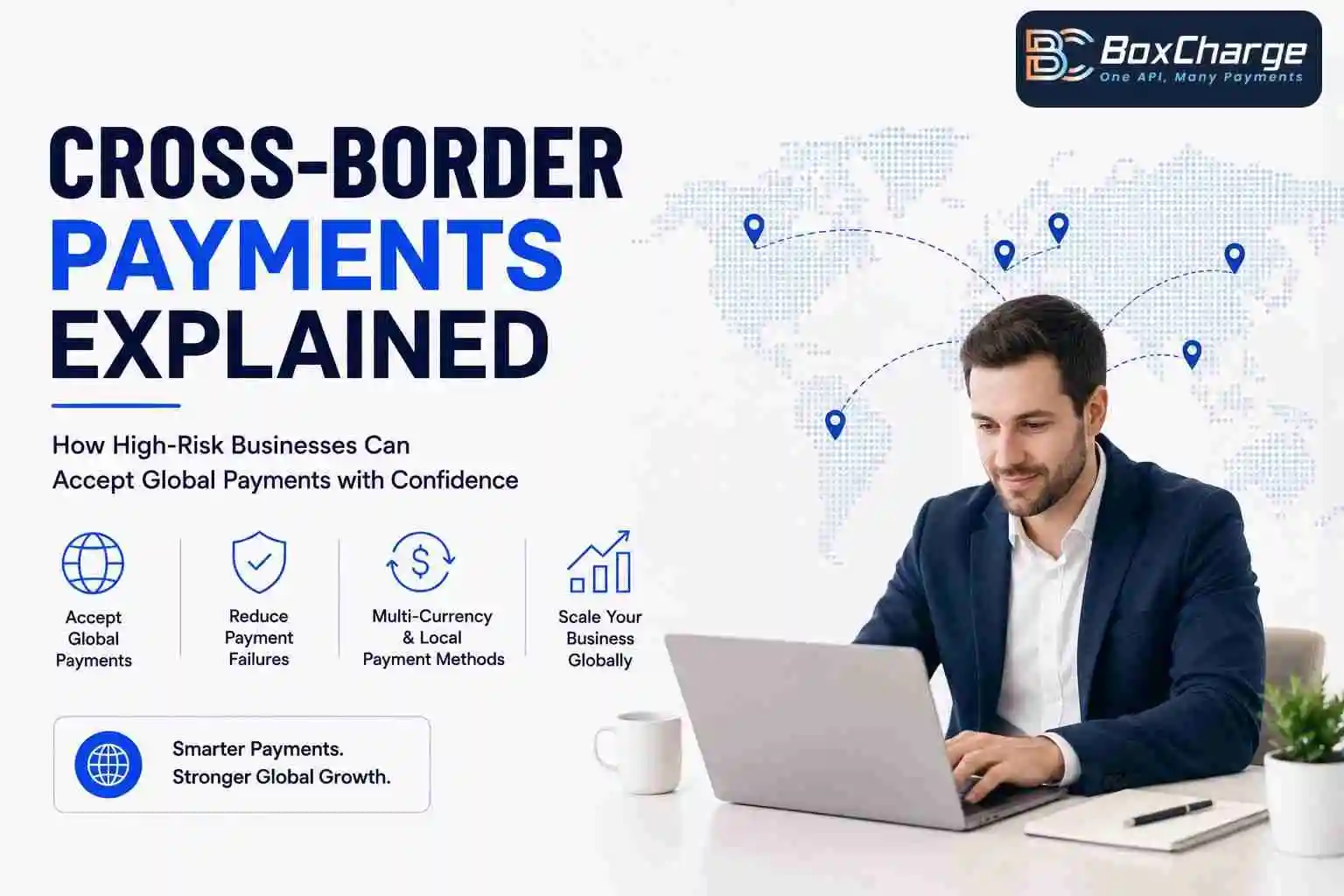
Cross-border payments are what make international business possible. But if you're a high-risk merchant, you already know that getting paid by customers in other countries isn't always as simple as making a sale.
Everything can seem to be going well until the payment reaches the checkout.
A customer in the UK places an order. Someone in Australia signs up for your subscription. Another customer from Canada is ready to pay. Then, without warning, one payment is declined, another is flagged for review, and a third takes days to settle.
The customer is confused, your support team is answering emails, and you're left wondering why accepting international payments has become so complicated.
Unfortunately, this isn't unusual.
Many businesses invest heavily in marketing, build a great website, and attract customers from around the world, only to lose sales because their payment setup can't handle cross-border payments efficiently.
For businesses operating in industries like travel, forex, online gaming, digital subscriptions, CBD, nutraceuticals, crypto, or other high-risk sectors, these problems are even more common.
Banks naturally apply stricter risk policies to these industries. That often means more declined transactions, longer underwriting, higher reserves, and ongoing account reviews.
The good news is that international payments don't have to be this difficult.
With the right global merchant services, reliable international payment processing, and an experienced payment partner, high-risk businesses can accept payments worldwide with fewer interruptions and much greater confidence.
In this guide, we'll explain how cross-border payments work, why they create challenges for high-risk merchants, and what you can do to make international payments smoother, faster, and more reliable.
What Are Cross-Border Payments?
A cross-border payment happens whenever money moves between two different countries.
It's as straightforward as that.
If your business is based in Singapore and a customer from Germany buys your product, that's a cross-border payment. The same applies if you're selling software from the UK to customers in the United States or offering subscription services to clients across Europe.
To your customer, the payment usually takes just a few seconds.
Behind the scenes, though, there's a lot more happening.
The transaction passes through payment gateways, card networks, acquiring banks, issuing banks, fraud detection systems, and sometimes even currency conversion providers before a final approval is given.
Every additional step introduces another opportunity for something to go wrong.
A payment might be declined because the issuing bank sees unusual activity. It could be delayed while extra security checks are carried out. Sometimes, higher foreign exchange costs reduce your profit without you even realising it.
That's why businesses selling internationally need more than a basic payment gateway. They need a payment solution that's built for global transactions.
Why High-Risk Businesses Face More Payment Challenges
If you've ever wondered why another business seems to get approved instantly while yours goes through weeks of reviews, you're not imagining things.
Banks assess every industry differently.
Businesses that offer recurring subscriptions, digital products, online gaming, forex services, travel bookings, or other higher-risk services are naturally subject to more scrutiny than a local retail shop.
From the bank's perspective, it's about managing financial risk.
From the merchant's perspective, it often feels like you're constantly proving your business is legitimate.
Many high-risk businesses deal with challenges such as:
Unexpected payment declines.
Higher processing fees.
Rolling reserves.
Delayed settlements.
Limited banking options.
Frequent compliance reviews.
Lower transaction approval rates.
These issues don't just affect payments.
They affect cash flow, customer satisfaction, advertising performance, and your ability to grow internationally.
When payments become unreliable, every part of the business feels the impact.
The Hidden Cost of Poor International Payment Processing
Most business owners compare payment providers by looking at transaction fees.
That's understandable.
But transaction fees are rarely the biggest expense.
The real cost comes from the sales you never complete.
Imagine spending thousands on digital advertising to bring visitors to your website.
They browse your products.
They add items to their cart.
They reach the checkout.
Then their payment fails.
You haven't just lost a transaction.
You've lost the money you spent acquiring that customer, and there's a good chance they'll buy from a competitor instead.
It happens every day.
Some businesses also lose money because customers can't pay in their local currency or don't see a payment method they're familiar with. Others struggle with poor approval rates because their payment provider has limited acquiring relationships in certain regions.
These are problems many merchants don't notice until they start analysing where revenue is being lost.
Improving your international payment processing isn't just about processing more transactions.
It's about making sure the customers you've already worked so hard to attract can actually complete their purchase.
What Should You Look for in a Cross-Border Payment Solution?
The right payment solution should make international payments feel just as easy as domestic ones.
That means supporting multiple currencies, connecting with several acquiring banks, offering strong fraud protection, and helping legitimate transactions go through on the first attempt.
It should also give customers a checkout experience they trust.
The easier it is for customers to pay, the more likely they are to complete their purchase.
That's why businesses investing in cross-border payments, payment orchestration, and reliable international payment processing often see better approval rates, fewer abandoned carts, and healthier long-term growth.
A good payment partner doesn't just process payments.
They help remove the barriers that stop your business from growing internationally.
The Biggest Mistakes Businesses Make with Cross-Border Payments
Expanding into new markets is exciting, but many businesses underestimate how different international payments can be from domestic ones.
A common mistake is assuming the same payment setup that works locally will work just as well overseas.
It rarely does.
Every country has its own banking preferences, payment regulations, customer expectations, and fraud patterns. What works perfectly in one market may result in lower approval rates or higher payment failures in another.
We've seen businesses spend thousands on international marketing campaigns only to discover that customers couldn't complete their purchases because the payment experience wasn't designed for global transactions.
Another mistake is relying on a single acquiring bank.
It might seem like the easiest option in the beginning, but it also creates a single point of failure. Banks regularly update their risk policies, and some choose to stop supporting certain industries or regions altogether. When that happens, merchants with only one acquiring relationship often find themselves rushing to replace their payment infrastructure while trying to keep sales flowing.
High-risk businesses also tend to underestimate the impact of chargebacks.
Many merchants accept disputes as part of selling online, but banks don't see them that way. A growing chargeback ratio can lead to higher reserves, additional compliance reviews, or stricter processing conditions. That's why successful businesses actively monitor disputes, improve customer communication, and invest in fraud prevention before problems start affecting their merchant account.
The businesses that perform well internationally don't simply process payments—they continuously optimise them.
Why Payment Orchestration Is Becoming Essential for Global Businesses
As businesses expand into new countries, managing payments becomes far more complex.
Different currencies, multiple acquiring banks, regional payment preferences, and varying approval rates all need to work together to create a smooth customer experience.
That's where Payment Orchestration makes a real difference.
Instead of relying on a single payment provider, a Payment Orchestration Platform intelligently routes transactions through the best available acquiring bank or payment provider based on factors such as location, currency, transaction type, and real-time performance.
For customers, nothing changes.
They simply complete their purchase.
Behind the scenes, however, the payment is being routed through the path most likely to succeed.
That means fewer failed transactions, better approval rates, lower payment friction, and a checkout experience that's far more reliable for international customers.
For businesses processing thousands of payments every month, even a small improvement in approval rates can translate into a significant increase in revenue.
Choose a Payment Partner That Understands Global Growth
When comparing payment providers, many businesses focus almost entirely on processing fees.
While pricing matters, it shouldn't be the deciding factor.
The right payment partner should understand your industry, your target markets, and the challenges that come with cross-border payments. They should offer access to multiple acquiring banks, support international payment processing, provide strong fraud prevention tools, and help your business scale without constantly changing providers.
A reliable payment partner doesn't just process transactions.
They help you remove barriers to growth.
Ready to Simplify Cross-Border Payments?
Expanding into international markets should create new opportunities—not new payment problems.
If you're dealing with frequent payment declines, delayed settlements, high chargebacks, or limited banking options, it's time to rethink your payment strategy. The right payment partner can help you improve approval rates, reduce payment friction, and build a payment infrastructure that supports your business as it grows.
At BoxCharge, we work with businesses across high-risk and international industries to deliver reliable Cross-Border Payment Solutions, International Payment Processing, High-Risk Merchant Accounts, Payment Orchestration, and Global Merchant Services. Our goal is simple: help you accept more successful payments, reach more customers, and scale your business with confidence.
Whether you're entering a new market, replacing an unreliable payment provider, or looking for a more flexible global payment solution, our team is ready to help.
Final Thoughts
Cross-Border Payments are no longer just a feature of international business—they're a key part of sustainable growth.
For high-risk merchants, the challenges often go beyond currency conversion or international transactions. Payment declines, settlement delays, account reviews, and limited acquiring options can slow growth and create unnecessary stress if the right payment infrastructure isn't in place.
The businesses that succeed globally aren't always the biggest or the oldest. They're the ones that invest in reliable International Payment Processing, partner with experienced providers, and build a payment strategy that can grow alongside their business.
If you want to sell globally with confidence, don't settle for a payment solution that only works today. Choose one that's designed to support your business tomorrow as well.
Frequently Asked Questions
1. What are cross-border payments?
Cross-border payments are transactions where the buyer and seller are located in different countries. These payments typically pass through multiple banks, card networks, payment gateways, and currency conversion systems before the transaction is completed.
2. Why are cross-border payments more challenging for high-risk businesses?
High-risk businesses often operate in industries with higher chargeback rates, recurring billing, international customers, or stricter regulatory requirements. Because of this, banks apply additional risk controls that can result in lower approval rates, higher reserves, and more frequent compliance reviews.
3. How can businesses improve cross-border payment success rates?
Improving payment performance starts with choosing the right payment partner. Working with providers that offer Payment Orchestration, multiple acquiring banks, intelligent payment routing, local payment methods, and advanced fraud prevention can significantly improve approval rates while reducing failed transactions.
4. What is Payment Orchestration, and why is it important?
Payment Orchestration is a technology that intelligently routes transactions through the most suitable payment provider or acquiring bank. This helps businesses increase payment approvals, reduce transaction failures, improve checkout performance, and create a more reliable payment experience for international customers.
5. Do I need a high-risk merchant account for international payments?
Not every business does, but if your industry is classified as high risk or you've experienced repeated merchant account rejections, a Right High-Risk Merchant Account can provide access to acquiring banks and payment solutions that are better suited to your business model.
6. How can BoxCharge help my business?
BoxCharge provides Cross-Border Payment Solutions, International Payment Processing, High-Risk Merchant Accounts, Payment Orchestration, and Global Merchant Services for businesses looking to expand internationally. We help merchants improve payment approvals, reduce payment disruptions, and build a scalable payment infrastructure for long-term growth.