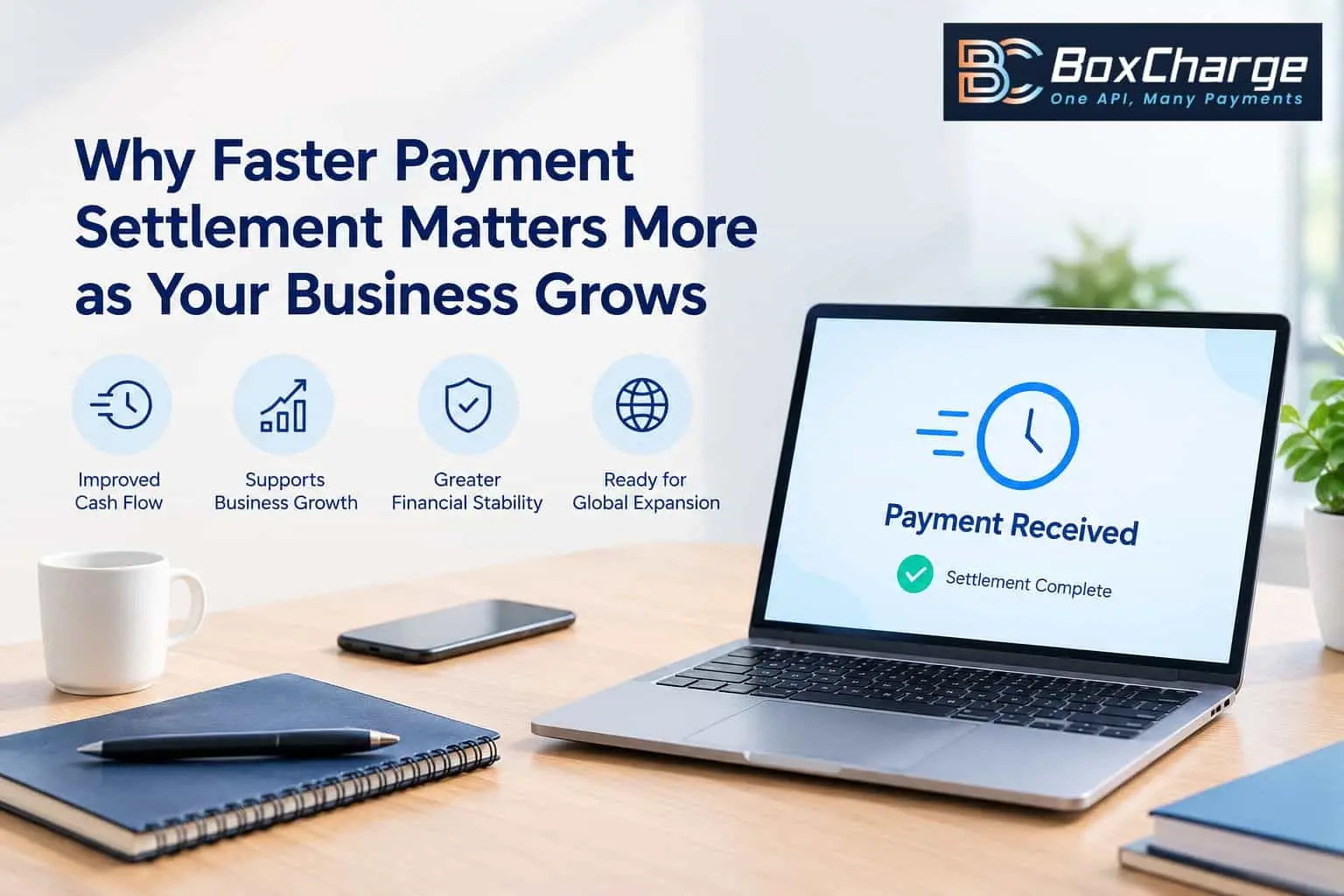
Faster payment settlement becomes increasingly important as a business grows, especially when rising transaction volumes, supplier payments, payroll, and operating expenses put pressure on working capital. For high-risk merchants, the challenge is often greater. Longer payout timelines, rolling reserves, payment holds, and limited access to acquiring services can leave businesses struggling to access revenue they have already earned.
A business can generate strong sales and still experience cash-flow problems when payment processors take several business days to release funds. As transaction volumes increase, the amount of money waiting to be settled can grow substantially, affecting everything from inventory planning to marketing budgets.
For businesses operating in industries such as online gaming, forex, travel, subscription services, adult entertainment, and nutraceuticals, settlement speed is more than a payment processing feature. It is an important consideration when choosing a high-risk merchant account provider.
Understanding how payment settlement works, why delays occur, and what merchants should look for in a payment processing partner can help growing businesses maintain liquidity without compromising risk management.
What Is Payment Settlement, and Why Does It Matter?
Payment settlement is the process through which transaction funds move through the payment ecosystem and become available to the merchant, subject to the provider's terms and applicable banking arrangements.
However, payment settlement and merchant payouts are not always the same thing. A payment may be processed successfully before the corresponding funds become available for withdrawal or transfer to the merchant's bank account. The timing depends on the payment processor, acquiring bank, payment method, country, risk profile, and contractual arrangements.
Stripe explains these distinctions in its guide to how payment payouts work.
For a growing business, the practical concern is straightforward: when will the money from completed sales become available to cover business expenses?
Consider an online merchant processing $100,000 in card payments each week. If a substantial portion of those funds remains unavailable for several days, the business must finance its daily operations using existing cash reserves, credit facilities, or other sources of working capital.
As sales increase, the amount tied up in pending payouts can also increase. Without sufficient liquidity, even a profitable business may struggle to meet its financial obligations on time.
Why Faster Settlement Becomes More Important as Your Business Scales
1. Higher Transaction Volumes Increase Working Capital Pressure
In the early stages of a business, a short delay in receiving payments may be manageable. Founders can sometimes cover expenses from existing reserves while waiting for customer payments to arrive.
That approach becomes harder to sustain when a business expands into new markets, increases advertising expenditure, hires more employees, or processes thousands of transactions every day.
A growing merchant must continually pay for inventory, fulfilment, customer support, software, compliance, and other operational requirements. These expenses do not necessarily wait for payment settlements to clear.
Faster merchant payouts help businesses align incoming revenue with outgoing expenses. This can reduce the need to rely on short-term borrowing simply to bridge routine payment delays.
Settlement speed does not automatically improve profitability, but it can make available working capital more predictable and easier to manage.
2. Cash Flow Can Become a Growth Bottleneck
Business growth frequently requires spending money before the resulting revenue becomes available.
An e-commerce merchant may need to purchase inventory before a sales campaign begins. A subscription business may invest in customer acquisition before recovering its marketing costs. A travel company may incur supplier expenses well before a booking is fully delivered.
When settlement cycles are lengthy, these businesses must finance the gap between expenditure and accessible revenue.
This creates a difficult choice: maintain larger cash reserves, obtain additional financing, or slow down expansion.
A payment provider offering suitable, transparent settlement arrangements can help merchants plan around this gap more effectively. For businesses comparing merchant account providers, payout timelines deserve the same attention as transaction fees, supported payment methods, and integration capabilities.
3. International Expansion Makes Settlement Planning More Complex
Cross-border growth introduces additional variables, including currency conversion, local banking cut-off times, payment method availability, intermediary banks, and regional compliance requirements.
A business accepting payments from customers in multiple countries may not receive all funds according to a single predictable timetable.
International merchants should therefore evaluate whether a payment partner supports their target markets, relevant currencies, local acquiring arrangements, and clearly defined payout schedules.
For businesses expanding internationally, cross-border payment processing should be assessed alongside settlement timing. Faster processing at checkout does not necessarily mean faster access to funds in the merchant's bank account.
The objective is to build a payment infrastructure that supports expansion while making settlement expectations clear across the markets in which the business operates.
Why High-Risk Merchants Face Greater Settlement Challenges
For high-risk merchants, delayed access to funds can be a particularly difficult operational problem.
Payment providers assess risk based on factors such as the merchant's business model, transaction history, refund activity, dispute levels, fulfilment timelines, and potential exposure to financial losses. Certain industries may carry additional risk because of regulatory requirements, recurring billing, elevated chargeback exposure, or the time between payment and service delivery.
Consequently, high-risk businesses may encounter stricter underwriting, higher processing fees, payout restrictions, and reserve requirements than merchants in lower-risk categories.
These measures are not identical across providers, and operating in a high-risk industry does not automatically mean every merchant will experience delayed settlements. However, understanding these possibilities is essential when selecting a payment partner.
Rolling Reserves Can Restrict Available Cash
A rolling reserve is a portion of processed funds that a payment provider holds temporarily to cover potential refunds, chargebacks, and other financial liabilities.
For example, if a provider applies a 10% rolling reserve to $100,000 in eligible transactions, $10,000 would be withheld under that arrangement, before considering processing fees or other adjustments.
The withheld funds may be released according to an agreed schedule, subject to the applicable terms.
Stripe's official guide to payment reserves explains how fixed and rolling reserves work.
For a growing high-risk merchant, reserve deductions can reduce the cash available for immediate expenses, even when sales are increasing. If a business is also waiting for its remaining funds to be paid out, the combined effect can put substantial pressure on liquidity.
Merchants should ask prospective providers about reserve percentages, release periods, adjustment conditions, and the circumstances in which additional funds may be withheld.
Payout Delays Can Disrupt Supplier Payments and Advertising
Many high-risk businesses depend on consistent cash flow to maintain their operations.
An online gaming business may need to manage technology costs and customer support. A forex-related business may face ongoing compliance and platform expenses. A subscription merchant may need to fund customer acquisition while handling cancellations and refunds.
If expected payouts arrive later than planned, merchants may have to postpone supplier payments, reduce advertising budgets, or draw on emergency financing.
This is especially challenging when expenses increase alongside sales. Higher transaction volume does not guarantee that more money will be immediately available.
The problem becomes more serious when payout schedules are unclear or when a provider changes reserve requirements without sufficient operational planning.
Limited Provider Options Can Make Negotiation Difficult
Some high-risk merchants struggle to find payment providers willing to support their industry, target markets, and transaction patterns.
When options are limited, a business may accept settlement terms without fully assessing their long-term impact. Later, as processing volume grows, those terms can become difficult to accommodate.
A more effective approach is to evaluate high-risk payment processing solutions before settlement restrictions become an operational emergency.
Merchants should compare underwriting requirements, payout schedules, reserve policies, chargeback management, supported countries, and the provider's experience with their specific business category.
A suitable payment partner should explain its terms clearly rather than relying on broad promises of fast payouts.
How to Evaluate a Payment Provider for Faster Settlement
Faster settlement should be evaluated as part of a broader payment strategy, not as an isolated sales promise.
Before choosing a merchant account provider, consider the following factors.
1. Understand the complete payout timeline: Ask when transactions become eligible for payout, how frequently transfers are initiated, and how long bank transfers typically take. Clarify the difference between transaction processing, settlement, and payout initiation.
2. Review reserve requirements: Determine whether fixed or rolling reserves apply, how release dates are calculated, and what events could trigger additional holds. Ask how the provider handles refunds and disputes.
3. Check industry-specific underwriting: Confirm that the provider accepts your business model and understands its regulatory obligations, average transaction values, customer locations, and fulfilment cycle.
4. Assess international capabilities: If your business operates across borders, review supported countries, currencies, acquiring arrangements, and the potential effect of foreign exchange conversion on received funds.
5. Examine reporting and reconciliation: Detailed transaction records, payout reports, reserve balances, and dispute information help finance teams forecast cash flow and investigate discrepancies.
6. Look beyond headline processing fees: A low transaction fee may not compensate for restrictive reserves, unsuitable payout schedules, or unexpected operational costs. Compare the overall commercial arrangement.
The right provider is not necessarily the one advertising the fastest settlement. It is the one that can offer suitable, clearly documented settlement terms for your business, subject to its underwriting and risk requirements.
Can Faster Settlement Reduce Cash-Flow Risk?
Faster settlement can improve liquidity, but it does not eliminate every financial risk.
Merchants still need to account for chargebacks, refunds, fraudulent transactions, failed payments, unexpected expenses, and seasonal fluctuations in demand.
The Federal Reserve's FedNow Service overview explains how participating financial institutions can use an instant payment infrastructure to transfer funds in near real time, around the clock. However, the availability of instant bank payments does not mean every card transaction or merchant payout settles instantly.
Businesses should also distinguish between faster access to eligible funds and the release of money held under a contractual reserve.
A sound payment strategy combines appropriate settlement arrangements with cash-flow forecasting, fraud prevention, dispute management, and sufficient operating reserves.
For high-risk merchants, this balance matters particularly because reducing payout delays should not come at the expense of sustainable risk controls or regulatory compliance.
How BoxCharge Can Fit Into Your Payment Strategy
As transaction volumes grow, merchants need payment processing arrangements that reflect their actual business requirements rather than relying on assumptions about when funds will arrive.
BoxCharge provides a starting point for businesses evaluating payment solutions and merchant account requirements. Merchants exploring their options can contact BoxCharge to learn more about the business and its payment services.
Before agreeing, high-risk businesses should discuss their industry, anticipated processing volume, target markets, average transaction value, and settlement expectations with a prospective provider.
It is also worth asking whether the proposed arrangement includes rolling reserves, minimum payout thresholds, additional verification requirements, or restrictions that may affect access to funds.
For businesses planning to scale, these details should be understood before processing volume increases—not after a cash-flow problem emerges.
The goal is to find a payment processing partner whose capabilities and contractual terms support the business's growth plans.
Conclusion: Settlement Speed Should Grow With Your Business
Faster payment settlement becomes increasingly important as a business expands because operating expenses, supplier commitments, payroll, and customer acquisition costs continue to demand working capital.
For high-risk merchants, the challenge can be more pronounced. Reserve deductions, extended payout timelines, and limited acquiring options may leave a growing business with substantial revenue that is not yet available for day-to-day operations.
Choosing a suitable merchant account provider requires more than comparing transaction fees. Businesses should evaluate payout timelines, reserve policies, risk controls, international capabilities, and reporting transparency before committing to a payment processing arrangement.
The real value of faster settlement is greater control over accessible cash flow. When payout expectations are clear and aligned with operating needs, merchants can plan expenditure more confidently, manage working capital more effectively, and pursue growth with fewer avoidable liquidity constraints.
For growing businesses and high-risk merchants, reviewing settlement terms early is a practical step towards building a more resilient payment infrastructure.