
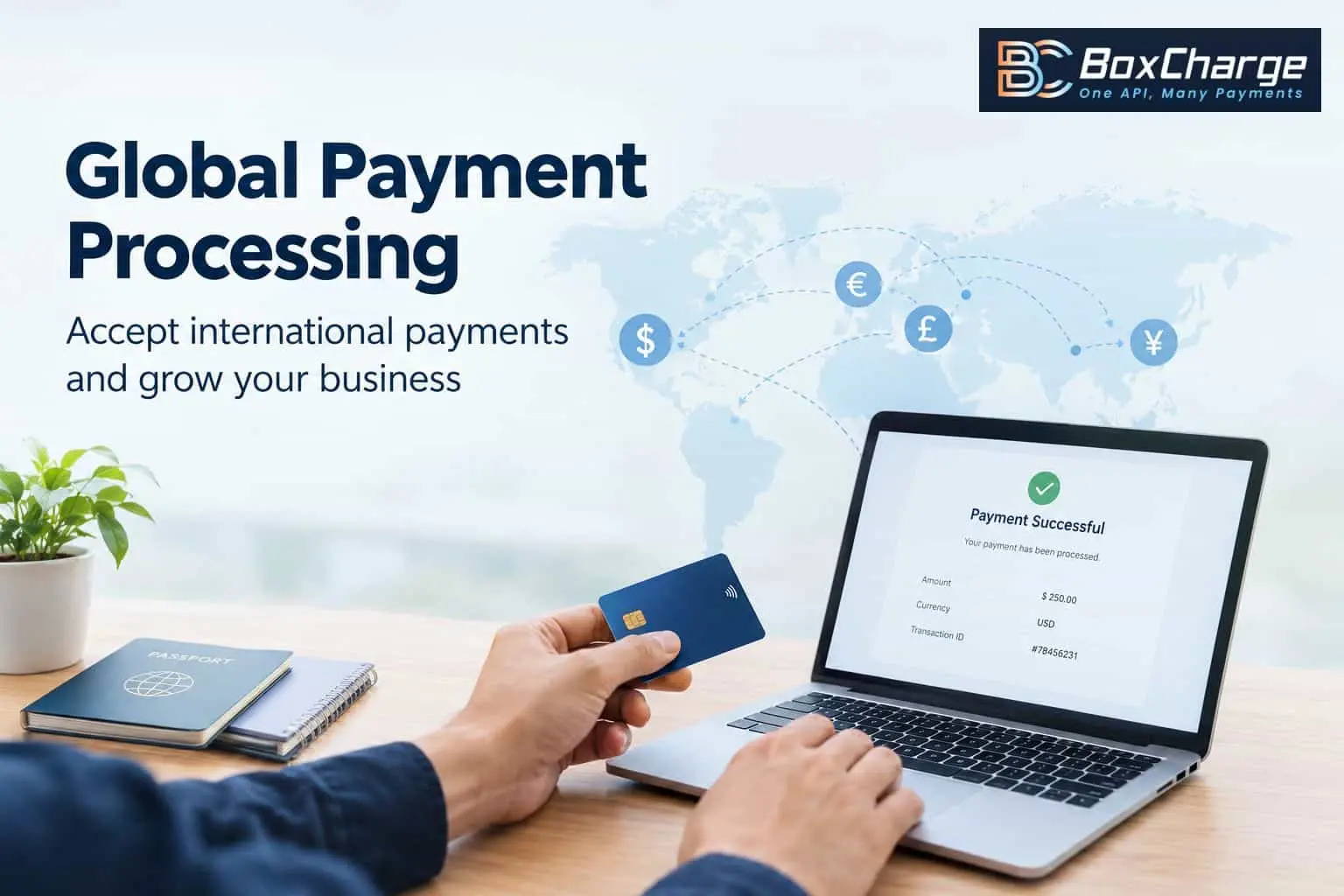
Global payment processing allows businesses to accept, authorize, process, and settle payments from customers across different countries. For companies selling internationally, the right payment infrastructure can make it easier to serve overseas customers, manage multiple currencies, reduce avoidable transaction failures, and expand into new markets.
However, accepting international payments is not as simple as adding a payment button to a website. Businesses must navigate cross-border transaction costs, currency conversion, local payment preferences, fraud prevention, compliance requirements, and settlement timelines. These challenges become even more complicated for high-risk merchants operating in industries that traditional banks and payment processors consider commercially or financially sensitive.
For businesses in online gaming, forex, subscription services, adult entertainment, digital products, and other high-risk sectors, choosing the right payment processing partner can influence everything from checkout conversion rates to working capital.
Understanding how international payment processing works—and what to look for in a provider—can help businesses build a payment infrastructure that supports sustainable growth.
What Is Global Payment Processing?
Global payment processing is the system that enables businesses to accept payments from customers in different countries through card networks, digital wallets, bank transfers, and other supported payment methods.
A typical international payment transaction involves several participants:
The merchant: The business selling products or services.
The payment gateway: The technology that securely transmits payment information between the checkout and the payment processing system.
The payment processor: The service that facilitates transaction processing and communication between relevant payment participants.
The acquiring bank or payment acquirer: The institution or regulated provider that supports the merchant's card acceptance arrangements.
The issuing bank: The customer's bank, which evaluates the card transaction and approves or declines it.
The card network: The network that facilitates communication and settlement between participating institutions.
Once a customer submits a payment, the transaction is routed through the relevant payment infrastructure for authorization. If approved, the transaction proceeds through clearing and settlement processes according to the arrangements between the participating institutions and providers.
International transactions can introduce additional considerations, including foreign exchange conversion, cross-border fees, regional restrictions, and differences in settlement arrangements.
For a business expanding into multiple countries, the objective is not simply to accept foreign cards. It is to establish a reliable system that makes payments convenient for customers while keeping transaction costs, risk exposure, and operational complexity under control.
How Does International Payment Processing Work?
Although individual providers use different technical arrangements, international card payments generally follow a recognizable process.
Step 1: The customer initiates payment: A customer selects a payment method and submits their payment details through the merchant's checkout.
Step 2: The payment gateway securely transmits the transaction: The gateway communicates the relevant payment information to the processing infrastructure. Security controls and authentication requirements depend on the payment method, jurisdiction, and transaction circumstances.
Step 3: The transaction is routed for authorization: The processor and acquiring arrangements route the transaction through the appropriate network or payment channel. The issuing bank evaluates the transaction and returns an approval or decline response.
Step 4: The transaction proceeds to settlement: Approved transactions move through clearing and settlement according to the relevant payment arrangements. The merchant receives the proceeds, less applicable fees, reserves, refunds, or other contractual adjustments.
Step 5: The merchant monitors the outcome: Payment reporting helps the business identify declined transactions, refunds, chargebacks, settlement discrepancies, and other operational issues.
For international merchants, the quality of each stage matters. A payment gateway might support numerous currencies, but that alone does not guarantee high approval rates, access to every market, or fast settlement.
The underlying acquiring relationship, issuing-bank decisions, risk controls, and the merchant's transaction profile all influence the final result.
Why Global Payment Processing Matters for Growing Businesses
International expansion creates opportunities, but payment infrastructure can quickly become a bottleneck if it is not designed for the markets a business wants to serve.
Accept payments from international customers
Customers may prefer to pay using familiar card networks, digital wallets, or locally available payment methods. Offering appropriate options can reduce checkout friction and make an international purchase feel more straightforward.
The best payment setup depends on the countries being targeted, the customer's preferred payment methods, and the merchant's eligibility for those services.
Manage multiple currencies
Multi-currency payment processing can help businesses display prices in familiar currencies and, where supported, charge customers in their preferred currency.
Merchants should understand the difference between displaying a price in a local currency, processing a transaction in that currency, and receiving settlement in another currency.
Foreign exchange rates, conversion margins, cross-border fees, and settlement currency can all affect the amount a business ultimately receives.
Improve checkout performance
A complicated checkout can discourage customers from completing a purchase. Payment failures, unfamiliar payment options, unexpected currency conversions, and additional authentication steps can create friction.
A well-configured international payment gateway can help streamline the payment experience, although no provider can guarantee that every transaction will be approved.
Support international business operations
As a company expands, it may need better transaction reporting, reconciliation, fraud monitoring, and settlement visibility across multiple markets.
A suitable payment processing partner should help the business understand where payments originate, which transactions fail, what fees apply, and how settlement proceeds are calculated.
The Biggest Global Payment Processing Challenges for High-Risk Merchants
International payment processing can be particularly difficult for businesses classified as high-risk.
Payment providers may assess a merchant's industry, business model, chargeback exposure, refund patterns, customer acquisition practices, delivery timelines, and regulatory obligations before deciding whether to provide services.
This does not mean every high-risk business is unsuitable for payment processing. It means that the merchant may need a provider with relevant underwriting experience and risk controls appropriate to its operations.
1. Limited access to merchant accounts
One of the biggest challenges for high-risk businesses is finding an acquiring partner willing to support their particular industry and geographic markets.
A provider that accepts ordinary retail businesses may not support online gaming, forex trading, adult entertainment, or certain subscription models.
Repeated applications and unsuccessful onboarding attempts can delay expansion and consume valuable management time.
What merchants should look for: A provider that evaluates the actual business model, explains its underwriting requirements, and confirms which jurisdictions and transaction types it can support.
Merchants should disclose their business activities accurately rather than attempting to obtain approval through misleading descriptions.
2. Declined transactions and lost revenue
A customer can have sufficient funds and still experience a declined payment. Issuer risk controls, authentication failures, incorrect payment details, processing restrictions, and other factors can affect authorization.
For high-risk merchants, unexplained declines can be especially frustrating because the business may already face stricter acceptance requirements.
A decline should not automatically be treated as a gateway problem. Merchants need transaction-level reporting to identify whether failures relate to issuing banks, technical issues, fraud controls, authentication, or provider restrictions.
Intelligent payment routing, where available, can direct eligible transactions through suitable processing connections. However, routing must follow provider rules, network requirements, and applicable regulations.
3. Rolling reserves and cash-flow pressure
Some high-risk acquiring agreements include rolling reserves, under which a portion of transaction proceeds is retained for a specified period to cover potential refunds, chargebacks, or other liabilities.
Although reserves can protect payment providers against financial exposure, they can create cash-flow pressure for merchants.
For example, a growing subscription business may need to pay advertising costs, staff salaries, software expenses, and suppliers before all its sales proceeds become available.
When a portion of those proceeds is held back, the business may have less working capital available for expansion.
Before signing an agreement, merchants should understand the reserve percentage, release schedule, settlement terms, circumstances that permit additional withholding, and the process for resolving disputes.
4. Chargebacks and fraud exposure
International businesses may encounter stolen-card transactions, unauthorized purchases, customer disputes, refund requests, and friendly fraud.
High-risk merchants can face additional scrutiny when transaction disputes increase or their business model involves recurring billing, delayed delivery, or products and services that customers may misunderstand.
Effective prevention starts with transparent billing descriptions, clear refund policies, appropriate customer authentication, accurate transaction records, and responsive customer support.
Merchants should also monitor chargeback trends by country, payment method, product, and customer segment.
The objective is to reduce avoidable disputes without rejecting legitimate customers unnecessarily.
5. Currency conversion and settlement delays
International merchants must consider the complete cost of receiving payments, not just the advertised processing rate.
A transaction may involve a processing fee, cross-border charges, foreign exchange costs, and other contractual expenses.
Settlement timing can also vary according to the provider, payment method, banking arrangements, currency, compliance reviews, and risk-management terms.
For a high-risk business operating across several countries, unclear settlement reporting can make it difficult to forecast cash flow and reconcile revenue.
Merchants should request a transparent fee schedule and realistic settlement expectations for each market they intend to serve.
How to Choose the Right Global Payment Processing Provider
Selecting an international payment processing provider requires more than comparing headline transaction fees.
The right partner should match the merchant's business model, target markets, payment volume, compliance requirements, and long-term growth plans.
Consider these factors before making a decision.
1: Industry acceptance: Confirm that the provider supports your specific business category. General international payment coverage does not necessarily include high-risk industries.
2: Geographic coverage: Ask which merchant domiciles, customer locations, currencies, and acquiring markets are supported. Confirm any country-specific restrictions.
3: Payment methods: Determine whether the provider supports the card networks, digital wallets, and alternative payment methods relevant to your customers.
4: Pricing transparency: Review transaction fees, cross-border charges, currency conversion costs, chargeback fees, refund fees, monthly charges, and reserve requirements.
5: Settlement terms: Establish when funds become available, which currencies can be used for settlement, and what circumstances could delay or restrict payouts.
6: Fraud and chargeback management: Look for appropriate authentication tools, transaction monitoring, dispute reporting, and configurable fraud controls.
7: Technical integration: Check API documentation, checkout compatibility, reporting capabilities, integration support, and the availability of additional processing connections.
8: Compliance and security: Understand the provider's onboarding requirements and responsibilities for customer verification, transaction monitoring, and payment-data security.
A lower processing rate is not necessarily the most economical option. A provider with transparent pricing, reliable reporting, and suitable market coverage may deliver better commercial value than a cheaper service that cannot support the merchant's operating requirements.
Compliance and Security in International Payment Processing
Cross-border payments involve multiple legal, regulatory, and technical considerations. Requirements vary according to the merchant's location, the markets served, the services offered, and the role each payment participant performs.
Businesses should establish a clear understanding of their obligations before launching in a new jurisdiction.
For example, the Financial Action Task Force (FATF) publishes international standards for combating money laundering and terrorist financing. Its recommendations provide an important reference for understanding risk-based approaches to financial crime prevention.
Payment security is another essential consideration. The PCI Security Standards Council maintains the Payment Card Industry Data Security Standard (PCI DSS), which establishes technical and operational requirements for protecting payment card data.
Businesses that store, process, or transmit cardholder data should understand the applicable requirements and their responsibilities within their payment environment.
Cost transparency also deserves attention. The World Bank's Remittance Prices Worldwide database provides information on the cost of sending and receiving money across international corridors. Although remittances are different from merchant card processing, this resource illustrates the importance of evaluating cross-border transaction costs rather than assuming that international payments have a single, universal price.
Merchants should obtain jurisdiction-specific legal and compliance advice where necessary, particularly when operating in regulated or high-risk industries.
How BoxCharge Can Support High-Risk Payment Processing Requirements
For businesses seeking international payment acceptance, finding a provider that understands their operating model is an important part of building a sustainable payment strategy.
BoxCharge provides a starting point for businesses exploring international payment solutions for high-risk merchant requirements and international commerce.
Rather than evaluating a payment partner solely on its advertised processing rates, merchants should consider how well the proposed arrangement addresses their actual needs.
This includes industry eligibility, target-market coverage, onboarding requirements, transaction reporting, settlement arrangements, and chargeback management.
Businesses should also establish whether the proposed solution supports their intended currencies and payment methods before committing to an integration.
Explore BoxCharge to learn more about its payment-related services and discuss whether an available solution fits your business model. Specific approval decisions, supported markets, processing terms, and service availability should be confirmed directly with the provider.
The aim is to establish a payment arrangement that supports legitimate transactions while maintaining appropriate financial controls and compliance standards.
Frequently Asked Questions About Global Payment Processing
Q: What is the difference between global and international payment processing?
The terms are often used interchangeably. Both generally describe payment services that facilitate transactions involving customers, merchants, or payment institutions in different countries. Global payment processing may also refer to a broader infrastructure supporting multiple markets, currencies, payment methods, and acquiring relationships.
Q: Can high-risk businesses accept international payments?
Yes, some high-risk businesses can accept international payments through providers and acquiring partners willing to support their specific activities. Approval depends on factors such as industry, business model, merchant location, target markets, compliance requirements, and risk assessment.
Q: How can businesses reduce international payment declines?
Businesses can analyze decline codes, improve checkout usability, maintain accurate payment information, use appropriate authentication, and review payment routing options where available. They should also distinguish issuer declines from technical failures and provider restrictions before implementing changes.
Q: What fees should businesses consider when choosing an international payment processor?
Relevant costs may include transaction processing fees, cross-border charges, currency conversion margins, refunds, chargebacks, monthly fees, gateway charges, and rolling reserves. The exact costs depend on the provider agreement, payment method, currency, and transaction profile.
Q: How long does global payment settlement take?
Settlement timing varies by provider, payment method, currency, acquiring arrangement, and merchant risk profile. High-risk merchants may face additional settlement conditions or reserve requirements. Businesses should obtain written settlement terms before onboarding.
Q: What should high-risk merchants prioritize when selecting a provider?
High-risk merchants should prioritize industry acceptance, transparent commercial terms, suitable geographic coverage, reliable reporting, appropriate fraud controls, clear settlement arrangements, and compliance support. The provider should be able to explain its requirements and limitations before the merchant commits to the service.
Conclusion: Build a Payment Strategy That Can Scale Internationally
Global payment processing is a fundamental part of international business growth. It determines how effectively a company can accept payments from overseas customers, manage currency-related costs, monitor transaction performance, and maintain access to working capital.
For high-risk merchants, these decisions carry additional weight. Restricted provider access, payment declines, rolling reserves, chargebacks, and settlement uncertainty can affect day-to-day operations as well as expansion plans.
The most effective approach is to evaluate payment infrastructure as a business requirement rather than simply a checkout feature. Understand the target markets, compare the complete cost of acceptance, review underwriting and settlement terms, and select payment partners that can support the business's actual operating model.
For merchants planning to expand internationally, a well-matched payment processing arrangement can provide a stronger foundation for customer acquisition, operational visibility, and sustainable growth.
Explore BoxCharge to discuss payment processing requirements for your business and identify a solution that aligns with your target markets and industry needs.