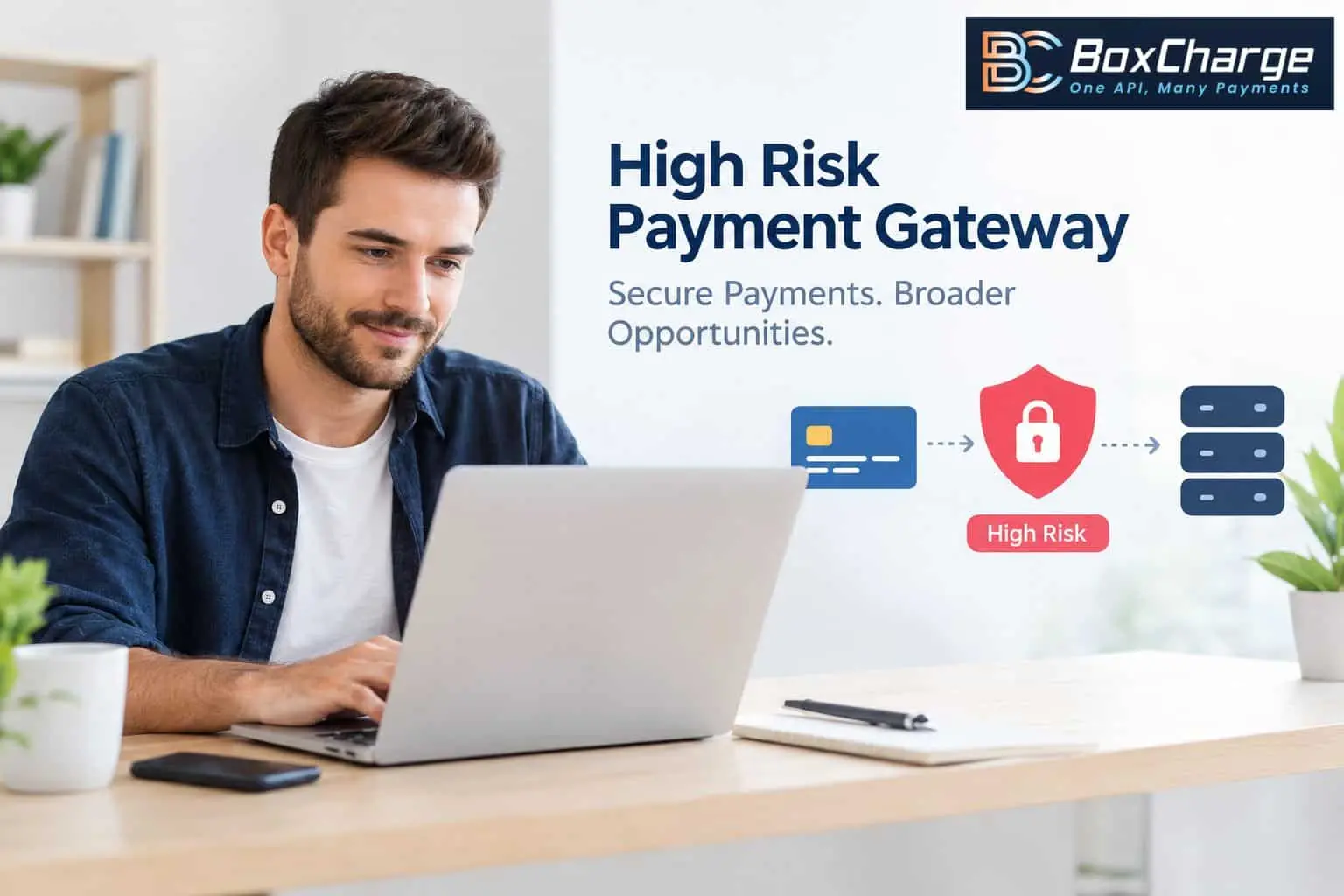
A high-risk payment gateway helps businesses operating in industries with elevated financial, regulatory, fraud, or chargeback exposure accept and manage online payments through an appropriate payment processing arrangement. For merchants that struggle to secure conventional payment services, choosing the right gateway can be an important step toward maintaining reliable transactions, protecting revenue, and supporting business growth.
However, finding a suitable payment solution is not simply about getting an account approved. High-risk merchants also need to understand processing fees, rolling reserves, transaction declines, settlement schedules, international payment acceptance, and the conditions that could lead to an account review or termination.
For businesses in sectors such as online gaming, adult entertainment, travel, subscription services, nutraceuticals, and certain financial services, payment acceptance can be more complicated than it is for a conventional retailer. Requirements vary by provider, jurisdiction, business model, and the acquiring bank's underwriting policies.
This guide explains how a high-risk payment gateway works, why merchants face payment processing challenges, and what to evaluate when choosing a long-term payment partner.
What Is a High-Risk Payment Gateway?
A high-risk payment gateway is a payment technology solution used by eligible businesses whose industry, transaction patterns, operating model, or financial history may expose payment providers to greater risk.
The gateway securely transmits transaction information between the merchant's checkout, payment processor, and relevant payment networks. The acquiring bank or payment provider manages the merchant relationship and determines whether the business can be supported under its underwriting and compliance requirements.
A gateway and a merchant account are related but different components. The payment gateway facilitates transaction communication, while the merchant account or acquiring arrangement enables the business to accept card payments and receive settlement under the agreed terms.
A merchant may therefore need both an appropriate gateway and a provider willing to underwrite its business category.
According to Visa's Global Acquirer Risk Standards, acquiring institutions assess factors such as a merchant's business activities, financial position, compliance, operating history, and exposure to fraud or disputes. Depending on the findings, approval may involve additional conditions, reserves, or processing restrictions.
The important distinction is that high-risk classification does not automatically mean a business is unlawful or poorly managed. It means the provider must evaluate its particular risk profile before agreeing to process transactions.
Why High-Risk Merchants Struggle to Accept Online Payments
Payment processing challenges can affect a business long before its first successful transaction. They can also become more difficult as sales volumes increase or a merchant expands into new markets.
1. Merchant Account Rejections
One of the most frustrating problems is being rejected by a payment provider despite operating a legitimate business.
Some providers do not support particular industries because of their internal risk policies, commercial priorities, banking partnerships, or compliance obligations. Others may consider an application but decline it after reviewing the business model, transaction history, website, or expected sales volume.
This creates a difficult situation for merchants who have already invested in marketing, website development, inventory, or customer acquisition.
The practical solution: Look for a payment provider that explicitly evaluates your industry and business model. Before applying, prepare clear information about your products or services, ownership, operating jurisdictions, refund policy, expected transaction values, and sales channels.
An application should present an accurate picture of how the business operates rather than rely on generic descriptions.
2. High Processing Fees and Rolling Reserves
High-risk merchants may face higher processing fees, reserve requirements, or other contractual conditions than businesses considered lower risk.
A rolling reserve is an amount withheld from processing proceeds for a specified period to cover potential refunds, chargebacks, or other liabilities. The amount, release schedule, and applicable conditions depend on the merchant agreement.
These arrangements can put pressure on cash flow.
For example, an online subscription business might generate strong monthly sales while still having to pay advertising expenses, staff, software subscriptions, suppliers, and refunds. If a portion of its processing revenue is temporarily unavailable, the business may struggle to meet those obligations.
The issue is not always the total processing cost. It is also how much working capital remains accessible after fees and reserves.
Before signing an agreement, ask for a transparent breakdown of transaction fees, monthly charges, reserve percentages, reserve release periods, settlement terms, and any additional costs. Request written clarification of the circumstances under which these terms can change.
3. Unexpected Transaction Declines
A customer reaches checkout, enters their payment information, and clicks the payment button. The transaction fails.
For the merchant, the immediate consequence may be a lost sale. Repeated declines can also undermine customer confidence and reduce the return on marketing expenditure.
Declines can occur for several reasons, including insufficient funds, issuer restrictions, incorrect payment details, suspected fraud, technical errors, and payment processing configuration issues. Not every decline is caused by the gateway, and no provider can guarantee approval for every legitimate transaction.
Businesses accepting international payments may face additional complexity because customer locations, currencies, issuing banks, and authentication requirements vary.
A capable high-risk payment processing arrangement should provide useful transaction reporting, clear decline information where available, and practical support for diagnosing payment failures.
Merchants should also assess whether the solution supports their target markets, relevant currencies, suitable authentication methods, and the checkout integrations they need.
4. Chargebacks and Fraud Exposure
Chargebacks are a significant concern for businesses with recurring billing, digital delivery, high transaction values, delayed fulfilment, or customers who may not immediately recognize a billing descriptor.
A chargeback occurs when a cardholder disputes a transaction and the payment is reversed through the applicable dispute process. Merchants may lose the transaction amount and incur additional costs while spending time gathering evidence and responding to the dispute.
Common causes include unauthorized transactions, unclear billing descriptions, duplicate payments, delayed delivery, misunderstood subscription terms, and dissatisfaction with a product or service.
Visa's guidance on chargebacks explains the importance of understanding disputes, preventing avoidable problems, and responding with appropriate evidence.
Merchants can improve their position by using clear checkout disclosures, recognizable billing descriptors, accessible cancellation procedures, documented fulfilment, appropriate fraud screening, and timely customer support.
A gateway can provide useful risk-management tools, but it cannot eliminate chargebacks or guarantee that a transaction is free from fraud.
5. Account Reviews and Processing Interruptions
A business that has processed payments successfully for months may still face additional scrutiny if its transaction patterns change significantly.
A sudden increase in sales, an unusual spike in refunds, a change in products, higher average transaction values, or a rise in disputes can prompt a review.
For the merchant, the consequences may include delayed settlements, additional documentation requests, processing limits, reserve adjustments, or account termination, depending on the agreement and provider's assessment.
These interruptions can be especially damaging when a business depends on a single payment provider.
To reduce avoidable disruption, maintain accurate business records, monitor refunds and disputes, notify your provider about material changes to your business model, and understand the contractual grounds for account reviews.
Where commercially appropriate, evaluate whether a properly approved secondary processing arrangement could improve resilience. Never use another account to conceal restricted activity or bypass a provider's compliance requirements.
Industries That May Need a High-Risk Payment Gateway
Risk classification is not universal. Two businesses in the same sector may receive different underwriting decisions because their products, jurisdictions, customer acquisition methods, refund rates, and transaction patterns differ.
Industries that may require specialist underwriting include:
Online gaming and gambling: Businesses may face licensing, jurisdictional restrictions, age-verification obligations, and elevated dispute exposure.
Adult entertainment: Providers may apply specific rules to content, services, customer verification, and the jurisdictions in which transactions are accepted.
Travel and hospitality: Bookings, cancellations, delayed fulfilment, and high-value transactions can create additional exposure.
Subscription businesses: Recurring billing, cancellation disputes, and unclear renewal terms can increase chargeback risk.
Nutraceuticals and supplements: Product claims, fulfilment practices, recurring orders, and applicable regulatory requirements can influence underwriting.
Forex and certain financial services: Licensing, regulatory status, customer funds, and transaction characteristics can lead to enhanced scrutiny.
Digital products and online services: Cross-border sales, instant delivery, refund disputes, and difficulty verifying fulfilment may affect risk assessments.
These are examples, not a universal classification. Each provider maintains its own eligibility criteria, and some categories may be restricted or prohibited altogether.
Merchants should confirm that their exact products, services, licensing arrangements, and target markets are acceptable before submitting an application.
Looking for a Reliable High-Risk Payment Gateway?
Don’t let payment processing challenges slow down your business growth. BoxCharge helps high-risk merchants explore payment processing solutions tailored to their business models, target markets, and transaction requirements.
Whether you operate in online gaming, adult entertainment, subscriptions, travel, or another high-risk industry, finding the right payment partner can help you manage payment challenges and build a more sustainable business.
Ready to explore your options? Contact BoxCharge today to discuss your payment processing needs and find out whether a suitable solution is available for your business.