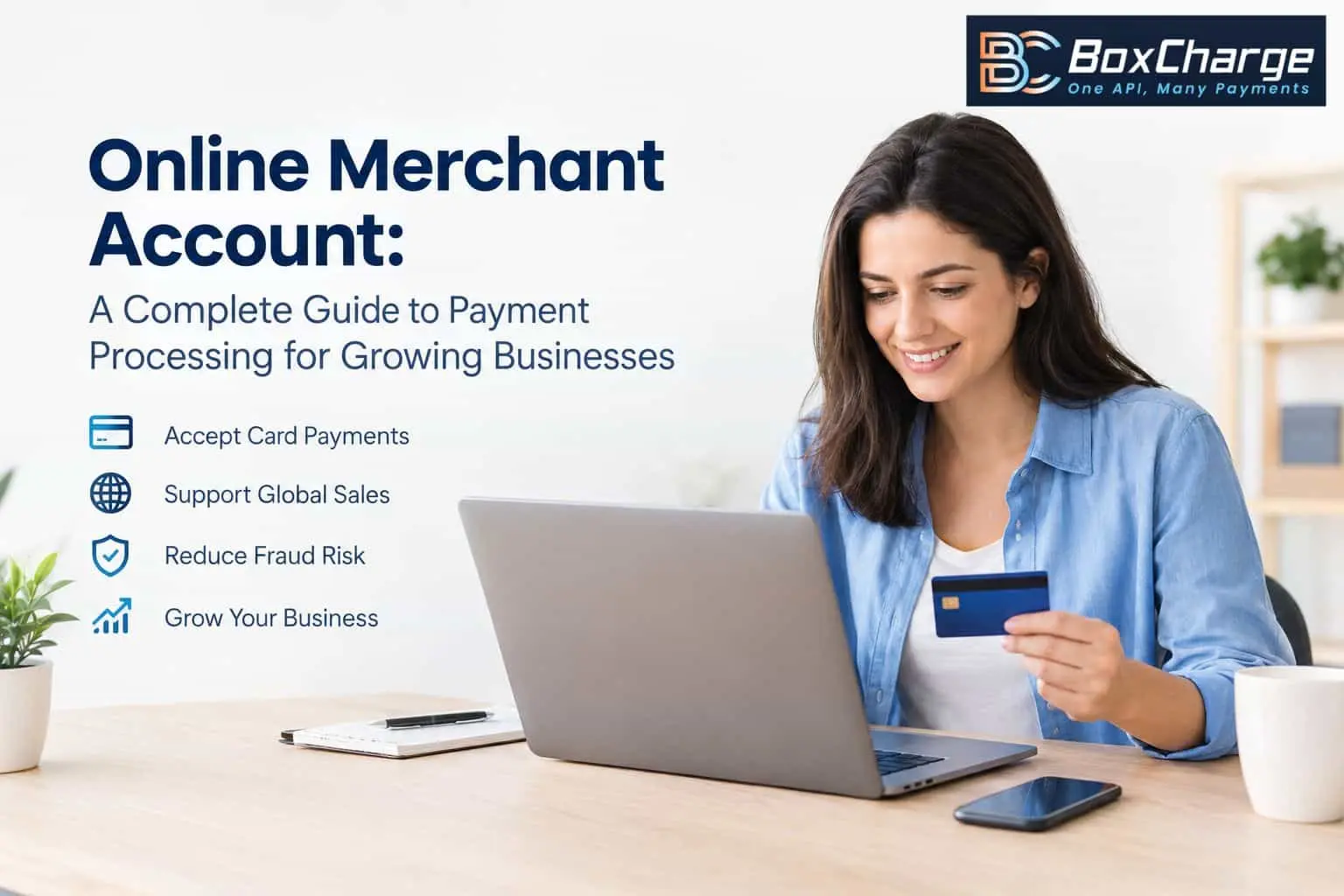
An online merchant account helps businesses accept and process card payments from customers purchasing products or services online. For e-commerce companies, subscription platforms, international sellers, and high-risk businesses, choosing the right merchant account can influence payment approval rates, cash flow, customer experience, and long-term growth.
However, finding a suitable payment processing solution is not always straightforward. While some businesses can open a standard merchant account with minimal difficulty, others face repeated application rejections, expensive processing fees, rolling reserves, delayed settlements, and sudden account restrictions. These challenges are particularly common in industries that payment providers classify as high-risk.
A suitable merchant account should do more than process transactions. It should support the business model, accommodate its transaction volume, provide appropriate fraud protection, and offer transparent commercial terms.
For businesses looking for dependable payment infrastructure, understanding how online merchant accounts work is the first step toward choosing a solution that supports sustainable growth.
What Is an Online Merchant Account?
An online merchant account is a payment-processing account that enables a business to accept card payments from customers through a website, mobile application, or other online sales channel.
When a customer pays online, the transaction typically passes through several participants, including the payment gateway, payment processor, acquiring bank, and the customer's card issuer. These participants help authenticate, authorize, process, and settle the payment.
A payment gateway securely transmits transaction information, while the acquiring bank or relevant payment service provider facilitates the merchant's acceptance of card payments. Depending on the provider's business model, a merchant may have a dedicated merchant account or access payment acceptance through an aggregated payment platform.
For businesses evaluating online payment processing solutions, understanding this distinction matters because different arrangements can have different underwriting requirements, pricing structures, settlement procedures, and risk controls.
A well-matched account can help businesses:
Accept credit and debit card payments online.
Process domestic and international transactions where supported.
Manage refunds, disputes, and transaction reporting.
Integrate checkout with an e-commerce website or business platform.
Monitor payment activity and identify unusual transaction patterns.
Support recurring billing and subscription payments where available.
The appropriate solution depends on the merchant's location, industry, target markets, average transaction value, and operational requirements.
Why Businesses Need the Right Online Merchant Account
Payment acceptance is a core part of the customer experience. A shopper may be ready to purchase, but an unsuccessful payment can interrupt the sale before the business earns any revenue.
The problem becomes more significant when a merchant processes large transaction volumes or sells internationally. Even small changes in authorization rates, processing costs, or settlement timing can affect profitability.
Consider an online retailer receiving orders from several countries. If its payment provider does not adequately support the customers' preferred payment methods or currencies, legitimate transactions may fail. If settlement takes longer than expected, the business may also struggle to pay suppliers, fund advertising campaigns, or maintain inventory.
An appropriate merchant account can help address these operational challenges through compatible payment integrations, clear settlement arrangements, suitable fraud controls, and support for the merchant's intended markets.
However, merchants should avoid choosing a provider based solely on advertised approval rates or low transaction fees. The complete agreement, including reserve requirements, dispute policies, supported countries, and account termination provisions, deserves equal attention.
Why High-Risk Businesses Struggle to Get Merchant Accounts
Not every business presents the same level of payment risk. Acquiring banks and payment providers assess factors such as industry, transaction patterns, financial stability, chargeback history, and regulatory exposure.
Businesses that present higher potential exposure may require additional underwriting or specialized high-risk merchant account services.
Common examples include certain businesses operating in adult entertainment, online gaming, gambling, travel, subscription services, nutraceuticals, and other industries subject to elevated fraud, dispute, or regulatory concerns. Classification varies by provider and business model.
For these merchants, obtaining an online merchant account can involve several practical difficulties.
1. Repeated Application Rejections
A merchant may have legitimate products, paying customers, and a viable business model but still struggle to secure payment processing.
Some mainstream providers do not support particular industries. Others may decline an application because of limited processing history, international sales exposure, unclear fulfillment procedures, or insufficient financial documentation.
Repeated rejections waste time and can delay a business launch.
The practical solution: Merchants should identify providers that explicitly support their industry and intended markets before applying. Preparing accurate business information, financial statements, ownership details, relevant licences, and processing history can also help underwriting teams evaluate the application.
Approval is never guaranteed, and all material information should be disclosed honestly.
2. High Processing Fees and Unexpected Costs
High-risk businesses may encounter higher transaction fees, setup charges, monthly account fees, and additional risk-management costs.
These expenses can reduce margins, particularly for businesses operating on subscription revenue or selling products with substantial customer acquisition costs.
A provider advertising an attractive transaction rate may also impose minimum monthly charges, cross-border fees, refund fees, or other contractual costs.
The practical solution: Compare the total cost of processing rather than looking at one advertised rate. Ask providers to explain every applicable charge and estimate costs using realistic transaction volumes, average order values, refund rates, and international payment percentages.
3. Rolling Reserves and Cash-Flow Pressure
One of the most difficult issues for high-risk account holders is restricted access to their own revenue.
A payment provider may require a rolling reserve, meaning it temporarily withholds a percentage of processed transactions to cover potential refunds, chargebacks, or other liabilities. The percentage and holding period depend on the agreement and the merchant's risk profile.
For example, a business processing substantial monthly revenue may still have insufficient immediately available cash if a portion of its settlements remains in reserve.
This can create problems with payroll, advertising budgets, inventory purchases, and supplier payments.
Before signing an agreement, merchants should ask how reserves are calculated, when funds are released, whether reserve terms can change, and what happens if the account is terminated.
4. Delayed Settlements and Account Restrictions
High-risk merchants may experience longer settlement periods or additional reviews when their transaction patterns change.
A sudden increase in sales, unusual international activity, rising refund requests, or a significant change in average transaction value may trigger a risk review.
When funds are delayed, the consequences can extend beyond payment processing. A business may need to postpone marketing campaigns, reduce inventory purchases, or renegotiate supplier payments.
Merchants should therefore evaluate settlement schedules, account review procedures, reserve policies, and the provider's communication practices before committing.
5. Chargebacks and Fraud Exposure
Chargebacks are especially challenging for businesses selling digital products, subscriptions, high-value goods, or services delivered over extended periods.
A customer may dispute a transaction because they do not recognize the billing descriptor, forgot about a recurring payment, did not receive the expected service, or experienced unauthorized card use.
Excessive disputes can increase costs and lead to closer monitoring, stricter account terms, or termination.
Clear billing descriptions, accessible cancellation procedures, prompt customer support, accurate product descriptions, and effective transaction monitoring can help reduce preventable disputes.
Merchants should also establish procedures for collecting delivery evidence and responding to legitimate disputes within the required deadlines.
What Features Should You Look for in an Online Merchant Account?
The right online merchant account should match your operational requirements rather than simply promise quick approval.
Before selecting a provider, evaluate the following features.
Industry-Specific Underwriting
Businesses operating in high-risk sectors should look for providers experienced in their particular industry.
A provider familiar with the merchant's business model may better understand its billing structure, customer acquisition practices, fulfillment timelines, and regulatory requirements.
However, industry experience should not replace due diligence. Merchants must still verify the provider's capabilities, contractual terms, and applicable restrictions.
Secure Online Payment Processing
Security is essential for every business accepting card payments.
Merchants should understand their responsibilities under the applicable Payment Card Industry Data Security Standard (PCI DSS) requirements and confirm that their payment partners maintain appropriate security controls.
Using a compliant payment service provider and an appropriately designed hosted checkout can help reduce direct exposure to sensitive payment information, although it does not automatically eliminate every merchant compliance obligation.
The PCI Security Standards Council provides official guidance on payment data protection and PCI DSS requirements.
Multiple Payment Methods and International Coverage
Businesses selling internationally may need support for different card brands, currencies, and locally preferred payment methods.
A suitable provider should explain which countries it supports, how currency conversion works, what cross-border charges apply, and whether settlement is available in the merchant's preferred currency.
Merchants should confirm these capabilities before entering new markets rather than assuming international payment acceptance is included automatically.
Fraud Prevention and Chargeback Management
Useful risk-management capabilities may include transaction monitoring, configurable fraud rules, customer authentication tools, dispute notifications, and transaction reporting.
The goal is to identify suspicious activity without unnecessarily declining legitimate customers.
Merchants should ask which tools are included in the account, which require additional fees, and how they can access transaction-level information when investigating disputes.
Transparent Pricing and Reliable Support
A competitive merchant account should provide understandable pricing and clear contractual terms.
Merchants should review transaction fees, monthly charges, setup costs, reserve conditions, settlement timing, termination clauses, and any minimum processing commitments.
Responsive support is also important. When a payment integration fails or settlements are delayed, businesses need access to a team that can investigate the issue and explain the next steps.
How to Apply for an Online Merchant Account
Although requirements vary between providers, preparing a complete application can make the review process more straightforward.
Step 1: Define your business model: Explain what you sell, how customers pay, how products or services are delivered, and which countries you serve.
Step 2: Prepare your documentation: Depending on the provider, this may include business registration documents, identity verification, ownership information, bank statements, financial statements, website details, and relevant industry licences.
Step 3: Review your transaction history: If you already accept payments, gather information about processing volume, average transaction value, refunds, chargebacks, and previous account issues.
Step 4: Compare suitable providers: Evaluate industry acceptance, pricing, supported currencies, integration requirements, settlement arrangements, and customer support.
Step 5: Complete underwriting accurately: Provide consistent information and disclose any previous processing restrictions or relevant business changes.
Step 6: Review the agreement before activation: Understand the reserve policy, settlement schedule, dispute procedures, prohibited activities, and circumstances that could lead to additional reviews or account termination.
The objective is not simply to secure approval. It is to establish a payment-processing relationship that remains workable as the business grows.
How BoxCharge Can Support Your Online Payment Processing Requirements
Choosing payment infrastructure can be particularly challenging for businesses that operate in higher-risk industries or accept international payments.
BoxCharge provides a starting point for businesses exploring merchant account and payment-processing options tailored to their operational requirements.
When evaluating a potential solution, merchants should consider how well it aligns with their industry, transaction volumes, target markets, integration needs, and risk-management obligations.
For high-risk businesses, the conversation should also cover underwriting requirements, chargeback management, settlement expectations, reserve conditions, and the documentation needed to support an application.
Rather than selecting a provider based on approval promises alone, businesses should seek a clear explanation of the available services, associated costs, eligibility criteria, and contractual obligations.
To explore potential payment-processing options, visit BoxCharge and discuss your business requirements with the team.
Specific services, supported industries, geographic coverage, and approval outcomes should be confirmed directly with the provider before making a decision.
Frequently Asked Questions About Online Merchant Accounts
Q: What is the difference between an online merchant account and a payment gateway?
An online merchant account is an arrangement that enables a business to accept card payments, while a payment gateway securely transmits transaction information between the checkout and payment-processing infrastructure. Some providers combine these functions into one service.
Q: Can a high-risk business get an online merchant account?
Yes. Some payment providers and acquiring banks offer merchant accounts for eligible high-risk businesses. Approval depends on factors such as the industry, business model, location, processing history, financial position, and compliance requirements.
Q: How much does an online merchant account cost?
Costs vary by provider and business risk. They may include transaction fees, setup charges, monthly fees, cross-border charges, refund fees, and reserve requirements. Merchants should request a complete pricing breakdown before signing an agreement.
Q: How long does it take to get approved?
Approval timelines vary according to the provider, application completeness, underwriting requirements, and complexity of the business. High-risk applications may require additional documentation and review. Merchants should request an estimated timeline rather than rely on a guaranteed approval date.
Q: Can I accept international payments with an online merchant account?
Some accounts support international card payments and multiple currencies, while others have geographic or currency restrictions. Confirm the supported countries, payment methods, conversion charges, and settlement options before applying.
Q: What happens if my merchant account is rejected?
Ask the provider for the reason, if it can be disclosed, address any documentation gaps, and identify whether the issue relates to industry restrictions, financial history, compliance, or transaction risk. You can then approach a provider that legitimately supports your business category. Avoid submitting misleading information or opening accounts under an unrelated business description.
Conclusion: Choose an Online Merchant Account That Supports Long-Term Growth
An online merchant account is more than a way to accept card payments. It is an important part of a business's financial infrastructure, influencing transaction acceptance, settlement access, operating costs, and customer experience.
For high-risk merchants, choosing the wrong provider can mean repeated application rejections, expensive processing, restricted funds, and avoidable disruptions. A carefully selected solution can provide a more suitable framework for managing these challenges, although no provider can eliminate payment risk entirely.
Before making a decision, compare industry eligibility, pricing, settlement terms, reserve requirements, fraud controls, security responsibilities, and international capabilities.
For businesses evaluating high-risk merchant accounts or international payment processing, the priority should be finding a provider whose services and contractual terms fit the actual business model.
The right payment-processing relationship should support responsible growth, transparent operations, and a checkout experience customers can trust.