
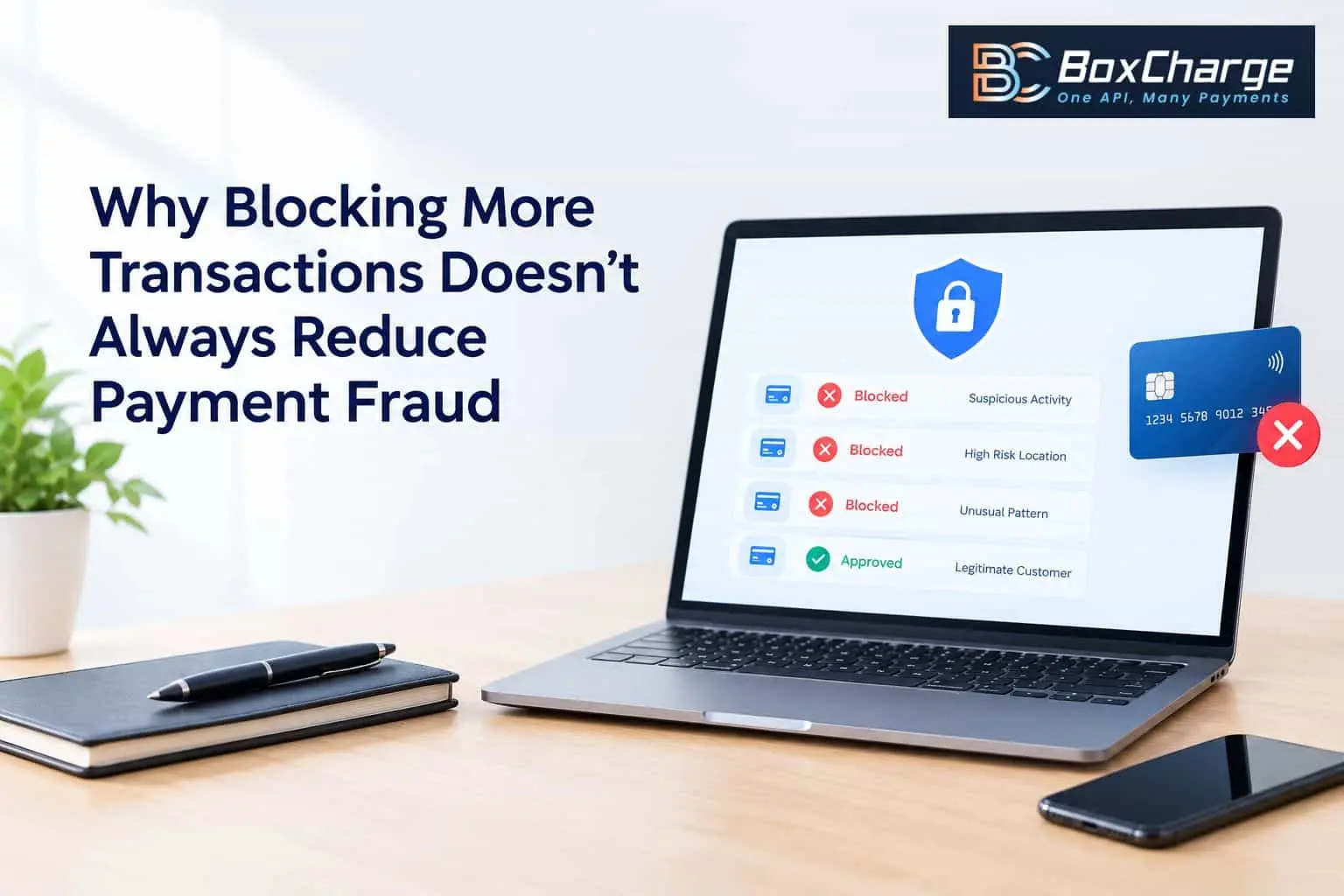
Fraud prevention is not just about declining suspicious payments. For high-risk merchants, it is about identifying genuine customers, stopping fraudulent activity, protecting payment processing stability, and maintaining profitable transaction volumes.
For an online business, a declined transaction can look like a small problem. The customer tries again, uses another card, or leaves. But when declines happen repeatedly, the financial impact becomes harder to ignore.
For high-risk merchants, the consequences can be even more serious. Businesses operating in industries such as forex, online gaming, dating, travel, nutraceuticals, and subscription services often face closer scrutiny from payment providers. A rise in chargebacks or suspected fraudulent activity can lead to stricter monitoring, higher processing costs, rolling reserves, delayed settlements, or difficulties maintaining a merchant account.
It is understandable that merchants respond by tightening fraud filters and blocking more transactions. However, blocking more payments does not automatically mean reducing payment fraud. Overly aggressive fraud rules can reject genuine customers while sophisticated fraudsters continue finding ways around basic controls.
The real objective is to build a payment fraud prevention strategy that distinguishes legitimate transactions from fraudulent ones without unnecessarily restricting revenue.
1. Why Blocking More Transactions Can Hurt Your Business
A strict fraud filter may appear effective because it prevents more transactions from reaching the payment gateway or acquiring bank. However, the number of declined payments alone does not tell you whether your fraud prevention strategy is working.
Consider an online merchant receiving 10,000 payment attempts in a month. If its fraud system blocks a large number of transactions based on broad rules, it might stop some fraudulent purchases. It could also reject legitimate customers whose purchasing behaviour happens to look unusual.
For example, a customer making a high-value purchase from a new device, paying from another country, or using a recently issued card may trigger a risk rule. None of these factors independently proves fraud.
When merchants treat every unusual transaction as dangerous, they risk increasing their false decline rate.
According to Visa's merchant fraud prevention resources, false declines, low authorisation rates, and dispute management are significant challenges for digital commerce.
For merchants, the commercial consequences include:
Lost sales: Genuine customers cannot complete their purchases.
Lower payment approval rates: More legitimate transactions are rejected before revenue is collected.
Higher customer acquisition costs: Marketing expenditure is wasted when potential customers fail at checkout.
Reduced customer retention: Customers who experience repeated declines may choose a competitor.
Poorer customer experience: Legitimate buyers may have to retry payments or complete unnecessary verification steps.
The problem is particularly challenging for high-risk businesses, where acquiring partners may already be cautious about transaction patterns and chargeback exposure.
A better fraud strategy measures both fraud losses and legitimate payment acceptance rather than treating every decline as a successful outcome.
2. Why High-Risk Merchants Face Greater Payment Processing Challenges
High-risk merchants do not always have the same operating conditions as businesses selling conventional, low-risk products.
Their industry, transaction profile, sales model, geographical reach, and dispute history may influence how acquiring banks and payment service providers assess their applications and ongoing activity.
For example, a forex merchant may process international payments from customers across several countries. A subscription business may experience recurring billing failures and disputes over renewals. A dating platform may handle frequent small payments, premium memberships, and account-related fraud risks.
These differences matter because legitimate transactions can look different across business models.
Common challenges faced by high-risk account holders
1: Merchant account restrictions: Some providers may limit transaction volumes, impose reserve requirements, or apply additional monitoring when a merchant's risk profile changes.
2: High processing costs: Businesses with elevated perceived risk may face higher fees or additional expenses associated with fraud management and dispute handling.
3: Chargeback pressure: Fraud claims, unauthorised payments, and customer disputes can increase operational costs and put merchant account stability at risk.
4: Cross-border payment declines: International transactions may trigger additional scrutiny because of unfamiliar issuing banks, billing locations, currencies, or customer behaviour.
5: Unpredictable approval rates: A merchant may experience inconsistent payment acceptance across card issuers, countries, payment methods, and transaction types.
6: Limited room for error: A sudden change in transaction patterns or a spike in disputes can create additional pressure when a merchant is already operating under enhanced monitoring.
These challenges make a blanket blocking strategy particularly unattractive. Rejecting more legitimate transactions can reduce the revenue available to absorb fixed operating costs, marketing expenditure, and payment processing fees.
High-risk businesses need a payment partner and fraud management setup that accounts for their actual business model, rather than relying entirely on generic restrictions.
3. Fraudsters Adapt, Even When Your Filters Become Stricter
One reason blocking more transactions may fail to reduce payment fraud is that fraudsters do not necessarily behave in predictable ways.
Basic rules can detect obvious warning signs, such as repeated payment attempts, unusual transaction volumes, or activity associated with known compromised payment details. However, criminals can change devices, rotate IP addresses, distribute transactions across multiple accounts, and vary their purchase patterns to evade simple controls.
Card testing is a useful example. Fraudsters may use automated tools to test stolen card credentials through repeated low-value transactions. Blocking one suspicious payment does not necessarily stop the wider attack if the system cannot identify the connected activity.
Account takeover presents a different challenge. A transaction may appear consistent with a genuine customer's normal purchasing behaviour even though someone else has gained access to their account.
This is why modern online payment fraud prevention requires more than a fixed list of reasons to decline a transaction.
Visa's guide to e-commerce fraud prevention discusses layered protection measures, including behavioural analytics, velocity checks, device intelligence, authentication, and post-purchase monitoring.
For merchants, the practical lesson is straightforward: fraud controls need to evaluate combinations of signals and adapt as transaction behaviour changes. A stricter rule is not necessarily a smarter rule.
4. False Declines Can Be Just as Costly as Poor Fraud Controls
Fraud prevention is often evaluated by how much fraudulent activity it blocks. Yet merchants also need to understand how many legitimate customers they turn away in the process.
A false decline occurs when a legitimate payment is rejected because a fraud detection or risk assessment system incorrectly identifies it as suspicious.
The problem can be difficult to diagnose because the merchant may not always receive enough information to determine why a transaction was declined. The decision may involve the issuer, payment processor, acquiring bank, or the merchant's own fraud controls.
Imagine a returning customer purchasing a premium subscription while travelling abroad. The transaction may trigger a location-based rule, even though the customer has sufficient funds and is using a valid payment method.
If the merchant automatically rejects the payment, it may lose a sale without preventing any actual fraud.
The commercial cost extends beyond the original order. Customers who encounter repeated payment failures may abandon the business, cancel a subscription, or avoid making future purchases.
Mastercard addresses this challenge in its Trusted Transactions overview, which explains how transaction data, authentication, and risk assessment can help merchants prevent fraud while reducing unnecessary friction for genuine customers.
For high-risk merchants, reducing false declines is not about relaxing security indiscriminately. It is about improving the accuracy of decisions so that genuine customers can pay while suspicious activity receives appropriate scrutiny.
5. What a Smarter Payment Fraud Prevention Strategy Looks Like
A more effective approach combines transaction intelligence, customer verification, appropriate payment routing, and continuous performance monitoring.
The aim is not to approve every payment. It is to make better-informed decisions about which payments to approve, challenge, review, or decline.
Use risk-based transaction screening
Instead of applying the same restrictions to every customer, assess transactions according to their individual risk signals.
Relevant indicators may include transaction value, purchase frequency, device information, account history, billing consistency, and previous payment outcomes.
A single unusual signal should not automatically determine the outcome when other information suggests the customer is legitimate. Equally, several connected warning signs may justify additional verification or rejection.
Risk-based screening helps merchants avoid treating different customers and transaction types as though they carry identical levels of risk.
Introduce appropriate customer authentication
Additional verification can help establish whether a transaction is being initiated by the legitimate cardholder.
Depending on the market, payment method, and transaction circumstances, tools such as EMV 3-D Secure may provide an additional authentication layer. Risk-based authentication can also help determine when further checks are appropriate.
The goal is to use stronger verification where it adds value without making every checkout unnecessarily complicated.
Merchants should work with their payment providers to understand the authentication options available to them and the applicable regulatory, scheme, and liability requirements.
Monitor transaction velocity and connected activity
Fraud attacks often become more visible when transactions are analysed together rather than individually.
For example, multiple attempts involving different cards but the same device, repeated low-value authorisation requests, or a sudden concentration of payments from unusual sources may indicate coordinated activity.
Velocity checks and behavioural analytics can help identify these patterns. Merchants should also review account creation, login behaviour, refunds, and post-purchase activity where relevant to their business model.
Improve payment routing and processing visibility
Payment routing can influence how transactions are submitted for processing, but it is not a substitute for fraud detection.
For eligible merchants, payment orchestration and intelligent routing may help direct transactions through suitable acquiring connections according to factors such as market coverage, payment method, availability, and historical performance.
However, routing should respect issuer responses, card-scheme rules, authentication requirements, and provider restrictions. Repeatedly submitting a transaction that has received a hard decline is not a sound fraud prevention strategy.
A capable payment infrastructure should help merchants understand where failures occur, distinguish technical errors from risk decisions, and identify opportunities to improve legitimate payment acceptance.
Review fraud performance continuously
Fraud prevention rules should be evaluated against actual business outcomes rather than left unchanged indefinitely.
Merchants should review fraud rates, chargeback ratios, authorisation rates, false declines where measurable, manual review outcomes, and checkout abandonment together.
If fraud losses decrease but legitimate payment acceptance falls sharply, the controls may be too restrictive. If approvals improve while disputes rise, the controls may be too permissive.
The right balance depends on the merchant's sector, payment mix, risk tolerance, and contractual obligations.
6. How to Measure Whether Your Fraud Strategy Is Working
For high-risk merchants, a useful fraud dashboard should provide a clearer picture of both protection and revenue performance.
Metric | What it helps you understand |
Fraud loss rate | How much revenue is lost to confirmed or reported fraudulent activity, according to the chosen measurement method |
Chargeback rate | How frequently transactions result in chargebacks under the relevant scheme or provider's calculation |
Authorisation rate | The proportion of submitted authorisation requests that are approved |
False decline rate | The proportion of legitimate transactions incorrectly declined, where reliable identification is available |
Checkout abandonment | How many customers leave without completing a purchase |
Manual review rate | How many transactions require additional investigation |
Payment recovery rate | How often eligible failed payments are successfully recovered through appropriate follow-up |
These measures should be interpreted together. Definitions and reporting methods can differ between payment providers, so merchants should confirm the denominator, reporting period, and treatment of retries before comparing results.
For example, a rise in authorisation rates does not necessarily indicate improved fraud performance if chargebacks rise at the same time. Likewise, fewer chargebacks do not automatically mean a business is healthier if a large share of genuine customers can no longer pay.
The best strategy uses measurable evidence to improve fraud controls without unnecessarily sacrificing conversion.
7. Choosing the Right Payment Partner for a High-Risk Business
Even well-designed fraud rules have limitations when the underlying payment infrastructure is poorly suited to the merchant's needs.
High-risk businesses should look beyond headline processing fees when choosing a merchant account provider or payment gateway.
Important questions include:
Q: Does the provider support your specific industry, business model, and target markets?
Q: What fraud screening and transaction monitoring capabilities are available?
Q: Can you access meaningful reporting on declines, authorisation outcomes, and disputes?
Q: Are suitable authentication methods and payment integrations supported?
Q: How are reserves, settlement timelines, transaction limits, and chargeback procedures explained?
Q: Can the provider help investigate payment failures and review risk controls as the business grows?
A payment partner should be transparent about its underwriting criteria, supported transaction types, compliance requirements, and risk management processes. No provider can guarantee that every legitimate transaction will be approved or that fraud and chargebacks will disappear.
For merchants experiencing frequent declines, the first step should be to identify whether the main problem comes from fraud screening, issuer decisions, technical failures, authentication issues, or limitations imposed by the acquiring relationship.
That diagnosis creates a much stronger foundation for improving payment performance than simply blocking additional transactions.
Conclusion: Better Fraud Decisions Matter More Than Higher Decline Volumes
Blocking more transactions can reduce certain types of fraud, but it can also increase false declines, damage customer relationships, and restrict revenue without addressing the underlying causes of fraudulent activity.
For high-risk merchants, the stakes are especially high. Payment acceptance, chargeback management, settlement reliability, and merchant account stability all contribute to sustainable growth.
A stronger approach combines risk-based screening, appropriate authentication, behavioural monitoring, payment performance analysis, and a payment infrastructure suited to the business.
The objective is not to decline more payments. It is to stop more genuine fraud while allowing more legitimate customers to complete their purchases.
If your business is struggling with declining approval rates, payment restrictions, or the challenges of managing a high-risk merchant account, reviewing your payment processing setup is a practical place to start.
BoxCharge helps businesses explore payment processing solutions suited to their merchant requirements. Speak with the BoxCharge team to discuss your industry, target markets, payment acceptance challenges, and the infrastructure your business needs to support more reliable payment processing.