If you run an online business, especially in industries like forex, IPTV, gaming, or nutraceuticals, you’ve probably heard the term payment gateway thrown around a lot. But what does it actually mean, and why does it feel so hard to get one approved?
Let’s break it down in simple terms, without the fluff.
What Is a Payment Gateway?
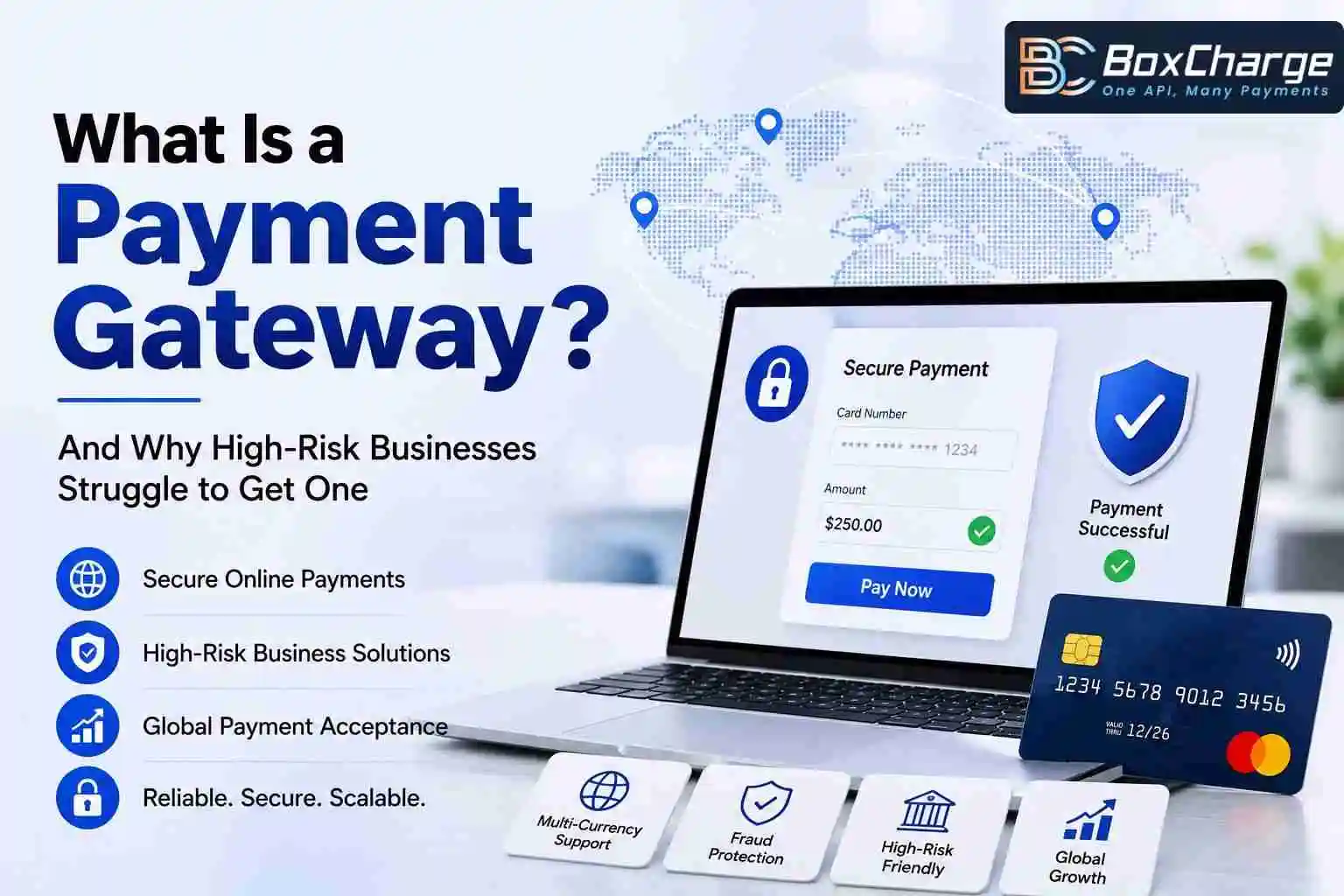
A payment gateway is the technology that allows your website to accept online payments securely. It acts as the bridge between your customer, your website, and the bank.
Think of it like this:
When a customer enters their card details → the gateway encrypts the data → sends it to the bank → gets approval or a decline → and returns the result instantly.
Without a secure payment gateway, you simply can’t accept credit card payments online.
How Does a Payment Gateway Work?
Here’s a quick step-by-step process:
The customer enters card details on your checkout page
The online payment gateway encrypts the data
It sends the request to the acquiring bank
The bank communicates with the card network (Visa/Mastercard)
Approval or decline is sent back
Payment is completed (or rejected)
All of this happens in 2–5 seconds.
Why Payment Gateways Are Critical for Online Businesses
If you’re serious about scaling, a global payment gateway solution is not optional—it’s essential.
Here’s why:
Enables accepting credit card payments online
Supports international payment processing
Builds customer trust with secure transactions
Helps reduce cart abandonment
Allows multi-currency payments
But here’s the catch…
Why High-Risk Businesses Struggle the Most
This is where things get real.
If you're in a high-risk industry, getting a merchant account or payment gateway approval is not straightforward.
Let’s talk about real-world struggles
You apply for a high-risk merchant account…
1: You wait days… sometimes weeks
2: You get rejected without a clear reason
Or worse:
You get approved…
1: Then your account gets suspended suddenly
2: Funds are held for 90–180 days
3: Your business operations freeze overnight
This isn’t rare. It’s common.
Why Do Payment Gateways Reject High-Risk Merchants?
Payment providers look at risk factors, not just your business model.
Here are the biggest reasons:
1. High Chargeback Ratio
Industries like IPTV, forex, and gaming often face disputes. Even a 1% chargeback rate can trigger alarms.
2. Regulatory Concerns
Cross-border payments and compliance issues make banks cautious.
3. Business Model Risk
Some industries are labeled as “high-risk” by default—even if you're running a legit business.
4. Poor Processing History
If you’ve had past account closures or rolling reserves, it becomes harder to get approved.
The Hidden Pain Points No One Talks About
Let’s keep it real—these are the actual frustrations merchants face:
“My payment gateway got shut down overnight with no warning.”
“Funds stuck for months… no access to my own money.”
“Every provider keeps rejecting my application.”
“High fees, low approval chances—it feels impossible.”
Many merchants end up juggling multiple payment processors just to stay operational.
Types of Payment Gateways
Understanding your options can help you choose better:
1. Hosted Payment Gateways
Redirects users to a third-party page (like PayPal)
2. Integrated Payment Gateways
Customers stay on your website during checkout
3. Self-Hosted Gateways
You collect data, but processing happens externally
4. API-Based Payment Gateways
Flexible and best for scaling businesses
For high-risk merchants, API-based and custom solutions are usually the best fit.
Features to Look for in a Payment Gateway
Not all gateways are built the same. If you're serious about scaling globally, look for:
Multi-currency support
Fraud detection & chargeback management
Fast settlement cycles
Global card acceptance
Secure payment processing (PCI-DSS compliant)
What Makes a Good High-Risk Payment Gateway?
If you’re in a tough industry, you need more than just a gateway—you need a partner.
Here’s what actually matters:
Experience with high-risk payment processing
Strong relationships with international banks
Ability to handle large transaction volumes
Flexible underwriting policies
Transparent fee structure
The Truth About “Easy Approvals”
You’ll see a lot of platforms promising:
“Instant approval”
“Zero risk”
“Guaranteed merchant account”
Let’s be honest—that’s marketing.
In reality, approvals depend on:
Your business model
Processing history
Website compliance
Risk profile
However, the right provider can significantly improve your chances.
How to Increase Your Approval Chances
If you’re tired of rejections, here’s what actually helps:
1. Fix Your Website
Make sure it has:
Clear refund policy
Terms & conditions
Contact details
Transparent pricing
2. Reduce Chargeback Risk
Use fraud tools and clear billing descriptors
3. Be Honest in Your Application
Hiding details only leads to rejection later
4. Choose the Right Provider
Not all gateways support high-risk merchant accounts
Why Businesses Move to Global Payment Solutions
Many merchants start local… but quickly hit limits.
That’s when they shift to:
International payment gateways
Offshore merchant accounts
Multi-bank routing systems
This helps in:
Reducing declines
Increasing approval rates
Expanding globally
Final Thoughts
A Best payment gateway is more than just a tool—it’s the backbone of your online business.
But if you’re in a high-risk space, the journey isn’t easy.
You’ll face rejections.
You’ll deal with delays.
You might even lose access to funds at times.
That’s the reality.
But with the right setup, provider, and understanding of how online payment processing works, you can build a stable, scalable payment system.
If you're serious about growing your business globally, don’t just look for a payment gateway.
Look for a solution that actually understands the high-risk payment challenges you face and helps you overcome them. Apply now on BoxCharge