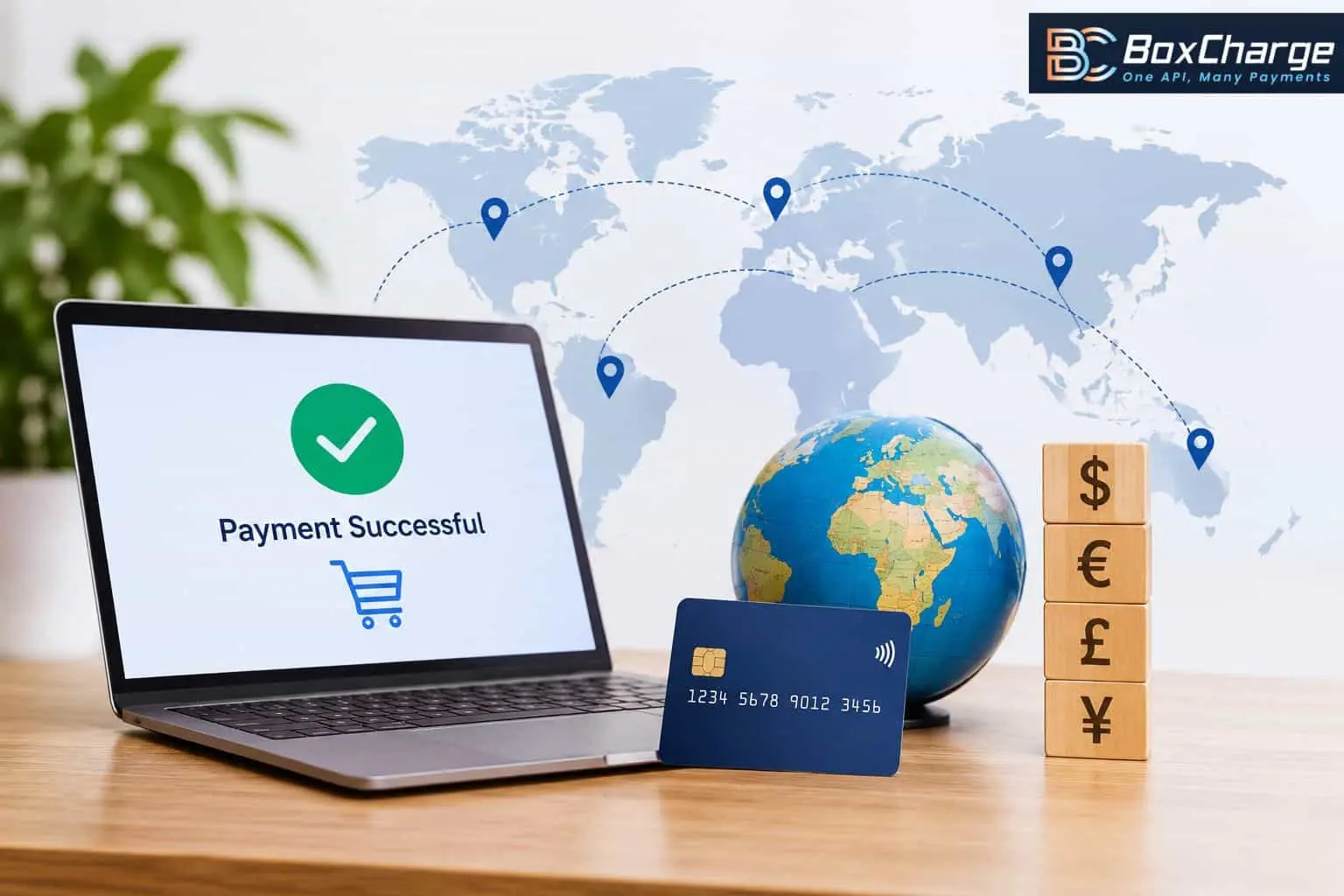
A cross-border payment gateway enables businesses to accept and process payments from customers across different countries while managing multiple currencies, international acquiring arrangements, and regional payment requirements. For businesses expanding into global markets, having the right payment infrastructure is essential to maintaining smooth transactions, managing foreign exchange costs, and delivering a reliable checkout experience.
However, international payment processing is not equally accessible to every business. High-risk merchants, including iGaming operators, forex businesses, adult entertainment platforms, subscription services, and online gaming companies, often face additional challenges when searching for suitable payment providers. Restricted acquiring options, unexpected account reviews, international card declines, chargeback exposure, and complicated compliance requirements can make global expansion particularly difficult.
A reliable international payment gateway helps businesses address these operational challenges through multi-currency payment capabilities, acquiring connectivity, transaction authentication, and centralized payment management.
For merchants looking to expand internationally, BoxCharge offers cross-border payment gateway connectivity and partner-led acquiring solutions designed around different business models, transaction requirements, and target markets. The right solution depends on the merchant's industry, jurisdiction, compliance position, and onboarding eligibility.
What Is a Cross-Border Payment Gateway?
A cross-border payment gateway is a payment technology that enables businesses to accept and process transactions from customers located in different countries. It connects the merchant's checkout environment with payment processors, acquiring partners, card networks, and other payment infrastructure involved in completing a transaction.
Unlike a domestic payment gateway, which primarily supports transactions within one country or market, an international payment gateway is designed to handle payments involving different currencies, regions, issuing banks, and payment preferences.
For example, a UK-based e-commerce business selling products to customers in Germany, the United States, and Australia may need to accept payments in GBP, EUR, and AUD. Its payment gateway must support the relevant transaction currencies and acquiring arrangements while handling authentication, authorization, and transaction reporting.
A capable cross-border payment processing solution may provide:
International card acceptance through acquiring partners.
Multi-currency payment presentment and processing.
Regional alternative payment method connectivity.
3D Secure authentication.
Payment tokenization.
Fraud prevention and transaction monitoring.
Hosted checkout and API-based integration.
Centralized transaction reporting and reconciliation.
The actual availability of these features depends on the payment provider, acquiring relationships, merchant category, and supported jurisdictions.
Why Businesses Need an International Payment Gateway
International expansion can quickly expose the limitations of a domestic payment infrastructure. A business that initially processes payments within one country may find that its existing provider does not adequately support customers from other markets.
This creates operational difficulties that can affect both sales and financial management.
1. International card declines: A transaction that works domestically may be declined when the issuing bank, acquiring arrangement, authentication requirements, or transaction profile changes.
International card declines can result from issuer restrictions, insufficient authentication, fraud controls, currency-related issues, and other authorization factors.
A payment gateway with appropriate acquiring connectivity and routing capabilities can help merchants manage these challenges more effectively. However, no gateway can guarantee approval of every international transaction.
2. Currency conversion complications: Customers are generally more comfortable purchasing when prices are displayed in a familiar currency. If an international customer sees an unexpected currency at checkout, uncertainty about the final amount can discourage them from completing the purchase.
A multi-currency payment gateway allows merchants to present prices in supported currencies and manage the associated processing arrangements.
Businesses should also understand the difference between currency presentment, transaction processing currency, and settlement currency. These are not necessarily the same.
3. Fragmented payment operations: Working with several payment providers across different countries can create inconsistent reporting, separate integrations, and complicated reconciliation processes.
A centralized gateway layer can help consolidate transaction information and provide a more consistent operational view across supported payment methods and acquiring partners.
4. Settlement and cash-flow difficulties: International payments may involve different acquiring partners, settlement currencies, banking arrangements, and payout schedules.
Merchants need to understand when funds become available, what conversion costs apply, whether reserves are required, and how refunds are handled.
These details are particularly important for businesses operating with tight working capital.
Why Cross-Border Payment Processing Is More Difficult for High-Risk Merchants
High-risk merchants face a different set of challenges when accepting international payments. Their difficulties are not limited to currency conversion or international authorization. They also involve underwriting, compliance, chargeback exposure, and the availability of acquiring partners willing to support their business category.
Industries such as iGaming, forex, adult entertainment, subscription services, online gaming, and certain digital businesses can face additional scrutiny depending on their licensing, jurisdiction, transaction patterns, and operating model.
Here are some of the problems high-risk account holders regularly encounter.
Limited access to international merchant accounts
One of the biggest challenges for high-risk businesses is finding an acquiring partner that understands their business model.
Many conventional payment providers have restrictive underwriting policies. A merchant may have a legitimate business, established customers, and consistent revenue but still struggle to secure suitable payment processing because its industry falls outside the provider's risk appetite.
This can become particularly frustrating when a business wants to expand into new countries but cannot find a provider with appropriate acquiring coverage.
A specialist high-risk merchant account arrangement can help businesses explore suitable acquiring options, subject to jurisdictional requirements, licensing, documentation, and partner approval.
Unexpected account reviews and processing restrictions
High-risk merchants may experience additional account reviews when transaction volumes change, new markets are introduced, or chargeback and refund patterns move outside expected thresholds.
Sometimes, merchants are informed about restrictions only after payment operations have already been affected.
This creates uncertainty around revenue forecasting, customer refunds, supplier payments, and business expansion.
Merchants should therefore understand their provider's monitoring policies, reserve arrangements, transaction limits, and account review procedures before going live.
Higher chargeback exposure
International transactions can introduce additional complications when customers do not recognize a billing descriptor, misunderstand currency conversion, experience delivery delays, or encounter difficulties obtaining refunds.
For high-risk merchants, elevated chargeback levels can create further underwriting concerns and potentially affect acquiring relationships.
According to Visa's Dispute Resolution Guidelines, merchants should maintain accurate transaction information and respond promptly to disputes with appropriate supporting documentation.
A suitable payment processing arrangement should support transaction visibility and give merchants access to the information needed to investigate disputed payments.
Complex compliance and documentation requirements
High-risk international merchants may need to demonstrate licensing, beneficial ownership, business registration, customer verification procedures, refund policies, and other compliance controls.
Requirements vary according to the business category, jurisdiction, acquiring partner, and applicable regulations.
The FDIC's Guidance on Payment Processor Relationships highlights the importance of appropriate due diligence, underwriting, and ongoing monitoring of payment processor relationships.
For merchants, this reinforces the importance of working with payment partners that understand their business activities and can clearly communicate onboarding and monitoring requirements.
Essential Features to Look for in a Cross-Border Payment Gateway
Not every international payment gateway is suitable for every merchant. Businesses should evaluate the underlying payment infrastructure rather than choosing a provider solely because it advertises global payment acceptance.
The following capabilities deserve particular attention.
1. Multi-Currency Payment Support
A multi-currency payment gateway should allow merchants to present and process payments in supported currencies.
This can improve the checkout experience for international customers while giving businesses more flexibility in managing their payment operations.
Before selecting a provider, confirm:
Which transaction currencies are supported?
Which currencies are available for settlement?
What foreign exchange charges apply?
Are refunds processed in the original transaction currency?
Are currency conversion rates disclosed clearly?
2. International Acquiring Connectivity
Acquiring connectivity determines how merchants access card acceptance across different markets.
A provider with suitable acquiring relationships can help businesses explore processing arrangements that match their geographical reach and risk profile.
Merchants should ask about supported regions, local acquiring availability, partner coverage, settlement arrangements, and restrictions affecting their industry.
3. Smart Payment Routing
Payment routing determines how transactions are directed through available acquiring connections.
Depending on the gateway architecture, routing rules may consider factors such as transaction currency, card type, issuing region, and available processing connections.
For businesses processing international payments, an appropriate routing setup can help manage operational complexity and support authorization optimization.
Merchants should ask whether routing decisions are configurable and what reporting is available to evaluate performance.
4. 3D Secure Authentication and Tokenization
Payment security becomes increasingly important when businesses accept transactions across multiple regions.
3D Secure authentication adds an additional authentication layer to supported card-not-present transactions. Tokenization replaces sensitive payment information with tokens that can be used within appropriately designed payment environments.
Together with suitable fraud controls, these technologies can contribute to a more secure payment infrastructure.
5. Hosted Checkout and API Integration
A hosted checkout allows merchants to redirect customers to a payment environment managed by their payment provider. Server-to-server API integration offers greater control over the payment experience and technical workflow.
The right option depends on the merchant's development resources, operational requirements, and security responsibilities.
The PCI Security Standards Council provides the Payment Card Industry Data Security Standard (PCI DSS), which establishes technical and operational requirements for protecting payment account data.
Importantly, outsourcing payment processing does not automatically remove a merchant's PCI DSS responsibilities. Merchants should confirm their specific compliance obligations with the relevant acquiring and payment partners.
6. Reporting and Reconciliation
International payment operations become difficult to manage when transaction information is scattered across several platforms.
A centralized reporting environment should help merchants review transaction statuses, payment methods, currencies, refunds, and settlement information.
This is particularly valuable for businesses managing multiple markets or operating through several acquiring relationships.
How to Choose the Right Cross-Border Payment Gateway for Your Business
Selecting a payment provider requires more than comparing transaction fees. A solution that appears inexpensive initially may become costly if it lacks suitable international acquiring coverage, clear settlement arrangements, or adequate support for the merchant's industry.
Before applying, consider the following:
1: Understand your business category. Clearly identify your industry, products or services, licensing position, and expected transaction profile. High-risk merchants should work with providers that are willing to assess their actual business activities.
2: Identify your target markets. List the countries where your customers are located and establish which currencies and payment methods are important for those markets.
3: Review the complete fee structure. Ask about transaction fees, cross-border charges, foreign exchange costs, refund fees, chargeback fees, rolling reserves, and any additional processing expenses.
4: Check onboarding requirements. Confirm the documents required for business verification, beneficial ownership checks, licensing, and compliance review.
5: Understand settlement arrangements. Establish settlement currencies, payout schedules, reserve conditions, and the process for handling refunds or account reviews.
6: Evaluate integration and support. Look for suitable API documentation, hosted checkout options, transaction reporting, technical assistance, and a clear escalation process.
A payment gateway should be selected according to the merchant's actual operational needs, not simply its advertised international coverage.
Why Consider BoxCharge for Cross-Border Payment Processing?
For businesses seeking international payment acceptance, BoxCharge offers cross-border payment gateway connectivity and global merchant services through partner-led acquiring arrangements.
Its approach is designed to help legitimate businesses explore payment infrastructure suited to their operating model, target markets, and transaction requirements.
The BoxCharge cross-border payment gateway solution supports several important capabilities:
Multi-currency presentment and processing: Businesses can explore supported currency options for accepting payments from international customers.
Card and alternative payment connectivity: Payment acceptance can include major card networks and regional alternative payment methods where partner coverage is available.
Secure transaction infrastructure: The gateway layer supports 3D Secure authentication and tokenization as part of its payment security capabilities.
Flexible integration: Merchants can explore hosted checkout or server-to-server API integration, depending on their technical requirements.
Payment routing and reporting: Available infrastructure includes smart routing capabilities, transaction-level reporting, webhooks, and reconciliation support.
Partner-led acquiring: BoxCharge coordinates onboarding and acquiring partner arrangements based on merchant documentation, business activity, and available processing corridors.
For high-risk merchants, this partner-led approach is particularly relevant because the suitability of a payment arrangement depends on more than the gateway technology. The business category, jurisdiction, compliance position, and acquiring partner's risk appetite all matter.
Businesses can explore the solution directly through the BoxCharge Cross-Border Payment Gateway page.
Merchants interested in broader international acquiring arrangements can also review BoxCharge Global Merchant Services.
Processing availability is subject to onboarding, jurisdictional review, and acquiring partner approval.
Frequently Asked Questions About Cross-Border Payment Gateways
Q: What is the best cross-border payment gateway for international businesses?
The best cross-border payment gateway depends on the merchant's industry, target countries, currencies, transaction volume, settlement requirements, and compliance needs. Businesses should prioritize acquiring coverage, transparent pricing, security, and reliable reporting rather than choosing solely on advertised transaction fees.
Q: Can a high-risk merchant use a cross-border payment gateway?
Yes. High-risk merchants operating legally may access cross-border payment processing through suitable acquiring arrangements. However, acceptance depends on the merchant's business model, licensing, jurisdiction, transaction history, compliance documentation, and partner underwriting policies.
Q: Does a cross-border payment gateway support multiple currencies?
Many international payment gateways support multiple transaction and presentment currencies. However, supported currencies and settlement options vary between providers. Merchants should confirm currency conversion charges and settlement arrangements before onboarding.
Q: How can international merchants reduce payment declines?
Merchants can review issuer decline patterns, improve checkout authentication, support appropriate local payment methods, maintain accurate transaction information, and evaluate acquiring connectivity and routing performance. No payment provider can guarantee approval of every transaction.
Q: What documents are required to apply for an international merchant account?
Common requirements include business registration documents, ownership information, identification documents, bank statements, processing history, website details, product information, and relevant industry licences. Additional documentation may be required for high-risk businesses.
Q: Is a cross-border payment gateway suitable for subscription businesses?
Yes. Subscription businesses can use international payment infrastructure to accept recurring payments from customers in supported markets. They should evaluate recurring transaction support, tokenization, authorization handling, cancellation procedures, refund policies, and applicable consumer protection requirements.
Final Thoughts: Build a More Reliable International Payment Setup
International expansion should not be limited by a payment infrastructure that only works well in one domestic market. Businesses need a payment gateway capable of supporting their geographical reach, currency requirements, transaction patterns, and compliance responsibilities.
For high-risk merchants, selecting the right provider becomes even more important. Limited acquiring options, account reviews, chargeback exposure, and complex underwriting requirements can make international growth difficult without an appropriate payment arrangement.
A well-selected cross-border payment gateway can help bring these operations together through multi-currency capabilities, acquiring connectivity, transaction authentication, and centralized reporting.
If your business is planning to accept international payments or looking for a more suitable payment processing arrangement, explore BoxCharge's cross-border payment gateway solutions and discuss your requirements with its payment specialists.